


How to Install a Garbage Disposal in 5 Easy Steps in Wichita, KS
Garbage disposal installation is something most Wichita homeowners can tackle on their own in under three hours — no plumber required — as long as you have the right tools and a basic comfort level with simple plumbing and electrical work.
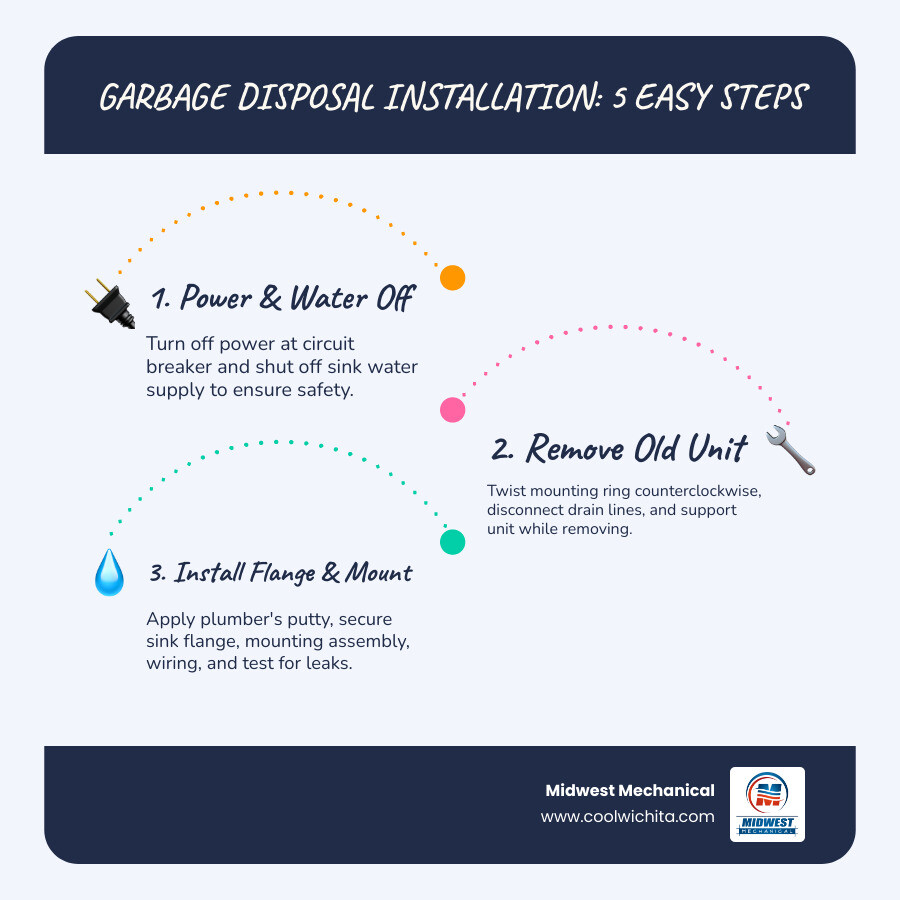
Here is a quick overview of the five steps:
- Turn off power and water at the circuit breaker and shutoff valve
- Remove the old unit by twisting the mounting ring and disconnecting the drain lines
- Install the sink flange and mounting assembly using plumber's putty for a watertight seal
- Connect the wiring and dishwasher line by matching color-coded wires and removing the knockout plug if needed
- Mount the disposal, reconnect the drain, and test for leaks before powering on
Whether you are replacing a worn-out unit or installing one for the first time, this guide walks you through every step clearly and safely. Knowing what to expect before you start makes the whole process much smoother — and helps you avoid the most common mistakes that lead to leaks or electrical problems down the road.
Preparing for Your Garbage Disposal Installation
Before we dive into the nuts and bolts of the project, we need to talk about preparation. It is April 2026, and modern kitchens are more efficient than ever, but they still rely on proper setup to function correctly. Safety is our first priority. You must turn off the power at the main circuit breaker. Simply turning off the wall switch isn't enough; you want to ensure there is zero chance of the unit receiving power while your hands are near the wiring.
Next, shut off the water supply to the sink. While you won't necessarily be working on the pressurized water lines, you will be disconnecting drain pipes, and any residual water in the sink or pipes needs a place to go. Having a bucket handy is a lifesaver here.
Choosing the right unit is the next big decision. Most disposals range from 1/3 horsepower (HP) to 1 HP. For a typical household in Wichita, a 1/2 HP or 3/4 HP model is usually the "sweet spot." A 1/2 HP motor is great for light, everyday use, while a 1 HP motor can handle tougher food scraps and generally runs quieter. You also have to choose between a continuous feed unit (which runs as long as the switch is on) and a batch feed unit (which only runs when a stopper is in place). If you find yourself frequently solving garbage disposal problems, upgrading to a higher horsepower model with stainless steel grinding components can make a world of difference.
Essential Tools for Garbage Disposal Installation
Having the right tools on your workbench (or kitchen floor) before you start will prevent those frustrating mid-project trips to the hardware store.

To get the job done right, we recommend gathering the following:
- Screwdrivers: Both Phillips and flat-head.
- Channel-lock pliers: Essential for tightening or loosening large plumbing nuts.
- Plumber's putty: This is what creates the waterproof seal between the sink and the flange.
- Hammer and a blunt punch: Needed to knock out the dishwasher plug.
- Putty knife: To clean away old putty from the sink drain.
- Safety glasses: To protect your eyes from falling debris while you’re lying under the sink.
- Flashlight: It gets dark under those cabinets!
While many homeowners find this to be a rewarding DIY project, there are significant benefits of professional disposal install, especially if your plumbing is older or if you need new electrical outlets installed to meet current codes.
Choosing the Right Unit for Wichita Homes
In Wichita and surrounding areas like Derby and Andover, our local water can be a bit hard. Hard water minerals can lead to corrosion over time. When selecting your new unit, look for models with stainless steel grinding chambers and components. These resist rust and mineral buildup much better than galvanized steel.
Noise insulation is another factor. If you have an open-concept floor plan, a "quiet" model with extra insulation is worth the investment. Finally, ensure your sink is compatible. Most standard kitchen sinks have a 3-1/2 inch to 4-inch drain opening, which is the universal size for garbage disposal installation.
Step-by-Step Guide to Removal and Flange Setup
Now that we are prepared, it is time to get our hands dirty. If you are replacing an old unit, the removal process is just as important as the installation.
Removing the Existing Unit Safely
- Support the unit: Garbage disposals are surprisingly heavy (some up to 15-20 pounds). Place a bucket or a stack of books underneath the unit so it doesn't drop suddenly when you release it.
- Disconnect the plumbing: Use your pliers to unscrew the nuts connecting the discharge tube to the drain pipe. If you have a dishwasher, disconnect that hose as well.
- Release the mounting ring: Insert a screwdriver into one of the lugs on the mounting ring (the metal ring holding the disposal to the sink) and rotate it counterclockwise. The unit should pull away.
- Remove the old flange: From the top of the sink, pop out the old metal drain flange. Use your putty knife to scrape away every bit of old, dried plumber's putty. A clean surface is the only way to ensure the new seal doesn't leak. For more detailed local tips, check out our Garbage Disposal Installation Wichita Guide.
Installing the New Mounting Assembly
This is where the "watertight" part of the job happens.
Take a golf-ball-sized piece of plumber's putty and roll it between your hands to create a "rope" about 1/2 inch thick. Wrap this rope around the underside of the new sink flange. Press the flange firmly into the sink drain hole.
From underneath the sink, slide on the fiber gasket, the backup ring, and the mounting ring. While holding these in place, slide the snap ring onto the flange groove until it clicks. Now, tighten the three mounting screws evenly. You want them snug, but don't over-tighten to the point of warping the rings. As you tighten, you'll see a bit of putty ooze out into the sink—this is a good sign! Just wipe away the excess.
Wiring, Mounting, and Final Testing After Garbage Disposal Installation
With the mounting bracket in place, we are ready for the final stretch. This involves the electrical connection and physically hanging the heavy disposal unit.
Connecting the Electrical and Dishwasher Lines
If your new disposal didn't come with a pre-installed power cord, you will need to wire it yourself or use the cord from your old unit (if it’s in good condition). Remove the metal cover plate on the bottom of the disposal to reveal the wires.
Use wire nuts to connect the wires—usually matching black to black (hot), white to white (neutral), and green or bare copper to the green ground screw. Ensure you use a strain relief fitting where the cord enters the disposal so the wires don't get pulled loose.
Crucial Step for Dishwasher Owners: If you are connecting a dishwasher to your disposal, you must knock out the plastic "knockout plug" located inside the small inlet nipple on the side of the disposal. Use a hammer and a screwdriver to tap it through. Important: Reach inside the disposal and remove that plastic slug! If you leave it in there, it will jam your new disposal the first time you turn it on. This is one of those common garbage disposal installation mistakes we see all too often.
For a full professional setup in the Wichita area, you can always rely on our Garbage Disposal Installation Wichita KS services to ensure everything is code-compliant.
Final Testing After Garbage Disposal Installation
Now, lift the disposal and align the three mounting tabs with the slide-up ramps on the mounting ring. Turn the lower mounting ring clockwise until all three tabs are locked securely. You may need to use a screwdriver for leverage to get it fully locked.
Reconnect the discharge elbow to the side of the disposal and then to your P-trap. Once everything is tight, it’s time for the "leak test."
- Put the stopper in the sink and fill it with a few inches of water.
- Remove the stopper and let the water rush down.
- Look under the sink with your flashlight. Check the flange, the dishwasher connection, and the drain pipes.
- If it’s dry, turn on the power at the breaker and flip the wall switch.
If the unit hums but doesn't spin, or if it won't turn on at all, see our guide on Garbage Disposal Not Working for troubleshooting tips.
Frequently Asked Questions
| Feature | DIY Installation | Professional Installation |
|---|---|---|
| Time | 2 - 4 Hours | 45 - 60 Minutes |
| Tools Needed | Must purchase/borrow | Technician brings all |
| Risk | Potential for leaks/wiring errors | Guaranteed & Warrantied |
| Complexity | Moderate | Handled by experts |
Can I install a garbage disposal on any sink?
Most standard stainless steel and porcelain sinks are perfectly compatible with a garbage disposal. However, if you have a very thin stainless steel sink, the vibration of a high-horsepower motor might cause some flexing or noise. In these cases, a mounting gasket or a lower-HP unit might be better. Composite or stone sinks also work well, but we sometimes recommend using 100% silicone sealant instead of plumber's putty to avoid staining certain porous materials.
How long does the installation process take?
For an experienced DIYer, the process usually takes about two hours. If it’s your first time, give yourself a three-hour window. A professional plumber from our team can usually finish the job in under an hour if the existing plumbing is already in good shape.
When should I call a professional plumber?
While DIY is great, some situations require an expert touch:
- No existing electrical: If there isn't an outlet or a switch already under the sink.
- Drain height issues: If your new disposal sits lower than the wall drain pipe, water won't drain correctly. This requires moving the plumbing inside the wall.
- Historic homes: In older Wichita neighborhoods, you might encounter lead pipes or unusual configurations that require specialized tools.
- Leaking inside the unit: If the unit itself is leaking from the bottom, it usually means an internal seal has failed, and it's time for a replacement.
To keep your new investment running smoothly for years, follow our guide on preventing garbage disposal clogs.
Conclusion
A successful garbage disposal installation can transform your kitchen routine, making cleanup faster and keeping your trash cans smelling fresher. By following these five steps—preparation, removal, flange setup, wiring, and testing—you can confidently upgrade your home.
At Midwest Mechanical, we take pride in serving our neighbors in Wichita, Maize, Bel Aire, and throughout the surrounding communities. We know that sometimes a "simple" DIY project can turn into a headache, especially when dealing with electrical wiring or complex drain alignments. Whether you need a quick installation or a comprehensive Professional Drain Cleaning Wichita KS to clear out years of buildup before your new unit goes in, we are here to help.
From Goddard to Towanda, we provide total home comfort with transparent service and expert reliability. If you’d rather spend your weekend enjoying the Kansas weather instead of lying under a sink, give us a call. We’ll get your kitchen back in top shape in no time!
Customer Testimonials
Hear from satisfied customers who trust us for reliable HVAC and plumbing service across Wichita.





Plus, the technician, Lee was very professional, knowledgeable and informative.
We will definitely be doing business with them sometime again in the past.
I'm prompt to my appointment. Thank you Midwest Mechanical.
I'm prompt to my appointment. Thank you Midwest Mechanical.

We have partnered with GoodLeap to offer flexible payment options for your project. GoodLeap uses a soft credit check until funding and the highest score from all 3 bureaus to see if you qualify. It also takes just a few minutes to get started.




Service Areas
.svg)