


Why Every Wichita Homeowner Needs an AC Tune-Up Before Summer
This ac tune up guide for Wichita area homeowners covers everything you need to know to keep your cooling system running strong before the Kansas heat arrives. Here's a quick overview:
Quick Answer: AC Tune-Up Essentials for Wichita Homeowners
- Schedule in early spring (March or April) before peak demand hits
- Change your air filter every 30 days during cooling season
- Clear your outdoor unit - maintain at least 2 feet of clearance on all sides
- Watch for warning signs - weak airflow, strange noises, warm air, or rising energy bills
- Book a professional tune-up that covers refrigerant levels, coil cleaning, electrical checks, thermostat calibration, and drain line inspection
- Consider a maintenance plan for priority service and long-term savings
Wichita summers are no joke. Temperatures regularly climb into the 90s, humidity makes it feel even hotter, and your air conditioner runs hard for months at a time. When that system fails, and without proper care it often does, it tends to fail on the hottest day of the year, right when service schedules are already full.
The good news? Most AC breakdowns are preventable. In fact, industry data shows that over 80% of AC repairs could have been avoided with routine maintenance. A little attention in spring goes a long way toward keeping your home cool, your energy bills reasonable, and your system running for years to come.
Whether you're a first-time homeowner or you've been living in the Wichita area for decades, this guide walks you through exactly what to do, and when to do it, so you're not caught off guard when summer shows up fast.
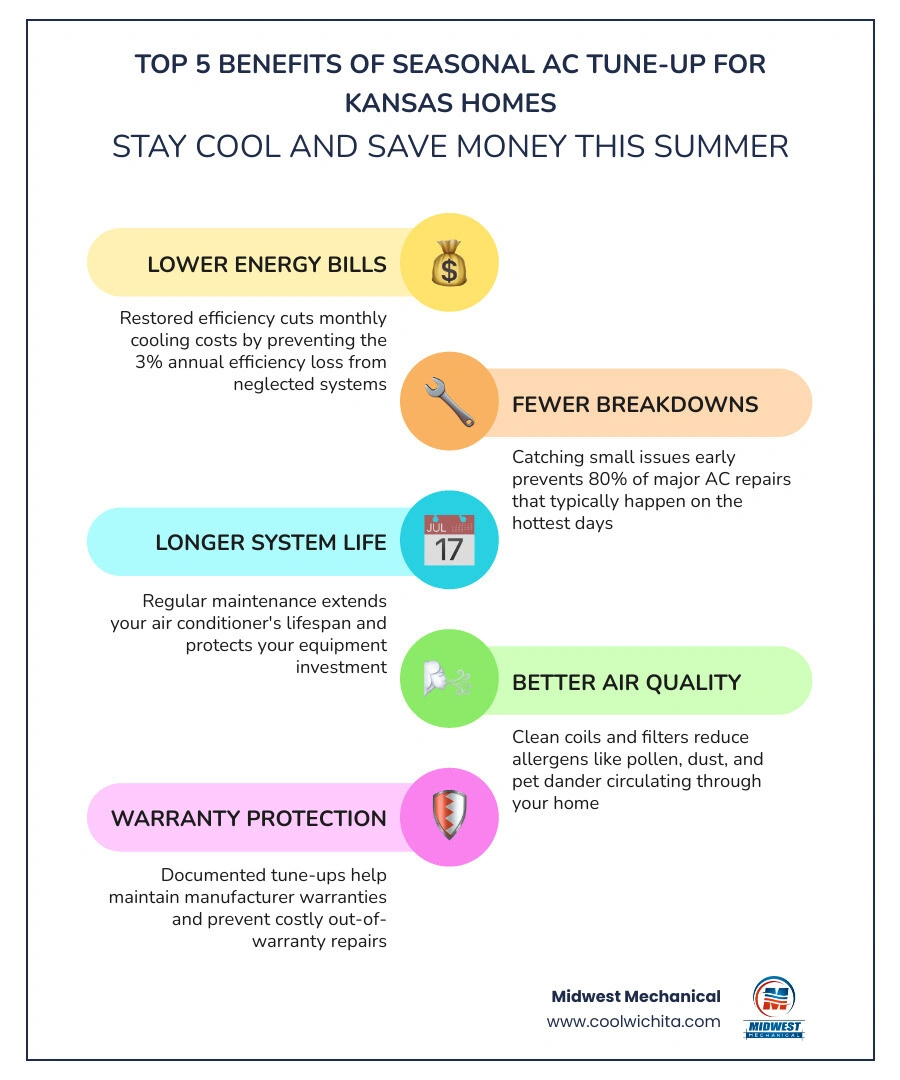
Why an AC Tune-Up Guide for Wichita Area Homeowners is Essential
An AC tune-up is a scheduled preventive service that checks, cleans, tests, and fine-tunes your cooling system before heavy summer use. It is not the same thing as a repair. A repair fixes a problem after something breaks. A tune-up helps us catch wear and small issues before they turn into a sweaty living-room emergency.
For Wichita homeowners, this matters even more because our cooling season is demanding. Heat, humidity, windblown dust, pollen, and spring debris all make your air conditioner work harder. Over time, neglected systems lose efficiency. Research consistently shows that AC equipment can lose up to 3% of efficiency each year it goes without service, and heating and cooling account for roughly half of a home's total energy use. That means small maintenance problems can become noticeable on your utility bill pretty quickly.
Routine maintenance also helps protect system lifespan. A well-maintained AC commonly lasts 10 to 15 years, and in some cases longer, while neglected equipment tends to wear out sooner. If you want a deeper look at why seasonal care matters, these resources on the importance of regular AC maintenance and understanding AC maintenance are helpful companions to this guide.
Navigating the Wichita Climate and Its Impact on Your Cooling System
Wichita-area homes face a specific mix of stressors:
- Hot summer days in the 90s that drive long AC run times
- Humidity that forces the system to remove heat and moisture
- Prairie dust and agricultural pollen that clog filters and coat coils
- Cottonwood seeds in spring that can blanket outdoor condensers
- Thunderstorms that bring debris and occasional power fluctuations
That combination affects performance in a few important ways.
First, dirty coils and clogged filters reduce airflow and heat transfer. Your AC then has to run longer to do the same job. Second, humidity adds extra strain because the system is not only cooling air, but also pulling moisture out of it. Third, storms can leave behind grass clippings, leaves, and dirt around the outdoor unit, which can choke airflow if nobody checks it.
This is one reason Wichita homeowners often notice issues like weak airflow, uneven cooling, short cycling, or rising energy bills as summer starts. If you want more tips for reducing summer strain, see Reduce AC Strain and Stay Cool.
The Best Time to Use This AC Tune-Up Guide for Wichita Area Homeowners
The best time to act is early spring, usually March or April. In Wichita, the first 80-degree day can arrive surprisingly early, often in early April. If you wait until the first truly hot week to test your AC, you may discover a problem at the exact moment everyone else does too. That is bad timing, and your thermostat will not feel sorry for you.
We recommend this simple spring test before scheduling service:
- Set your thermostat several degrees below the current room temperature.
- Switch the system to cool mode.
- Listen for the outdoor unit to start.
- Wait a few minutes and check whether cool air is coming from the vents.
If anything seems off, schedule service before the summer rush. Even if the system starts, a professional inspection is still smart because many problems are not obvious until a technician checks refrigerant pressures, electrical components, airflow, and coil condition. For local service options, visit AC Service Wichita KS.
What a Professional AC Tune-Up Includes
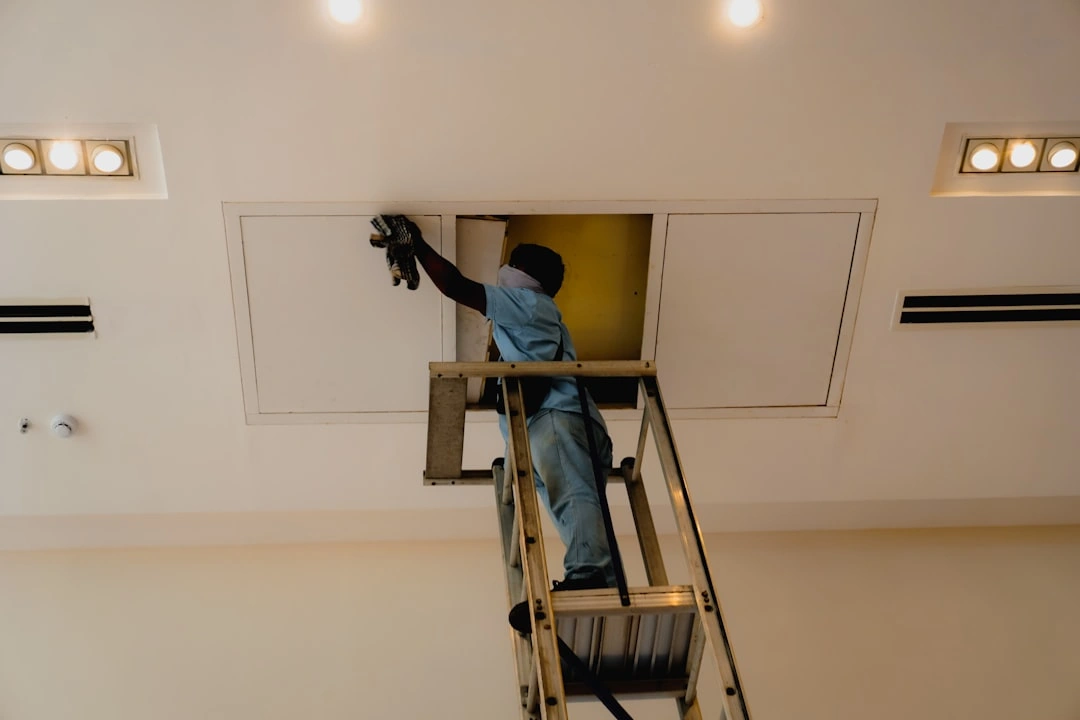
A professional tune-up is much more than a quick glance at your thermostat. A thorough visit typically includes inspection, cleaning, testing, adjustment, and performance verification.
Common tasks include:
- Checking refrigerant levels and looking for signs of leaks
- Inspecting and tightening electrical connections
- Testing capacitors and checking contactor wear
- Cleaning condenser and evaporator coils
- Inspecting the blower assembly and airflow
- Checking or replacing the air filter
- Inspecting the condensate drain and drain pan
- Testing thermostat operation and calibration
- Measuring system performance, including temperature split and amperage
These steps matter because many of the most common Wichita tune-up findings are not obvious to homeowners. Technicians often discover slow refrigerant leaks, dirty coils, clogged drains, worn capacitors, loose electrical connections, and thermostat problems during routine maintenance. Catching those issues early can help prevent major failures later.
For more on the professional side of maintenance, see Professional AC Maintenance Wichita, AC Maintenance Wichita KS, Prevent Major Breakdowns with AC Service, and Timely AC Repairs for Energy Efficiency.
Key Components of a Comprehensive AC Tune-Up Guide for Wichita Area Homeowners
Here are some of the most important tune-up items and why they matter:
Thermostat calibration
If the thermostat is reading the wrong temperature or cycling the system improperly, comfort and efficiency both suffer. A miscalibrated thermostat can make your home feel warmer than the setting suggests or cause the system to short cycle.
Condensate drain flush
Your AC removes humidity, and that moisture has to drain somewhere. In Wichita's humid weather, condensate drains can clog with algae, sludge, or debris. When that happens, you may see water around the indoor unit or face a system shutdown from a safety switch.
Blower motor inspection and lubrication
The blower is responsible for moving cooled air through the home. If it is dirty, worn, or struggling, airflow drops and the system works harder than it should.
Fan belt and moving-part checks
On systems that use belts or moving mechanical parts, wear can lead to noise, slippage, or breakdowns. Finding wear early is much better than hearing a sudden squeal on a 98-degree afternoon.
Coil cleaning
Dirty coils act like your AC is trying to breathe through a winter scarf in July. Clean evaporator and condenser coils improve heat transfer, system capacity, and energy efficiency.
Electrical component testing
Capacitors and contactors are common failure points in air conditioning systems, especially after heavy summer use and storm activity. Testing them during a tune-up helps us spot weak components before they fail.
A stronger preventive strategy leads to better AC performance with preventive maintenance.
DIY Maintenance Tasks for Kansas Homeowners
Homeowners absolutely can do some helpful maintenance between professional visits. In fact, a few simple habits make a real difference.
Safe DIY tasks include:
- Replacing or cleaning the air filter regularly
- Clearing leaves, weeds, and debris from around the outdoor condenser
- Keeping at least 2 feet of open space around the unit
- Gently rinsing outdoor coil fins with a garden hose using light pressure
- Checking that supply and return vents are open and not blocked
- Watching for visible drain issues or excess moisture near the indoor unit
- Using sensible thermostat settings instead of dramatic temperature swings
If your system sits in harsh afternoon sun, light shading around the unit can help, as long as airflow stays open and unrestricted. Good airflow always wins. For related reading, see Proper AC Installation for Energy Savings.
There are also tasks homeowners should not do, including refrigerant handling, capacitor replacement, deep electrical diagnostics, or dismantling sealed components. Those tasks require professional equipment and specialized expertise.
Recognizing Signs Your System Needs Professional Attention
A tune-up should happen routinely, but some signs mean you should call sooner:
- Weak airflow from vents
- Warm air instead of cool air
- Strange noises like rattling, grinding, buzzing, or hissing
- Frequent cycling on and off
- Musty or burning odors
- Water leaks near the indoor unit
- Unusually high electric bills
- Rooms cooling unevenly
- Thermostat settings not matching actual comfort
These symptoms often point to common Wichita-area issues such as clogged filters, dirty coils, low refrigerant, blower problems, electrical wear, or a blocked condensate drain. If your system is showing any of these warning signs, it needs more than wishful thinking and a lower thermostat setting.
Monthly DIY Maintenance Steps
- Check air filters every 30 days
- Clear leaves and grass clippings from the outdoor unit
- Ensure indoor supply vents are unobstructed by furniture
- Inspect the condensate drain line for visible blockages
A quick note on filters: replacing a clogged filter can reduce system energy use by up to 15%. In dusty or high-pollen conditions, monthly checks are especially important. If you have pets, allergies, or a home near open fields or windy roads, your filter may load up faster than you expect.
Frequently Asked Questions about Wichita AC Maintenance
Regular service always raises a few common questions, especially for homeowners deciding between one-time maintenance and an ongoing plan. These resources on the benefits of HVAC maintenance plans and preventing HVAC wear with maintenance offer useful background.
How often should I change my air filter during a Kansas summer?
For most Wichita-area homes, we recommend checking the filter every 30 days during cooling season. Many homeowners end up replacing it monthly in summer, especially if they have:
- Pets
- Allergies
- High indoor dust
- Construction nearby
- Open windows during pollen season
- Rural or windy surroundings
A dirty filter restricts airflow, increases strain on the blower, and can even contribute to frozen evaporator coils. It is one of the simplest maintenance tasks, but also one of the most important.
Will a tune-up help lower my monthly energy bills?
Yes, in many cases it can. Proper maintenance improves airflow, coil performance, electrical efficiency, and refrigerant operation. That means your AC does not have to run as long to maintain comfort.
Research shows that heating and cooling account for about half of home energy use, so even moderate efficiency improvements can matter. Dirty filters alone can increase energy consumption, while routine maintenance can cut AC energy use by 15% or more in some situations. Just as important, neglected systems can lose 1% to 3% of efficiency per year without service.
Is a maintenance plan better than a one-time service?
For many homeowners, yes. A one-time tune-up is still far better than skipping maintenance entirely, but a maintenance plan offers consistency. Plans often help by providing:
- Scheduled seasonal visits
- Better upkeep records
- Priority scheduling during busy weather
- Fewer missed tune-ups
- Long-term wear reduction
- Better planning for future repairs or replacement
This can be especially valuable in Wichita, where the first hot stretch of the year tends to fill schedules quickly. If you are busy, it is easy to say, "I'll book it next week," and then suddenly it is July and the AC sounds like it is negotiating with gravity.
A maintenance plan helps take the calendar memory part off your plate.
Conclusion
A solid AC tune-up plan is one of the smartest ways to protect comfort in Wichita, Andover, Derby, Park City, Maize, Bel Aire, Valley Center, Peck, and nearby communities we serve. The core idea is simple: test early, maintain regularly, and do not ignore small warning signs.
For Wichita homeowners, that means:
- Scheduling service in March or April when possible
- Replacing filters regularly through cooling season
- Keeping the outdoor unit clear of debris and overgrowth
- Watching for airflow, drainage, and thermostat problems
- Having a professional inspect and fine-tune the system before summer workload peaks
Routine maintenance helps lower the chance of breakdowns, supports better efficiency, improves indoor comfort, and can extend equipment life. If you want to keep reading, our team recommends this AC Tune-Up Wichita KS Complete Guide.
When you are ready for professional service, Midwest Mechanical is here to help with reliable home comfort solutions, transparent communication, and maintenance options built for long-term performance. You can learn more or schedule service here: AC Tune-Up Wichita KS.
Customer Testimonials
Hear from satisfied customers who trust us for reliable HVAC and plumbing service across Wichita.





Plus, the technician, Lee was very professional, knowledgeable and informative.
We will definitely be doing business with them sometime again in the past.
I'm prompt to my appointment. Thank you Midwest Mechanical.
I'm prompt to my appointment. Thank you Midwest Mechanical.

We have partnered with GoodLeap to offer flexible payment options for your project. GoodLeap uses a soft credit check until funding and the highest score from all 3 bureaus to see if you qualify. It also takes just a few minutes to get started.




Service Areas
.svg)