


The Shock of a Sudden Cold Blast During Morning Showers
You step into the shower, the water is perfectly warm for the first thirty seconds, and then—without warning—an icy blast hits you right in the middle of your routine. Diagnosing the cold water sandwich in your tankless heater is a common priority for homeowners who experience this jarring phenomenon. At Midwest Mechanical, our team fields plenty of concerned calls about this exact issue, especially during August back-to-school morning rushes when household schedules are tight. That sudden drop in temperature often triggers immediate panic. You might wonder if your high-efficiency unit is already failing, if the burners are malfunctioning, or if you made a mistake upgrading your system in the first place.
The short answer is that your unit is likely functioning exactly as designed. To fully resolve the issue, you need to combine a clear understanding of your system's mechanics with water heater services and professional plumbing solutions. Modern on-demand heating systems operate using precise flow sensors and mechanical sequences. When you understand how these components interact with your daily water usage habits, you can stop worrying about a catastrophic failure and start looking at professional upgrades that eliminate the cold blast entirely.
What Exactly Is the 'Cold Water Sandwich'?
The term "cold water sandwich" perfectly describes the physical state of the water inside your plumbing lines during specific types of usage. Unlike traditional tank heaters that keep forty or fifty gallons of water hot at all times, a tankless system heats water strictly on demand. When you experience this phenomenon, you are literally feeling three distinct layers of water passing through your showerhead or faucet.
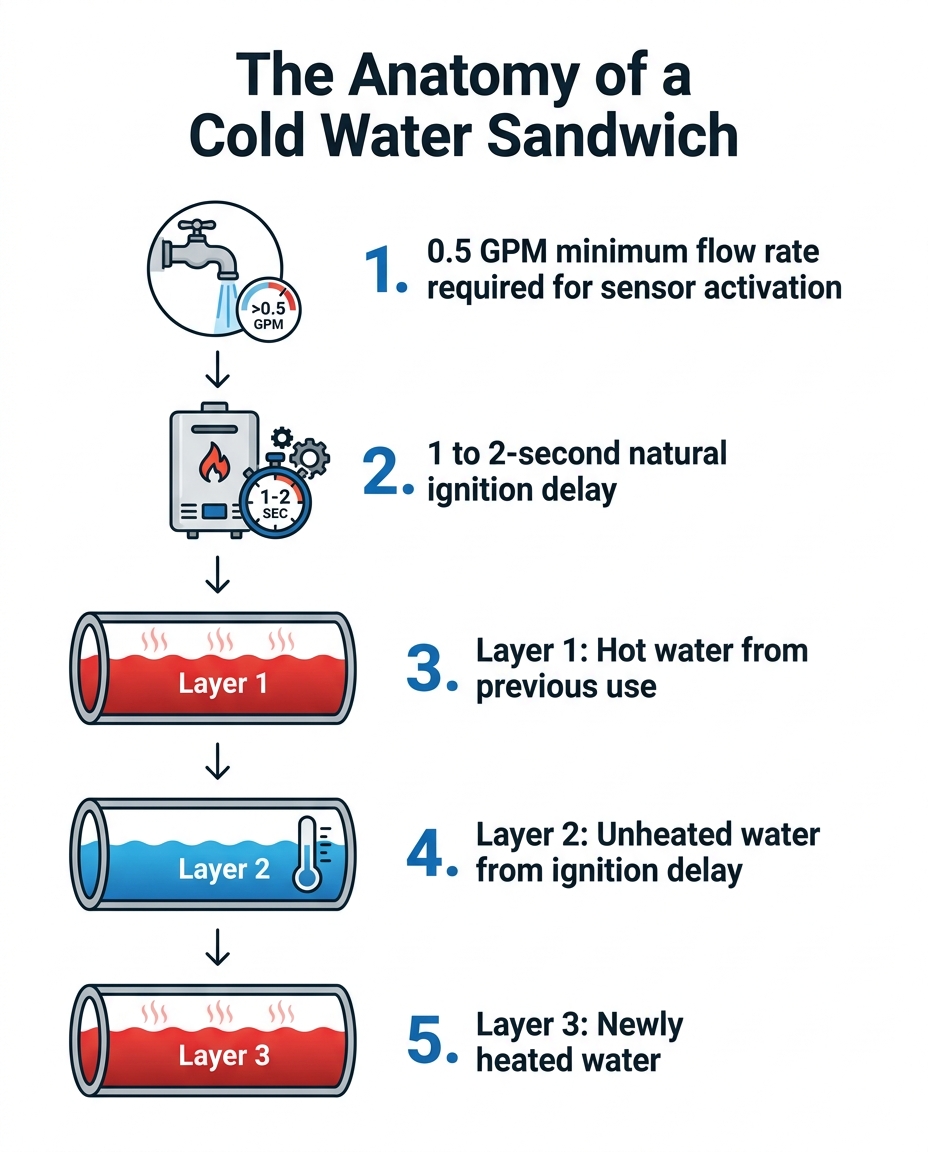
The three layers of the sandwich:
• The top bun (Hot): The heated water remaining in the pipes from the last time you ran the tap.
• The meat (Cold): A pocket of unheated water that passed through the unit during a brief shutoff period.
• The bottom bun (Hot): The newly heated water generated after the unit successfully reignited.
This sequence happens almost exclusively during intermittent use. If you turn the shower off to lather up and turn it back on a minute later, the system goes through a rapid shutdown and startup cycle. The unheated water trapped between the two heating cycles is the "sandwich" that eventually reaches your fixture.
The Pipe-Clearing Phase
When our technicians visit Wichita area homes to investigate these temperature drops, we always start by explaining the pipe-clearing phase. When you shut off the hot water tap, the water currently sitting in the pipes between the heater and your shower begins to cool rapidly. Because there is no active flow, the tankless unit shuts down its burners to save energy.
When you open the tap again, the water that was sitting in the pipe is pushed out first. Immediately behind it is a small volume of water that passed through the heat exchanger before the burners could reach full temperature. Finally, the freshly heated water pushes through. This creates a distinct, unavoidable wave of cold water that clears the pipes before the steady stream of hot water resumes.
• Residual Water — System Status: Burners off, water static in pipes — What You Feel at the Tap: Warm water (briefly)
• Ignition Delay Water — System Status: Flow sensor active, burners igniting — What You Feel at the Tap: Sudden cold blast
• Continuous Flow — System Status: Burners firing, heat exchanger hot — What You Feel at the Tap: Consistent hot water
The Mechanics Behind Flow Sensors and Ignition Delay
Tankless water heaters rely on a highly choreographed sequence of mechanical and electrical events to provide endless hot water safely. The cold water sandwich is a direct byproduct of this necessary sequence. Your unit does not keep a pilot light burning constantly; it must detect movement, verify safety protocols, and ignite the main burner every single time you open a hot water tap.
The step-by-step ignition sequence:
1. Flow Detection: When you open a tap, water begins moving through the unit. The internal flow sensor must detect a minimum flow rate—typically around 0.5 gallons per minute (GPM)—before it signals the control board to wake up.
2. Safety Checks: The computer verifies that the exhaust fan is running, clearing any residual gases from the combustion chamber.
3. Gas Valve Opening: The system opens the gas valve to allow fuel into the burner assembly.
4. Ignition and Heating: The electronic igniter sparks, lighting the burner. The heat exchanger then absorbs this energy and transfers it to the water passing through the coils.
This entire mechanical process takes about one to two seconds. During that brief 1-to-2 second window, water is still physically flowing through the unit and into your home's plumbing. Because the heat exchanger has not yet reached its target temperature, that specific volume of water enters your pipes completely unheated. This natural, built-in safety delay is the root cause of the cold water sandwich in Wichita area homes.

Why Busy Household Schedules Expose This Flaw
If the cold water sandwich is a normal mechanical feature, why does it seem to appear out of nowhere, or only happen on certain days? The answer lies in how your household uses water. A tankless system performs flawlessly during long, continuous draws—like filling a large bathtub or running a single, uninterrupted thirty-minute shower. The flaw is exposed exclusively through intermittent activation.
The impact of back-to-back routines:
Consider the reality of August back-to-school morning rushes. Our team at Midwest Mechanical sees this exact scenario play out constantly across Wichita: multiple family members are getting ready simultaneously. One person takes a shower, turns off the water, and steps out. Two minutes later, the next person steps in and turns the shower on. In another bathroom, someone is turning the sink on and off repeatedly while brushing their teeth or shaving.
These short gaps between usage are the perfect recipe for the cold water sandwich. The pipes do not have enough time to cool down completely, so the initial burst of water feels warm. However, the gap is long enough to force the tankless unit to shut down and go through its 1-to-2 second ignition sequence all over again. If your family's schedule compresses all of your daily water usage into a chaotic sixty-minute window, you are forcing the unit to cycle on and off constantly, generating multiple pockets of unheated water in the plumbing lines.
How Changing Seasons Affect Incoming Water Temperatures
Environmental factors play a massive role in how severely you feel the cold water sandwich. Many homeowners mistakenly believe their unit is degrading or breaking down as the year progresses, simply because the cold blast feels much more intense in November than it did in July. This shift has nothing to do with the heater's mechanical health and everything to do with municipal groundwater.
Understanding groundwater temperature fluctuations:
The water entering your home from the city main is not a static temperature. With summer temperatures heating the ground, the incoming water might sit at a relatively mild baseline. But as late summer transitions into fall, we notice Wichita's groundwater temperatures dropping significantly.
Your tankless unit operates on a concept called "temperature rise" or Delta-T. It takes the incoming water and heats it to your set point (usually around 120 degrees). During the 1-to-2 second ignition delay, the unheated water passing through the unit is exactly the temperature of the groundwater. In the summer, a pocket of 70-degree water hitting you in a 120-degree shower is noticeable but manageable. In the late fall or winter, a pocket of 45-degree water hitting you in that same shower is a jarring, physical shock. The mechanical delay hasn't changed; the environment has, making the effect feel increasingly severe to Wichita area homes.
Professional Solutions: Eliminating the Cold Blast
While understanding the mechanics provides peace of mind that your unit isn't broken, you still don't have to live with a freezing blast of water every morning. The plumbing industry has developed specific, highly effective technologies to counteract the ignition delay. Because these solutions involve altering water pressure, flow rates, and electrical integration, they require professional installation to ensure your system operates safely and efficiently.
Advanced solutions for consistent comfort:
• Dedicated Recirculation Lines: A professional plumber can install a dedicated return line that creates a continuous loop from the furthest fixture back to the heater. A small pump keeps hot water slowly moving through this loop, meaning hot water is always waiting right behind the faucet.
• Crossover Valves (Comfort Valves): If your home cannot easily accommodate a dedicated return line, a crossover valve can be installed under the furthest sink. This uses the existing cold water line to push cooling hot water back to the heater, keeping the main line primed.
• Mini Buffer Tanks: A small, heavily insulated electric point-of-use tank (usually holding 2 to 4 gallons) can be installed in line with the tankless unit. The tankless heater feeds the small tank, and the small tank feeds the house. The buffer tank easily absorbs the 1-to-2 second pocket of cold water, completely neutralizing the sandwich effect.
Proper sizing and integration of these components are critical. As a trusted local NATE-certified company serving Wichita since 2004, our team at Midwest Mechanical knows exactly how to properly size and integrate advanced solutions without voiding manufacturer warranties. We've seen firsthand how an incorrectly installed recirculation pump can force a tankless unit to run constantly, burning out the heat exchanger and drastically reducing the lifespan of the equipment. Partnering with experts for routine plumbing and heating maintenance ensures any upgrades enhance your system rather than damage it.
The Role of System Upkeep in Preventing Delays
While the standard cold water sandwich is a design quirk, excessive or worsening delays are often a symptom of neglected maintenance. If your 1-to-2 second delay has slowly turned into a 5-to-10 second delay, your unit is struggling to read the water flow and transfer heat effectively. The primary culprit our plumbers encounter during maintenance calls in Wichita area homes is mineral scale buildup.
How scale affects sensor response times:
When hard water is heated rapidly, the dissolved minerals (primarily calcium and magnesium) precipitate out of the water and stick to the hottest surfaces inside the unit. Over time, this creates a chalky, insulating barrier on the heat exchanger coils and the delicate flow sensors.
If the flow sensor is coated in scale, it takes longer for the internal paddle or turbine to register that water is moving. This delays the entire ignition sequence. Furthermore, if the heat exchanger is insulated by mineral deposits, it takes significantly longer for the newly ignited burners to transfer heat through the scale and into the water. This stretches the "meat" of the cold water sandwich from a brief moment into a long, uncomfortable wait. Routine professional descaling and flushing keep the sensors highly responsive and the heat transfer immediate. Keeping up with this maintenance, especially before the heavy usage of August back-to-school morning rushes, ensures the natural delay doesn't turn into a genuine mechanical failure. For more details on maintaining system health, learning about properly flushing a tankless water heater is a great next step.
Frequently Asked Questions About Tankless Heater Quirks
What causes a cold water sandwich in a tankless heater?
A cold water sandwich is caused by the natural 1-to-2 second ignition delay in a tankless water heater. When you turn on a tap, the unit must detect the water flow, run safety checks, and ignite the burners before it can heat the water. During this brief delay, a small amount of unheated water passes through the unit and enters your pipes, creating a pocket of cold water between the residual hot water and the newly heated water.
Is my tankless water heater broken if I get a burst of cold water?
No, experiencing a brief burst of cold water during intermittent use does not mean your tankless water heater is broken. This is a normal mechanical phase of on-demand heating systems. The unit is simply shutting down when the water is turned off to save energy, and going through its mandatory safety ignition sequence when the water is turned back on.
How does a recirculation pump fix cold water bursts?
A recirculation pump fixes cold water bursts by maintaining a continuous, slow loop of heated water through your home's main plumbing lines. Because the water is constantly moving and staying warm, the tankless unit does not have to start from a complete shutdown when you open a tap. This eliminates the ignition delay pocket and ensures hot water is instantly available at the fixture.
Do all tankless water heaters have a cold water sandwich?
Most standard tankless water heaters will produce a cold water sandwich during intermittent use due to the physics of on-demand heating. However, many newer, premium models come with built-in recirculation pumps or internal mini buffer tanks specifically designed to eliminate this issue. If you are installing a new unit in Wichita area homes, asking about models with built-in "cold water sandwich prevention" features is highly recommended.
Can scale buildup make the cold water sandwich worse?
Yes, excessive mineral scale buildup can significantly worsen the cold water sandwich effect. When calcium and magnesium coat the internal flow sensors, the unit takes longer to detect water movement, delaying the ignition sequence. Additionally, scale insulates the heat exchanger, meaning it takes longer for the burners to actually heat the water once they do ignite, prolonging the blast of cold water.
Restore Comfort to Your Morning Routine
Diagnosing the cold water sandwich in your tankless heater ultimately reveals that while the phenomenon is mechanically normal, you absolutely do not have to live with it. The frustration of stepping into an icy blast during August back-to-school morning rushes can be permanently resolved with the right professional upgrades. Whether the solution involves integrating a dedicated recirculation pump, installing a crossover valve, or adding a mini buffer tank, these enhancements require precise sizing and expert installation. Reach out to a qualified local professional to evaluate your specific plumbing setup. With the right adjustments, you can restore total comfort to your daily routine and enjoy the endless, consistent hot water your system was designed to provide.
Customer Testimonials
Hear from satisfied customers who trust us for reliable HVAC and plumbing service across Wichita.





Plus, the technician, Lee was very professional, knowledgeable and informative.
We will definitely be doing business with them sometime again in the past.
I'm prompt to my appointment. Thank you Midwest Mechanical.
I'm prompt to my appointment. Thank you Midwest Mechanical.

We have partnered with GoodLeap to offer flexible payment options for your project. GoodLeap uses a soft credit check until funding and the highest score from all 3 bureaus to see if you qualify. It also takes just a few minutes to get started.




Service Areas
.svg)