


Why Your Water Heater's Anode Rod Matters in Derby, KS

Water heaters anode rod replacement in derby ks is a critical maintenance task that can double the life of your water heater and prevent costly emergency repairs. Most homeowners don't know this small metal rod exists until it's too late and their tank starts leaking.
Quick Answer: How to Replace Your Water Heater Anode Rod
- Turn off power/gas and shut off the cold water supply
- Drain several gallons from the tank and relieve pressure
- Locate and remove the old anode rod using a socket wrench (typically 1-1/16 inch)
- Inspect the rod - replace if more than 75% corroded or core wire is exposed
- Install new rod with Teflon tape on threads, tighten securely
- Refill tank and check for leaks before restoring power
Typical replacement frequency: Every 3-5 years (inspect every 1-3 years)
Your water heater tank is a steel vessel sitting full of water. Without protection, it would rust through in just a few years. That's where the anode rod comes in. This sacrificial metal rod attracts corrosive elements in your water, slowly dissolving itself so your tank doesn't have to. Derby's hard water, rich in calcium and magnesium, makes this protection even more essential. Once the anode rod is completely corroded, your tank becomes the next target for rust.
For comprehensive guidance on maintaining your home's hot water system, check out our water heater maintenance guide, or if you'd prefer professional help, schedule your water heater service in Derby, KS.
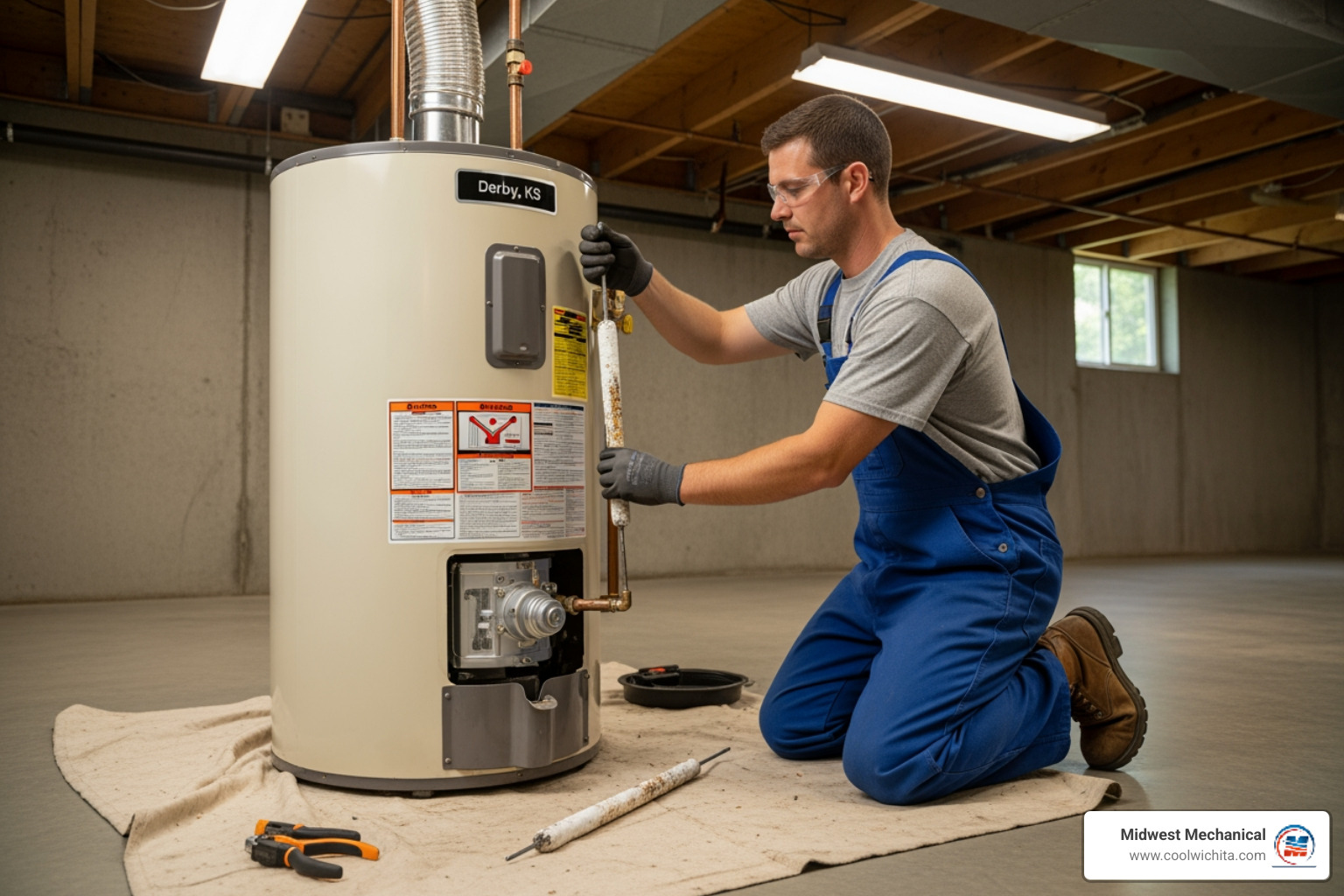
Understanding the Anode Rod: Your Water Heater's First Line of Defense
Inside every tank-style water heater is a steel tank lined with glass. While this sounds robust, the steel is still vulnerable to corrosion from constant water exposure. This is where the anode rod, your water heater's unsung hero, comes in. The anode rod is a long metal rod, typically made of magnesium or aluminum, that hangs inside the tank. Its crucial job is to sacrifice itself through a process called galvanic corrosion.
Essentially, the anode rod is made of a more reactive metal than the steel tank. Corrosive elements in the water are drawn to the anode rod, causing it to dissolve slowly over time instead of the tank. Think of it as a bodyguard for your water heater, giving its life to protect the tank's lining. This sacrificial action can double your water heater's lifespan, preventing premature leaks and failure. Without a functional anode rod, the tank itself begins to rust away.
Why Anode Rods are Crucial in Derby
For homeowners in Derby, KS, this protection is especially vital due to the local water quality. Derby's water is hard, meaning it has high levels of minerals like calcium and magnesium. While harmless to drink, these minerals create a more aggressive environment inside your water heater, accelerating the corrosion process. This makes the anode rod work harder and wear out much faster than it would in areas with softer water.
Once the anode rod is depleted, the hard water minerals begin to attack the steel tank, leading to rust, leaks, and the eventual need for a full water heater replacement. Understanding this local challenge is key to protecting your investment. Routine inspection of your anode rod isn't just a general tip; it's a critical practice for Derby homeowners to ensure their water heater provides reliable hot water for years.
Signs It's Time for an Anode Rod Replacement
Your water heater often gives clues when its anode rod needs attention. Ignoring these signs can lead to serious damage and costly repairs. Here are the key indicators that your anode rod might be failing:
- Foul-Smelling Hot Water / Rotten Egg Odor: A distinct sulfur or "rotten egg" smell from your hot water is a common sign. This is often caused by a reaction between a depleted anode rod and sulfate bacteria in the water, producing hydrogen sulfide gas.
- Rusty or Discolored Water: If your hot water has a reddish-brown tint, it's a red flag. This usually means the anode rod is gone and the steel tank itself has begun to rust.
- Popping or Rumbling Noises: These sounds are often caused by sediment buildup, but a failing anode rod can worsen the problem. As the tank corrodes, sediment issues and tank degradation can accelerate, leading to these noises.
- Water Heater Age: Anode rods need replacement much sooner than the water heater itself. If your unit is 5-6 years old, it's time for an inspection, especially with Derby's hard water.
- Reduced Hot Water or Inconsistent Temperatures: A heavily corroded tank due to a failing anode rod can operate less efficiently, leading to poor heating performance.
If you notice any of these signs, it's crucial to act quickly. For more details, see our guide on signs your water heater needs attention. Early detection can save you from a complete water heater failure.
A Step-by-Step Guide to Water Heater Anode Rod Replacement in Derby KS
Taking on a water heaters anode rod replacement in derby ks can be a rewarding DIY project, but it requires caution. If you're ever unsure, we recommend professional assistance.
Preparing for the Replacement
Safety is paramount. Before starting, take these precautions:
- Safety First: Wear gloves and safety goggles.
- Turn Off Power/Gas: For electric heaters, switch off the corresponding circuit breaker. For gas heaters, turn the gas control valve to "Off" or "Pilot" and shut off the main gas supply to the unit.
- Shut Off Water: Turn the cold water inlet valve at the top of the tank clockwise to close it.
- Relieve Pressure: Open a hot water faucet in your home to relieve system pressure. Then, carefully lift the lever on the temperature and pressure (T&P) relief valve on the heater.
- Drain Water: Attach a garden hose to the drain valve at the bottom of the tank. Drain several gallons to lower the water level below the anode rod's location.
- Gather Tools: You will need a 1-1/16 inch socket (a deep well socket is best), a long breaker bar or impact wrench, Teflon tape (pipe thread sealant), and a bucket.
Removing the Old Anode Rod and Inspecting for Wear
- Locate the Anode Rod: The rod is usually under a large hex head (often 1-1/16 inch) on top of the tank, sometimes hidden by a plastic cap. On some models, it's integrated with the hot water outlet.
- Loosen the Rod: This is often the hardest step. Use your socket and a long breaker bar for leverage. An impact wrench is extremely helpful for stubborn, seized rods. Have someone hold the tank steady if it moves.
- Remove the Rod: Once loose, unscrew and pull the old rod out. They can be over 40 inches long. If you have low overhead clearance, you may need to cut the old rod in sections to remove it and will need a flexible rod for replacement.
- Inspect for Corrosion: A healthy rod is thick and uniform. A worn-out rod will be thin, pitted, and look like a wire. If more than 75% of the rod is gone or several inches of the core wire are exposed, it needs replacement.
Choosing and Installing the Right Anode Rod for Derby's Water
Selecting the right replacement is key for Derby's water conditions.
- Types of Anode Rods:
- Magnesium: Best for soft water but can cause a "rotten egg" smell with some water chemistry.
- Aluminum: A good all-around choice that lasts longer than magnesium, especially in hard water areas like Derby.
- Aluminum/Zinc Alloy: Recommended if you've experienced foul-smelling water, as the zinc helps combat odor-causing bacteria.
- Electrical: A non-sacrificial, long-lasting but more expensive option.
- Flexible Anode Rods: If you have low clearance above your water heater (less than 44 inches), a flexible or segmented rod is necessary for installation.
- Apply Teflon Tape: Wrap the threads of the new rod with 5-6 layers of Teflon tape to ensure a watertight seal.
- Install the New Rod: Carefully insert the new rod, hand-tightening it first to avoid cross-threading. Then, use your socket wrench to tighten it securely, but do not over-tighten.
Final Steps and Checks for your water heaters anode rod replacement in derby ks
Completing the job correctly ensures safety and proper function.
- Restore Water Supply: Close the tank's drain valve and the T&P relief valve. Slowly open the cold water supply valve.
- Purge Air from System: Keep a hot water faucet open elsewhere in the house until water flows in a steady stream. This purges air from the tank and is critical for electric heaters to prevent burning out the heating elements.
- Check for Leaks: Inspect the area around the new anode rod for any drips as the tank fills. Tighten if necessary.
- Restore Power or Gas: Once the tank is full and leak-free, restore power at the circuit breaker (for electric models) or turn the gas supply back on and relight the pilot if needed (for gas models).
- Final Inspection: Allow the heater time to heat the water, then do a final check for leaks and ensure you have normal hot water flow.
DIY vs. Professional Anode Rod Replacement
Deciding whether to perform a water heaters anode rod replacement in derby ks yourself or call a professional is a common question. While it can be a DIY project for those with the right tools and skills, there are important considerations.
DIY Considerations:
- Tools and Skills: The job requires specific tools like a 1-1/16" socket, a breaker bar or impact wrench, and comfort working with plumbing and gas or electrical systems.
- Potential Challenges: The biggest hurdle is often a seized anode rod that won't budge. Limited overhead clearance can also complicate the process, requiring a flexible replacement rod.
- Risks: Improper installation can lead to leaks and water damage. Forcing a misaligned rod can also damage the tank's threads.
When to Call a Professional:
Professional help is the smarter choice in many situations:
- Lack of Confidence: If you're unsure about any step, it's safest to call a pro.
- Stuck Anode Rod: Plumbers have specialized tools to remove even the most stubborn rods.
- Gas Water Heaters: For safety, it's best to have a professional handle work involving gas lines.
- Other Heater Issues: If your heater is already leaking or making noise, a pro can diagnose the overall health of the unit, as other problems may exist.
- Time: A professional can complete the job efficiently, saving you time and potential frustration.
At Midwest Mechanical, our experienced technicians perform water heaters anode rod replacement in derby ks safely and efficiently. We can inspect your entire system to ensure it's in optimal condition. For more insights, see our post on why you should hire a professional plumber. We're here to take the stress out of water heater maintenance.
Frequently Asked Questions about Anode Rods
Homeowners in Derby, KS, often ask us about anode rods. Here are answers to the most common questions.
How often should I inspect and replace my water heater's anode rod in Derby, KS?
We recommend inspecting the anode rod every 1-3 years. Due to Derby's hard water, which accelerates corrosion, you may need to replace it every 3-5 years. In areas with softer water, they can last longer. A visual inspection is the only way to know for sure. If the rod is more than 75% corroded or the core wire is exposed, it's time for a replacement.
What happens if I don't replace a worn-out anode rod?
Ignoring a worn-out anode rod allows corrosive elements in the water to attack the steel tank directly. This leads to several serious consequences:
- Premature Tank Failure: Your water heater's lifespan could be cut in half.
- Water Leaks: Corrosion will eventually cause leaks, leading to costly water damage.
- Rusty Water: You'll notice discolored hot water as the tank deteriorates.
- Emergency Replacement: A failed tank requires an urgent and expensive water heater replacement, which is far more inconvenient than proactive maintenance.
Does flushing my water heater help the anode rod?
Yes, flushing is a crucial complementary task. While the anode rod fights corrosion, flushing removes sediment buildup. In Derby, hard water minerals settle at the bottom of the tank, reducing efficiency and accelerating corrosion. By flushing your tank annually, you create a cleaner environment, allowing the anode rod to work more effectively and extending the life of your entire unit. Learn more about sediment buildup in Derby water heaters.
Protect Your Investment with Proper Maintenance
We've explored the unsung hero of your hot water system, the anode rod, and why its proper maintenance is so crucial, especially for homeowners in Derby, KS. This sacrificial component is your water heater's first and best defense against the relentless forces of corrosion, working tirelessly to extend the life of your valuable appliance. From understanding its function in combating galvanic corrosion to recognizing the signs of its depletion, and finally, to the step-by-step process of replacement, we hope you feel more empowered to protect your home's comfort.
Replacing the anode rod before it fails can significantly extend the life of your water heater, sometimes even doubling it. This proactive approach saves you from the headache and expense of emergency repairs, potential water damage, and premature water heater replacement. It's a small investment in time and effort that yields significant long-term benefits.
For expert assistance with your water heater maintenance and replacement needs in Derby, trust our experienced technicians at Midwest Mechanical to get the job done right. We're dedicated to ensuring your total home comfort with traditional service, state-of-the-art systems, and transparent pricing. Don't let rust win the battle against your water heater – let us help you keep it running efficiently for years to come.
Schedule your professional water heater service in Derby, KS today!
Customer Testimonials
Hear from satisfied customers who trust us for reliable HVAC and plumbing service across Wichita.





Plus, the technician, Lee was very professional, knowledgeable and informative.
We will definitely be doing business with them sometime again in the past.
I'm prompt to my appointment. Thank you Midwest Mechanical.
I'm prompt to my appointment. Thank you Midwest Mechanical.

We have partnered with GoodLeap to offer flexible payment options for your project. GoodLeap uses a soft credit check until funding and the highest score from all 3 bureaus to see if you qualify. It also takes just a few minutes to get started.




Service Areas
.svg)