
How Long Does a Tankless Water Heater Last — and Is It Worth It in Wichita?
How long does a tankless water heater last is one of the most important questions you can ask before making this home investment. Here's the short answer:
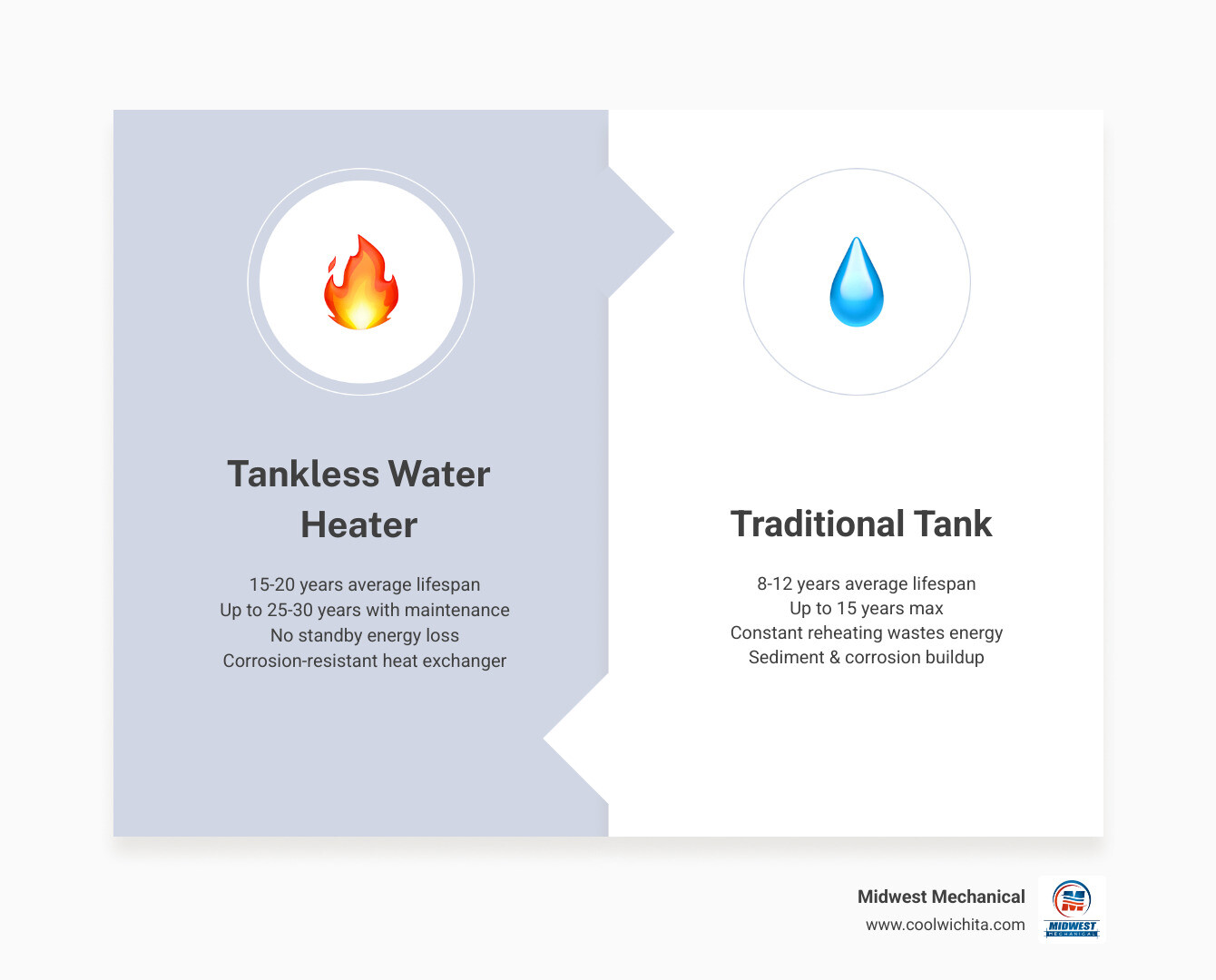
System TypeAverage LifespanWith Proper MaintenanceTankless water heater15-20 yearsUp to 25-30 yearsTraditional tank water heater8-12 yearsUp to 15 years
Most homeowners and business owners in Wichita, KS can expect a well-maintained tankless unit to outlast a traditional tank by nearly double — and in some cases, even longer.
That said, "up to 20 years" isn't a guarantee. It's a ceiling you reach only when a few key conditions are met: good installation, regular maintenance, and — especially here in Kansas — managing the effects of hard water on your system's internal components.
If you've ever dealt with a tank water heater failing ahead of schedule, you already know how disruptive and costly that can be. Tankless systems were designed to solve that problem. But they're not maintenance-free, and they're not immune to the wear and tear that comes with daily use in a Kansas home.
This guide walks you through everything that determines how long your tankless water heater will actually last — and what you can do to get the most out of it.
The Benchmark: How Long Does a Tankless Water Heater Last Compared to Tank Models?
When we talk about the "benchmark" for water heater longevity, the numbers are quite clear. According to the U.S. Department of Energy, a tankless water heater typically lasts 20 years or more. This is a massive jump compared to traditional storage-tank models, which generally tap out between 8 and 12 years.
Why the big difference? It comes down to how these systems operate. A traditional tank is under constant stress. It holds 40 to 80 gallons of water 24/7, heating and reheating that same water to maintain a set temperature. This constant exposure to water leads to corrosion and sediment buildup at the bottom of the tank, which eventually eats through the lining.
In contrast, tankless units only heat water on demand. When you turn on a tap in your Wichita kitchen, the unit springs to life, heating the water as it flows through a heat exchanger. Because there is no storage tank, there is no "standing" water to cause rust or corrosion inside a large vessel. This design significantly reduces the physical toll on the unit.
Beyond just lasting longer, there are numerous benefits of tankless water heaters that contribute to their value over time. They are roughly 30% to 50% more energy-efficient because they eliminate "standby energy loss"—the energy wasted keeping a big tank of water hot when no one is using it. When you consider the advantages of a tankless water heater, the combination of a 20-year lifespan and lower monthly utility bills makes them a compelling long-term investment for Kansas families.
Key Factors Influencing System Longevity in Kansas
While the 20-year mark is the industry standard, several variables can either extend or shorten that timeline. In our experience serving the Wichita area, we see four main factors at play:
- Installation Quality: A tankless unit is a sophisticated piece of machinery. If it isn't sized correctly or vented properly, it will work harder than it needs to. An undersized unit that is constantly pushed to its maximum flow rate will experience accelerated wear on its burners and heat exchanger.
- Usage Patterns: A large household in Derby or Andover that runs multiple showers and appliances simultaneously puts more "mileage" on the unit than a single-occupant home.
- Venting Configuration: For gas-fired units, proper exhaust is critical. If the venting run is too long or restricted, it can cause backpressure, which leads to overheating and component fatigue.
- Water Quality: This is the "silent killer" of water heaters in Kansas.

For homeowners and business owners looking for a tankless water heater in Wichita, KS, understanding your local environment is step one. You also need to ensure your home's plumbing can support the unit's needs. We recommend checking out our tankless flow rate guide 2025 to see how sizing impacts your system's performance and life expectancy.
How long does a tankless water heater last when dealing with Wichita’s hard water?
If you live in Wichita, Maize, or Bel Aire, you know our water can be "crunchy." Hard water contains high levels of dissolved minerals like calcium and magnesium. When this water is heated, those minerals solidify into "scale" or "lime" deposits.
In a tankless system, this scale attaches itself to the walls of the heat exchanger. This creates an insulating layer that forces the unit to run hotter and longer to reach your desired water temperature. Over time, this thermal strain can cause the heat exchanger to crack or fail. Without treatment or regular maintenance, hard water can cut a unit's lifespan in half—sometimes leading to failure in as little as 7 to 10 years.
To combat this, we often recommend installing a whole-home water softener. By removing the minerals before they reach the heater, you allow the unit to reach its full 20-year potential. If a softener isn't an option, following a strict tankless water heater descaling guide is the next best way to protect your investment.
How long does a tankless water heater last based on heat exchanger materials?
Not all tankless heaters are built with the same materials. The heat exchanger—the part that actually transfers heat to the water—is typically made of either copper or stainless steel.
- Copper Heat Exchangers: Copper is a fantastic conductor of heat, meaning these units are often very efficient. However, copper is a softer metal. It is more susceptible to "erosion-corrosion" and can be damaged more easily by acidic water or heavy scale buildup. These units typically have a lifespan of 12 to 15 years.
- Stainless Steel Heat Exchangers: Stainless steel is the premium choice for durability. It is much more resistant to corrosion and the "pitting" caused by hard water minerals. While they might have a slightly higher upfront cost, stainless steel units can easily last 20 to 25 years or more, making them a smarter financial move for "forever homes" in Kansas.
Essential Maintenance to Maximize Your Investment
If you want your "eternal flame" to keep burning for two decades, you cannot ignore maintenance. Think of a tankless water heater like a high-performance car; it needs more than just fuel to keep running.
Professional tankless hot water service usually involves several key tasks:
- Annual Flushing/Descaling: This is the most important task. Using a food-grade descaling solution (like citric acid), we flush the system to dissolve any mineral buildup inside the heat exchanger. For a deep dive on how this works, see our tankless water heater flush complete guide.
- Cleaning the Air Filter: Gas units need to "breathe." A clogged air filter can cause improper combustion, leading to soot buildup and reduced efficiency.
- Inspecting the Water Filter: Most units have a small screen at the water inlet to catch sediment. If this gets clogged, your water pressure will drop.
- Sensor Calibration: Over time, flame sensors and temperature probes can become dirty. Cleaning these ensures the unit operates safely and accurately.
By committing to an annual check-up, you can increase your system's lifespan by as much as five years.
Recognizing the Signs Your System Needs Attention
Even with the best care, parts can eventually wear out. Because tankless units are modular, we can often replace a single component—like a control board or a sensor—without replacing the entire unit. This is a major advantage over traditional tanks, where a leak usually means the whole thing is "dead on arrival."
Watch for these warning signs that your unit needs a professional look:
- Fluctuating Temperatures: If your shower goes from hot to cold and back again (the "cold water sandwich"), your heat exchanger might be scaling up or a sensor could be failing.
- Strange Noises: Rumbling, whistling, or banging sounds often indicate heavy sediment buildup or a problem with the fan motor.
- Reduced Water Flow: If your hot water pressure is significantly lower than your cold water pressure, there's likely a blockage in the unit.
- Error Codes: Modern units are smart. If you see a flashing code on the display, don't ignore it. Check our tankless water heater repair guide to understand what those numbers mean.
If you find yourself with no hot water from your tankless unit, it's time to call in the experts. For our neighbors in Derby, we've put together a specific Derby tankless water heater repair guide to help troubleshoot local issues.
Frequently Asked Questions About Tankless Longevity
Can a tankless water heater really last 30 years?
While 20 years is the average, 30 years is absolutely possible. We've seen units reach this milestone when they are installed in homes with a water softener, receive annual professional maintenance, and are high-quality models (especially those with stainless steel heat exchangers). However, by year 25, you might find that while the unit works, newer technology is so much more efficient that a professional tankless water heater replacement in Wichita, KS makes more financial sense.
Does the installation location affect the unit's life?
Yes. Units installed in "unconditioned" spaces—like a cold garage in Valley Center or a damp crawl space—have to work harder. In the winter, the unit must work against the freezing ambient temperature to heat the incoming water. High humidity can also lead to faster corrosion of external electrical connections. If possible, installing the unit in a conditioned utility room or basement is best for longevity.
Is it better to repair or replace an older tankless unit?
We generally suggest the "50% Rule." If a repair costs more than half the price of a new unit, and the heater is already over 15 years old, replacement is usually the better path. As units age, parts availability can also become an issue. For those in Derby, check out our tankless repair Derby KS tips for more guidance on making this call.
Conclusion
At Midwest Mechanical, we believe that a tankless water heater is one of the best investments you can make for your home's long-term value and comfort. Whether you are in Wichita, Derby, Andover, or any of our surrounding communities, we are here to help you get the most out of your plumbing system.
Understanding how long does a tankless water heater last is about more than just a number on a spec sheet—it’s about the peace of mind that comes from knowing you’ll have reliable hot water for decades to come. By choosing the right materials, ensuring a professional installation, and staying on top of annual maintenance, you can ensure your system serves your family faithfully for 20 years or more.
If you’re ready to upgrade to "endless" hot water or need a hand maintaining your current system, our team is ready to help. Explore our options for a tankless water heater in Wichita, KS today and let us help you achieve total home comfort.


We have partnered with GoodLeap to offer flexible payment options for your project. GoodLeap uses a soft credit check until funding and the highest score from all 3 bureaus to see if you qualify. It also takes just a few minutes to get started.






.svg)