
Surviving the Dust: Is Your HVAC System Choking After a Storm?
You just spent the weekend wiping a fine layer of grit off every surface in your house, but the air coming out of your vents still feels weak. When late-summer August dry spells whip across the plains, finding the right approach to air duct cleaning in Wichita, KS becomes a top priority for local homeowners and business owners. The immediate aftermath of a severe windstorm often leaves dust coating your home's interior and noticeably reduces the airflow circulating through your rooms.
This sudden influx of dirt introduces a frustrating dilemma. Almost immediately after the skies clear, your mailbox fills up with aggressive mailers insisting that your ductwork is contaminated and requires immediate, heavy-duty sanitation. As a homeowner or business owner, you have to decide whether these urgent warnings are legitimate or if simpler, standard maintenance will suffice. The truth is that most modern heating and cooling systems are remarkably resilient. While specific regional weather events can occasionally breach standard defenses, you rarely need to panic.
If you want to protect your indoor air quality after a major wind event, signing up for a comprehensive HVAC maintenance plan is the most reliable way to keep your equipment running smoothly.
How Kansas Windstorms Overload Your Air Conditioning System
To understand why your home feels so dusty after a storm, you have to look at the sheer force of the weather. High winds create intense pressure differentials around your home's exterior. This pressure forces fine particulate matter through tiny, microscopic gaps in your home's envelope—around window frames, under doors, and through attic vents. Once that dirt enters your living space, it remains suspended in the air until your air conditioning system cycles on and begins pulling that air through the return vents.
Wichita's geographic position makes local systems highly vulnerable to sudden, heavy particulate loads during late-summer high-wind weather events. The open landscape of the Wichita and surrounding plains allows wind to pick up massive amounts of dry topsoil without any natural barriers to slow it down. When your system attempts to filter out this massive amount of dirt all at once, it places an enormous burden on your blower motor and indoor evaporator coil.
It is important to remember that while your outdoor condenser unit sits fully exposed to the blowing dirt, your indoor ductwork is usually protected. As long as your air filter remains in place and does not collapse under the weight of the dirt, the vast majority of the grit will never reach the inside of your supply ducts.
The Journey of Plains Dust into Your Ductwork
When a storm hits, the dust follows a very specific path through your home's ventilation system. Understanding this journey helps you see exactly where the vulnerabilities lie:
1. Wind pressure infiltration: High-speed gusts push fine silt through the tiny unsealed cracks in your home's exterior walls and roofline.
2. Return air suction: As your thermostat calls for cooling, the return air vents pull the newly suspended dust out of your hallways and living rooms, dragging it directly toward your HVAC filter.
3. Filter saturation: The filter captures the dirt, but rapidly loads up with grit. If the storm lasts for days, the filter becomes a solid wall of mud and dust.
4. Bypass and collapse: Once the filter is completely blocked, the system's suction becomes so strong that it either bends the filter out of its track or pulls air through unsealed gaps around the filter housing, allowing raw dust to coat the blower motor and blast into the ductwork.
Normal Household Dust vs. Severe Particulate Intrusion
Not all dust is created equal, and knowing the difference can save you from purchasing services you do not need. Normal household dust consists primarily of fabric lint, pet dander, and microscopic skin cells. It accumulates slowly over months, creating a soft, gray layer that your standard air filter easily manages. Severe particulate intrusion, on the other hand, is entirely different. It consists of the fine, gritty, abrasive topsoil blown in during late-summer August dry spells. This dirt feels like ultra-fine sandpaper and accumulates in a matter of hours, rather than months.
When this heavy particulate load restricts your airflow, it leads to noticeably longer cooling cycles. Your system will run continuously, struggling to push conditioned air through the clogged pathways. If you notice your AC not cooling effectively after a storm, restricted airflow from dust buildup is often the primary culprit. However, a single weather event rarely requires full duct replacement. In most cases, targeted remediation and basic cleaning will restore your system's performance.
• Normal Household Dust — Primary Composition: Lint, pet dander, skin cells — Impact on HVAC System: Gradual filter loading; easily managed with routine monthly filter changes.
• Severe Particulate Intrusion — Primary Composition: Gritty topsoil, agricultural silt — Impact on HVAC System: Rapid filter clogging; restricts airflow, strains the blower, and can bypass cheap filters.
We see the effects of this severe intrusion frequently. During one of our late-summer August dry spells, a local homeowner or business owner reached out because their blower fan stopped working entirely, leaving the house without cooling during a heat wave. Our team squeezed the customer into a busy schedule to fix the issue, discovering that severe particulate buildup had completely choked the blower motor. Once the motor was addressed and the system was cleaned, the AC was fully functional again, avoiding further discomfort during the hot weather. The ductwork itself was fine—the problem was entirely at the point of filtration and air movement.
Signs You Actually Need Air Duct Cleaning in Wichita, KS
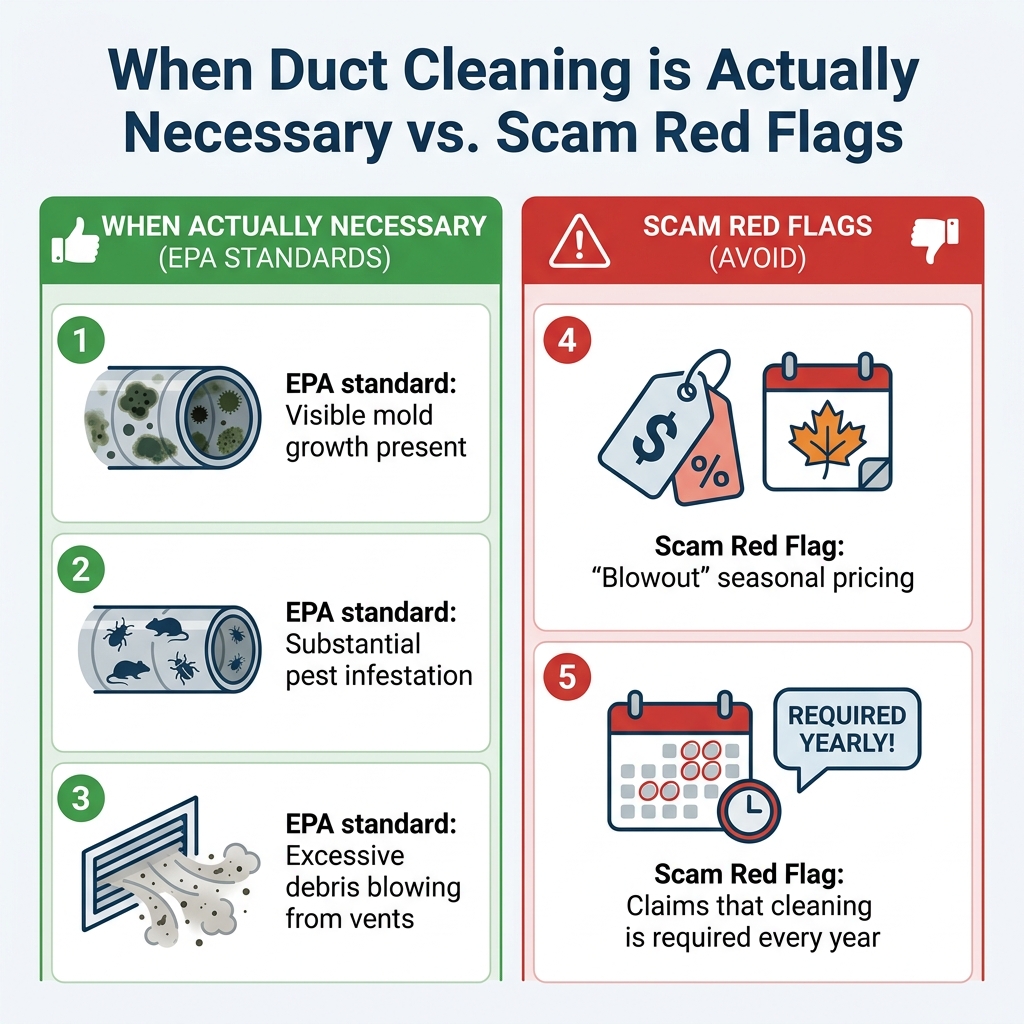
If you are staring at a dusty vent cover, you might be tempted to call the first duct cleaning company you find. However, the Environmental Protection Agency (EPA) maintains very specific guidelines regarding when duct cleaning is actually necessary. Across the Wichita and surrounding plains, you should only invest in professional duct remediation if you can confirm one of the following severe conditions:
• Visible, substantial debris: You can actively see large plumes of dust and heavy debris blowing out of your supply registers every time the system kicks on.
• Confirmed mold growth: You or a technician find verifiable mold growth inside the hard sheet metal ducts or on other internal heating and cooling components (note that a simple dust smudge is not mold).
• Pest infestations: You find clear evidence of vermin, rodents, or heavy insect infestation inside the ductwork following a storm or a drop in temperatures.
• Severe localized events: Your home recently underwent major post-storm renovations that generated massive amounts of drywall dust, or you have a physically breached duct line in the attic or crawlspace that is pulling raw exterior air directly into the system.
If your system does not meet these criteria, a full-scale duct cleaning is likely unnecessary. Wiping down the exterior vent covers and changing your air filter will usually resolve the issue without requiring expensive specialized equipment.
Spotting and Avoiding Aggressive Duct Cleaning Scams
Unfortunately, the days following a major weather event bring out opportunistic companies looking to capitalize on homeowner or business owner anxiety. Aggressive duct cleaning scams treat this service as a routine, required seasonal chore rather than the targeted remediation it actually is. You will often see these companies flooding neighborhoods with postcards immediately after late-summer August dry spells, promising impossibly low prices to completely sanitize your home's air.
You should always watch out for common red flags. "Blowout" pricing—where a company offers to clean an entire home's ductwork for an incredibly low flat rate—is almost always a bait-and-switch tactic. Once they arrive, they will claim your system is dangerously contaminated and pressure you into expensive upgrades. High-pressure door-to-door sales and claims that duct cleaning is required every single season are also major warning signs. The EPA explicitly states that routine duct cleaning is not recommended, advising homeowners and business owners to clean ducts only as needed based on severe contamination.
We recently performed a thorough system check for a customer who had received one of these alarming mailers and was worried about their equipment. Instead of pushing an unnecessary cleaning service, our technician thoroughly checked the system and provided detailed guidance on basic maintenance. We pride ourselves on a commitment to honest, transparent assessments. We will actively tell you when you do NOT need duct cleaning, saving you from unnecessary upsells and protecting your fragile flex ducting from being damaged by untrained technicians using improper, overly aggressive equipment.

Safe Post-Storm Steps to Take Before Calling a Professional
Before you reach for the phone to book an indoor air quality assessment, there are several safe, simple steps you can take to restore your airflow. When the dust settles across the Wichita and surrounding plains, taking immediate action can prevent minor dirt accumulation from turning into a major mechanical failure. Always stick to basic maintenance and never attempt to open sealed electrical cabinets or handle refrigerant lines.
1. Check and replace the indoor air filter immediately: Do this the moment the dust event passes. If the storm lasted several days, your filter is likely completely saturated. Do not try to vacuum it out; throw it away and install a brand-new, high-quality pleated filter.
2. Gently hose off the exterior fins of the outdoor AC condenser: Take a standard garden hose and gently wash the caked-on dirt off the outside of your outdoor unit. Spray at a downward angle. Never use a high-pressure power washer, and never open the cabinet yourself, as you can easily bend the delicate aluminum fins or damage the electrical components.
3. Wipe down the exterior of indoor grilles: Use a damp microfiber cloth to wipe away the gritty topsoil that has accumulated on the outside of your supply and return grilles. This prevents the system from sucking that dirt back into the filter.
4. Monitor the system's performance for 24 hours: Once you have a clean filter and a clean outdoor coil, let the system run. Pay attention to the airflow strength and the temperature of the air. If the system is still struggling after a full day, it is time to call a professional.
Frequently Asked Questions About Post-Storm Air Quality
Is duct cleaning a waste of money?
Duct cleaning is not a waste of money when it is performed for the right reasons, but it is unnecessary as a routine seasonal chore. If you have visible mold, pest infestations, or massive debris blockages, the service is highly valuable and necessary for your health. However, paying for it every year just to remove standard household dust offers very little return on investment. Always follow EPA guidelines to determine if your specific situation warrants professional remediation.
How often should you clean your air ducts?
There is no set timeline for cleaning air ducts, as it should only be done on an as-needed basis. Most homes and businesses in the Wichita and surrounding plains may only need professional duct cleaning once every five to ten years, if ever. You should only schedule a cleaning if you experience a severe contamination event, such as a major post-storm roof breach, extensive indoor renovations, or a confirmed pest infestation. Otherwise, routine filter changes are sufficient.
What happens to HVAC during a dust storm?
During a severe dust storm, high winds force fine particulate matter into your home, which your HVAC system then pulls into its return vents. This causes your air filter to clog at an incredibly rapid pace, severely restricting the airflow required to cool your home. If the filter fails or is bypassed, that abrasive dirt coats your blower motor and indoor evaporator coil, causing the system to overheat, freeze up, or shut down entirely.
How do I know if my ducts need to be cleaned after a storm?
You will know your ducts need cleaning if you see visible, heavy debris actively blowing out of your vents when the system turns on. You should also look for signs of physical damage to the ductwork in your attic or crawlspace, which could allow raw outside air to enter the system. If you only see a light dusting on the outside of the vent covers, a simple wipe-down and a new filter are usually all that is required.
Does air duct cleaning really make a difference for indoor air quality?
Air duct cleaning makes a significant difference for indoor air quality only when the ducts are heavily contaminated with mold, pests, or large blockages. In these severe cases, removing the source of the contamination drastically improves the air you breathe. However, if your ducts only contain a mild, normal layer of household dust, cleaning them will not produce a noticeable change in your daily air quality or your health.
Can a dirty AC filter cause my system to freeze up after a dust storm?
Yes, a severely clogged AC filter is one of the most common reasons a system freezes up after a major dust event. When the filter is blocked by heavy topsoil, the blower motor cannot pull enough warm air over the indoor evaporator coil. Without that warm air, the condensation on the coil freezes into a solid block of ice, completely halting the cooling process and potentially damaging the compressor.
Restore Your Home's Air Quality with an Honest Assessment
Navigating the aftermath of late-summer August dry spells does not have to be stressful. While severe storms certainly warrant a closer look at your equipment, the reality is that most systems just need basic, routine maintenance to recover from heavy wind and dust. You do not have to fall victim to aggressive mailers or fear-based sales tactics to keep your home comfortable and safe.
If you suspect that your system has suffered severe contamination, we encourage you to schedule an inspection to get a transparent, no-nonsense evaluation of your system's health. Our technicians will tell you exactly what is going on inside your ductwork and recommend only the services you truly need. Reach out today to secure your HVAC maintenance plan and gain the peace of mind that comes with honest, professional care.
Customer Testimonials
Hear from satisfied customers who trust us for reliable HVAC, plumbing and electrical service across Wichita.





We have partnered with GoodLeap to offer flexible payment options for your project. GoodLeap uses a soft credit check until funding and the highest score from all 3 bureaus to see if you qualify. It also takes just a few minutes to get started.




.svg)