

The Hidden Link Between Late Summer Heat and Autumn Furnace Failures
The August back-to-school transition is in full swing, and while the days are still hot, the subtle shift toward autumn has already begun. You might be focused on keeping the house cool for a few more weeks, but your heating system is quietly sitting in the dark, waiting for its turn. If you have ever wondered exactly why we check the furnace flame sensor during late summer AC maintenance, the answer comes down to preventing a very specific, highly frustrating winter breakdown.
Many homeowners and business owners assume that because their air conditioner and furnace operate in different seasons, they are entirely separate entities that require isolated care. In reality, they share the same blower motor, the same ductwork, and the same cabinet space. When you schedule professional Heating Services or cooling tune-ups, looking at the entire HVAC system as a connected unit is the only way to guarantee year-round comfort.
The late-summer blind spot:
• Focusing only on cooling: It is natural to only think about the equipment currently running, leaving dormant heating parts ignored.
• Assuming idle means safe: Just because a furnace is turned off does not mean it is protected from environmental wear and tear.
• Missing the transition window: Waiting until the first freezing night to turn on the heat is a recipe for an emergency service call.
A proactive approach means leveraging an existing late-summer service visit to preemptively inspect heating components before the cold weather arrives. By addressing the furnace while the cooling system is still the primary focus, you eliminate the hidden risks that develop over the summer months.
How Summer Humidity Attacks Dormant Heating Equipment
To understand why a furnace component fails before it is even turned on, you have to look at the environment where your HVAC system lives. Whether your equipment is in a basement, a utility closet, or an attic, it is subjected to the environmental extremes of the season. In Wichita, KS, the climate is known for fluctuating summer humidity levels that can take a serious toll on dormant metal components.
When the humid summer air infiltrates your home, your air conditioner works hard to remove that moisture from the living spaces. However, if you are dealing with an AC not cooling efficiently, or if your furnace cabinet is located in an unconditioned space like a garage or damp basement, that heavy moisture settles directly onto the idle heating equipment.
The Silent Process of Oxidation
The furnace flame sensor is a thin, delicate metal rod that sits directly in the path of the burner assembly. Throughout the summer, as warm, moist air circulates around this dormant metal rod, a chemical process called oxidation occurs. It is similar to rust, but on a flame sensor, it often presents as a dull, cloudy, or slightly white film that coats the metal.
This degradation happens completely silently. Your cooling system might be running perfectly, keeping your living room at a comfortable 72 degrees, while a microscopic layer of insulation is slowly building up on your furnace's most critical safety device.
• Active Winter — HVAC Environment: Hot, dry air moving through the burners. — Impact on Flame Sensor: Sensor is actively heated, keeping minor moisture at bay, though carbon soot can build up from the gas flame.
• Dormant Summer — HVAC Environment: Cooler, stagnant air with higher ambient humidity. — Impact on Flame Sensor: Moisture settles on the cool metal, causing slow oxidation and creating an invisible insulating barrier.
By the time autumn arrives, that oxidation has hardened into a barrier that will actively prevent your furnace from functioning. The humidity of the summer has effectively sabotaged the heating system for the winter.
The Science of the Flame Sensor: A 7-Second Safety Window
To fully grasp why that summer oxidation is so detrimental, it helps to understand the precise science behind how a flame sensor actually works. This component is not a thermometer; it does not measure the temperature of the air. Instead, it is a highly sensitive electrical probe designed to measure a microscopic electrical current.
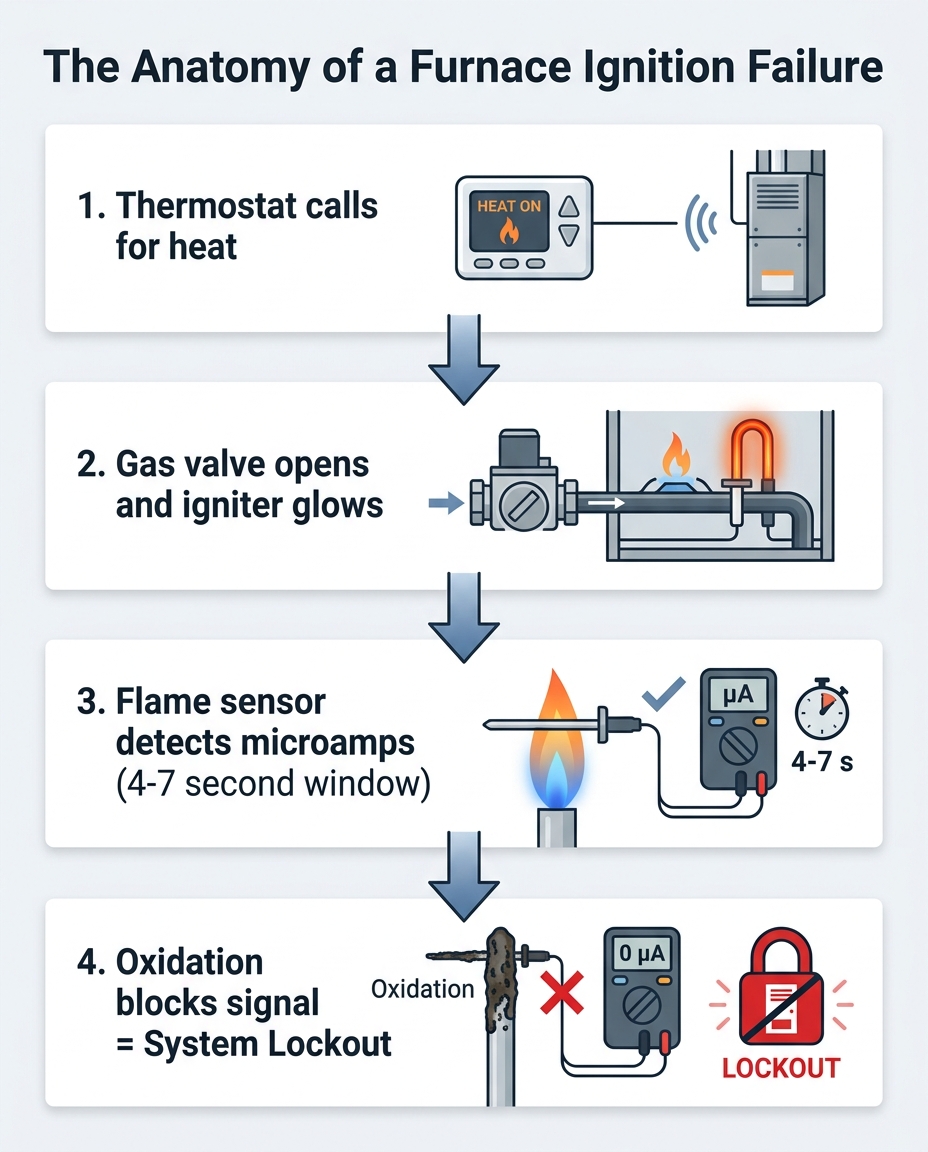
When your thermostat calls for heat, the furnace initiates a strict, sequential safety protocol. If any step fails, the system locks out to protect your home from unburned gas.
The Ignition Sequence:
1. The call for heat: The thermostat sends a signal to the furnace control board.
2. The inducer motor starts: A small fan turns on to clear the heat exchanger of any leftover gases and ensure proper drafting.
3. The igniter glows: The hot surface igniter heats up until it glows bright orange.
4. The gas valve opens: Gas flows into the burners and is ignited by the glowing element.
5. The flame sensor test: The control board sends a tiny electrical current (measured in microamps) through the flame sensor. Fire is slightly conductive. The current travels from the sensor, through the actual flame, and grounds out on the metal burner assembly.
This is where the 7-second safety window comes into play. The furnace control board expects to receive that microamp signal back almost instantly. It typically gives the system between 4 to 7 seconds to confirm that a fire is actually burning. If it does not detect the microamp current, it assumes the gas is pouring into the home unlit, and it slams the gas valve shut immediately.
Even a microscopic layer of summer oxidation acts as a perfect electrical insulator. It blocks that vital microamp signal from traveling through the flame. Recently, one of our Wichita, KS customers scheduled a routine summer system check and was surprised when our Midwest Mechanical technician took the extra time to thoroughly explain what to check and clean on the heating side for optimal system running. By understanding this delicate microamp process, the customer realized that a simple cleaning now would prevent a total system lockout later.

Solving the 'Furnace Won't Ignite' Mystery Before It Happens
There is a classic scenario our team at Midwest Mechanical sees play out in homes across the Wichita region every single year. The August back-to-school transition fades into September, the first genuine cold snap hits, and a homeowner or business owner walks over to the thermostat to switch it from "Cool" to "Heat" for the first time in months. The system clicks, the fans start whirring, but the furnace wont ignite.
Or, more accurately, it ignites for just a fleeting moment before shutting down. This is known as short-cycling, and it is the hallmark symptom of a dirty or oxidized flame sensor.
The Anatomy of a Short Cycle
When the flame sensor fails to read the microamps due to summer buildup, you will usually hear a very specific sequence of sounds. You will hear the click of the gas valve, followed by a sudden "whoosh" as the burners light. You might even feel a brief puff of warm air from the vents. But exactly 4 to 7 seconds later, you will hear another click, the flames will abruptly extinguish, and the blower fan will run cold air for a few minutes before the system goes entirely silent.
The furnace will usually attempt this sequence three times. After the third failed attempt, the control board will trigger a hard lockout, flashing a red error light and refusing to try again until the system is reset.
A dirty flame sensor is the primary culprit for this specific sequence of events. When you invest in a comprehensive Wichita heating tune-up during your late-summer cooling service, the technician cleans this sensor preemptively. This simple act contrasts the intense stress of a freezing-night emergency diagnostic call with the absolute peace of mind that comes from knowing your equipment is already prepped and tested.
Cross-Seasonal Prevention: Looking Beyond the Air Conditioner
True preventative maintenance does not adhere strictly to calendar seasons. The most reliable HVAC systems belong to homeowners and business owners who understand the value of holistic, cross-seasonal care. Checking heating components while a technician is already assessing the indoor AC coil and blower is the definition of efficiency.
In our years of keeping local homes and businesses comfortable, our team at Midwest Mechanical has learned that treating late summer AC maintenance as a critical window is the most reliable way to prevent winter emergencies. Because the evaporator coil for your air conditioner sits directly above or beside your furnace heat exchanger, accessing the heating components during a cooling visit is a seamless process.
Just last August, another Wichita, KS customer reached out to us because they needed a lingering furnace repair addressed after experiencing intermittent issues the previous winter. Our technician diagnosed and fixed the heating issue while on-site for a routine AC tune-up, explaining the entire process and answering questions. By handling it in the off-season, the furnace was completely restored and ready to run perfectly months before the cold weather returned.
What cross-seasonal prevention looks like in practice:
• Microamp testing: Technicians use specialized multimeters to measure the exact electrical current passing through the flame sensor, ensuring it falls within the manufacturer's required range.
• Visual burner inspection: Checking for rust, blockages, or pest intrusion that may have occurred during the dormant summer months.
• Blower motor calibration: Ensuring the fan that pushes both your cold and warm air is operating at the correct speed and amperage.
Catching ignition risks early prevents you from getting stuck in the massive backlog of emergency service calls that inevitably flood in during the first freeze of the year.
Why Flame Sensor Maintenance Requires Professional Precision
With the rise of internet tutorials, it can be tempting to view flame sensor cleaning as a simple weekend project. However, interacting with the ignition sequence of a natural gas appliance carries inherent safety risks and requires professional precision. These sensors are highly sensitive instruments, not just standard pieces of scrap metal.
One of the most common mistakes made during improper maintenance is the use of harsh abrasives. When a flame sensor is scrubbed with standard sandpaper, it creates microscopic grooves and scratches along the surface of the metal. While it might look clean to the naked eye, those tiny scratches dramatically increase the surface area of the rod. This accelerated texture acts as a magnet for future carbon soot and rapid oxidation, meaning a sensor cleaned with sandpaper will often fail much faster the next time around.
The professional difference:
• Proper materials: Technicians use specialized, non-abrasive cleaning pads or ultra-fine steel wool that removes oxidation without scoring the metal.
• Electrical verification: Visual cleaning is only half the job. A professional will always verify the repair by testing the direct current with a multimeter to ensure the microamps are reading correctly.
• Safety protocols: Working near the gas manifold requires a thorough understanding of how to safely isolate the gas supply and verify that no leaks have been introduced during the maintenance process.
In our experience serving Wichita, KS, where the winter weather can turn dangerously cold overnight, relying on guesswork for your furnace's primary safety mechanism is never worth the risk. We highly recommend leaving this delicate work to a licensed professional.
Frequently Asked Questions About Seasonal Ignition Failures
Why won't my furnace ignite on the first cold day?
The most common reason a furnace fails to ignite on the first cold day is a dirty or oxidized flame sensor. Over the summer, humidity causes a microscopic film to build up on the sensor's metal rod. When the thermostat finally calls for heat in the autumn, this film acts as an electrical insulator, blocking the safety signal and causing the furnace control board to lock out the system immediately.
Can summer humidity affect my dormant furnace?
Yes, summer humidity has a direct and significant impact on dormant heating equipment. Even when the furnace is turned off, the ambient moisture in your basement or utility closet settles on the internal metal components. This stagnant, humid air accelerates oxidation on sensitive electrical parts, which is why preemptive cleaning during the August back-to-school transition is so highly recommended.
Why does my furnace shut off after just a few seconds?
If your furnace lights but shuts off after 4 to 7 seconds, the flame sensor is failing to detect the fire. The furnace control board requires a constant microamp electrical current to prove that a flame is present and safely burning the gas. If it does not receive this signal due to soot or oxidation buildup, it shuts the gas valve off immediately to prevent dangerous gas accumulation in your home.
What happens if a furnace flame sensor is dirty?
When a flame sensor is dirty, it loses its ability to conduct the necessary electrical current through the burner flame. The furnace will typically attempt to ignite three times, short-cycling each time as the safety mechanism trips. After the third failed attempt, the system will enter a hard lockout mode, meaning it will completely shut down and refuse to operate until a professional resets and repairs the unit.
Why is my furnace clicking but not igniting?
A clicking sound usually indicates that the furnace is attempting to open the gas valve or that the spark igniter is trying to fire. If you hear clicking but there is no ignition, you may have a failed igniter, a blocked gas valve, or a severe lockout triggered by a faulty flame sensor. Because this involves the combustion process, it requires a professional diagnostic to safely resolve.
Should I have my furnace checked during my late-summer AC tune-up?
Absolutely. Having your furnace checked during a late-summer AC tune-up is the most efficient way to prevent sudden winter breakdowns. Because the heating and cooling systems share the same blower motor and cabinet space, a technician can easily clean the flame sensor and test the ignition sequence while they are already on-site, ensuring both systems are ready for the changing seasons.
Secure Your Comfort Before the First Cold Snap Hits
The logic behind preemptive flame sensor checks is simple: dealing with a minor layer of summer oxidation in the late summer is infinitely easier than dealing with a freezing house in the dead of winter. The August back-to-school transition provides the perfect, low-stress window to address your entire HVAC system before the seasonal rush begins.
Do not wait for your thermostat to deliver bad news on the first cold morning of the year. Secure your spot on the schedule now by enrolling in a comprehensive HVAC Maintenance Plan. By taking a proactive approach today, you can ensure total system reliability and enjoy a seamless, comfortable transition into the heating season.
Customer Testimonials
Hear from satisfied customers who trust us for reliable HVAC, plumbing and electrical service across Wichita.





We have partnered with GoodLeap to offer flexible payment options for your project. GoodLeap uses a soft credit check until funding and the highest score from all 3 bureaus to see if you qualify. It also takes just a few minutes to get started.




.svg)