


The Frustration of the September First-Furnace-Startup
Your thermostat clicks, the inducer motor whirs to life, and just as you anticipate that first breath of warm air, the entire system goes abruptly dead. You try resetting the unit, only to watch the burners ignite and immediately extinguish just moments later. If you are dealing with this exact scenario, understanding the mechanics of cleaning a dirty flame sensor to fix short-cycling is the first step toward restoring reliable heat to your home before the deep winter freeze sets in.
For immediate assistance with your heating system, our team at Midwest Mechanical is ready to help. Explore our heating services, or read on to learn exactly why this frustrating shutdown happens.
The sudden temperature drop in early fall brings a familiar ritual to households across the region: the September first-furnace-startup. After months of sitting idle, switching the thermostat from "cool" to "heat" carries a sense of anticipation. You expect the comforting hum of the blower motor and the steady flow of warm air. Instead, you are met with a terrifying sequence: the furnace ignites normally, holds a flame for a brief moment, and then abruptly shuts down after exactly three seconds. The silence that follows is often accompanied by a sinking feeling that the entire heating system has suffered a catastrophic failure.
The good news: This specific three-second shutdown is rarely a sign of a dead furnace. In the vast majority of cases, it points directly to a highly specific, resolvable sensor issue rather than a cracked heat exchanger or a failed blower motor. Modern heating systems are packed with safety switches designed to cut power the moment something looks wrong. When the system turns off that quickly after ignition, it is doing exactly what it was engineered to do: protecting your home from unburned gas. Addressing this diagnostic puzzle early, right at the start of the season, is the best way to ensure your home stays comfortable when the truly freezing temperatures arrive.
The Anatomy of an Early Fall Heating Failure
Why does this specific failure happen so frequently during the very first cold snap? The answer lies in the months of inactivity leading up to that moment. A furnace is a complex sequence of electrical and mechanical events. Every component must report a "pass" grade to the main control board before the next step in the sequence can begin. The burner ignition is the most critical phase of this sequence. If the system cannot verify that a safe, contained fire is burning, it will immediately halt operation. Recognizing this pattern is the key to understanding why your furnace is short-cycling and why professional intervention from a team like ours at Midwest Mechanical is the safest path forward.
What Is a Flame Sensor and How Does Flame Rectification Work?
To understand the three-second shutdown, you have to look at the component responsible for triggering it: the flame sensor. This vital safety component is a thin, metallic rod with a ceramic base, typically mounted directly in the path of the furnace burners. Its sole purpose is to detect the presence of a fire in the burner assembly. If the gas valve is open and releasing combustible fuel, the furnace must have absolute certainty that the fuel is being burned. Without this component, unburned gas could flood the combustion chamber and your home, creating an extreme safety hazard.
The way this sensor detects fire is through a fascinating scientific principle called flame rectification. Fire itself is capable of conducting a tiny amount of electricity. When the furnace ignites, the main control board sends an alternating current (AC) voltage to the sensor rod. Because the burners are grounded, the fire creates a bridge between the sensor rod and the burner face. As the electrical current travels through the plasma of the flame, it is converted (rectified) into a microscopic direct current (DC). This resulting signal is incredibly small—typically measuring between 1 to 10 microamps.
The Role of the Control Board
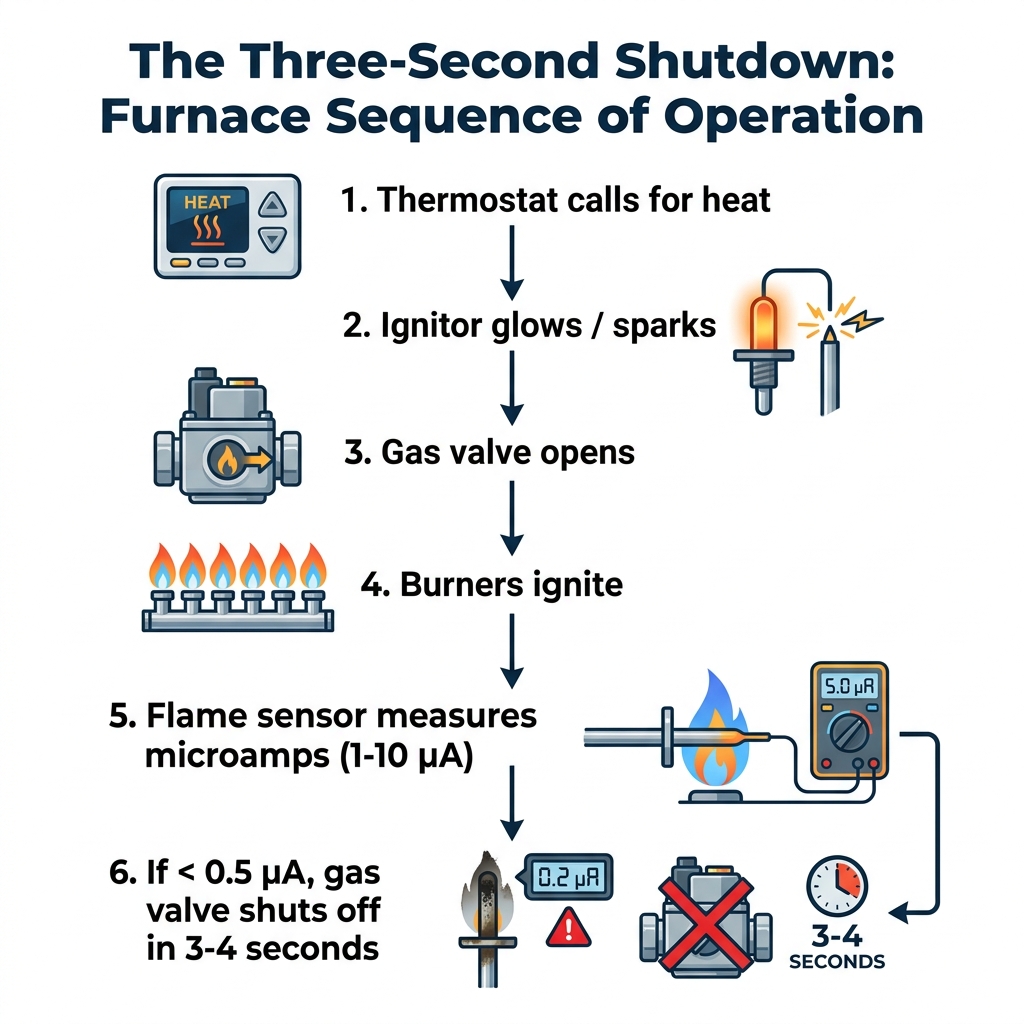
The furnace's sequence of operation relies entirely on this microamp signal. Once the gas valve opens and the ignitor lights the fuel, a countdown begins. The control board continuously monitors the wire connected to the sensor rod. It is looking for a specific safety threshold, often as low as 0.5 microamps, to keep the gas flowing.
• The Ignition Phase: The gas valve opens, and the burners light.
• The Sensing Phase: The control board sends voltage to the rod, waiting for the flame to rectify the signal into microamps.
• The Safety Cutoff: If the board does not detect the required microamp reading, it shuts off the gas valve in under four seconds.
This rapid, unforgiving response is exactly what causes the frustrating short-cycling behavior. The furnace is not broken; it is simply blind to the fire that is right in front of it. When the control board cannot "see" the flame via that tiny electrical signal, it assumes the fire has blown out and immediately cuts the fuel supply to prevent dangerous gas buildup.
• Flame Sensor — How It Works: Uses electrical flame rectification to measure microamps. — Common Failure Mode: Insulated by carbon, causing a three-second shutdown.
• Thermocouple — How It Works: Uses heat to generate millivolts (found on older standing-pilot models). — Common Failure Mode: Burns out over time, preventing the pilot light from staying lit.
• Hot Surface Ignitor — How It Works: Glows white-hot to ignite the gas. — Common Failure Mode: Cracks or burns out, resulting in no flame at all.

The Culprit: How Carbon Buildup Causes Furnace Short-Cycling
If the sensor is merely a metal rod, why does it suddenly stop working? The answer has everything to do with the environment inside your HVAC system during the off-season. In our years of servicing local systems, the team at Midwest Mechanical sees this constantly: Wichita's long, hot summers allow significant dust, pet dander, and airborne particulates to settle deep inside idle furnaces before the sudden need for heat in September. While your air conditioner is running, the furnace blower is moving air through the cabinet, but the burner assembly itself sits cold and unused for months.
During this idle period, a fine layer of household dust settles directly onto the metal sensor rod. Because the rod sits directly in the path of the burners, you can probably guess what happens the moment the furnace fires up for the first time in autumn. The settled dust instantly burns. Instead of blowing away, these microscopic particles bake onto the metal surface, creating a hard, microscopic layer of carbon.
Summer Dust to Fall Carbon
This transition from loose household dust to a baked-on carbon shell is a chemical change that fundamentally alters how the component functions. Carbon is a highly effective electrical insulator. Remember that the flame rectification process relies on a microscopic electrical current—just a few millionths of an amp—traveling through the fire and into the rod.
When that rod is coated in a layer of insulating carbon, the electrical current cannot penetrate the barrier. The flame is burning brightly, but the microamp signal is blocked from reaching the metal. The control board, waiting for that signal, receives nothing. Assuming the burners failed to light, the board triggers the safety protocol, resulting in the immediate shutdown. This buildup is virtually unavoidable without regular seasonal maintenance to clear away the summer dust before it has a chance to bake onto the components. Maintaining high indoor air quality with high-efficiency filters can reduce the amount of dust moving through the system, but the ambient settling during the summer months will still leave a residue on the burner assembly over time.
Recognizing the Symptoms of a Dirty Flame Sensor
At Midwest Mechanical, we know that proper diagnosis is the first step to restoring reliable heat to Wichita area homes. Because a furnace can shut down for dozens of different reasons, identifying the specific symptoms of a dirty sensor is critical. The primary symptom is incredibly distinct: the furnace turns on, the inducer motor runs, the ignitor glows, the gas valve clicks open, and the burners light successfully with a strong blue flame—but the flames extinguish within three to four seconds.
Contrast this with other common furnace failures:
• A bad hot surface ignitor: The inducer motor runs, but no flames ever appear because the ignitor fails to glow.
• A clogged air filter: The furnace ignites and runs for several minutes, pushing warm air into the house, before overheating and shutting down on a high-limit switch trip.
• A faulty gas valve: The ignitor glows, but you never hear the click of the valve opening, and no flames appear.
Just last season, a local homeowner reached out to our Midwest Mechanical team during an early cold snap experiencing severe issues with their furnace repeatedly shutting down. Not being handy with complex HVAC equipment, they knew they needed professional help rather than attempting a risky fix. Our technicians quickly assessed the problem—a classic short-cycle sequence—and clearly explained the repair process. Within a short time, the furnace was working great again, providing much-needed comfort to the home. This highlights how quickly a professional can distinguish a simple sensor issue from a major component failure.
The Three-Strike Lockout Rule
If your furnace is experiencing a three-second shutdown, you will quickly encounter another built-in safety feature: the lockout mode. Modern furnaces are programmed to protect themselves from repeated, failed ignition attempts. When the control board shuts off the gas due to a lack of microamp signal, it will usually pause, purge the combustion chamber with the inducer motor, and try again.
If the furnace attempts to ignite three times in a row and fails the flame rectification test each time, the control board will enter a "hard lockout." The system will shut down completely and refuse to attempt another ignition for an hour. Resetting the power at the breaker to bypass this lockout repeatedly without fixing the underlying sensor issue is dangerous, as it forces the system to continually cycle unburned gas through the heat exchanger.
Why Cleaning a Dirty Flame Sensor is Not a DIY Job
When homeowners search for solutions to a short-cycling furnace, they are often met with internet forums suggesting a quick DIY fix using sandpaper, steel wool, or abrasive scouring pads. We strongly warn against this approach. Opening the burner compartment of a gas appliance and handling delicate safety components without proper licensing introduces significant safety hazards to your home.
Beyond the safety risks of working around gas valves and high-voltage electrical boards, DIY cleaning almost always ruins the component. The sensor rod is not just a piece of scrap metal; it is often coated with a specialized, microscopic material designed to conduct microamps efficiently. When you scrub this rod with sandpaper or steel wool, you strip away this coating and create deep, microscopic grooves in the metal.
The Hidden Costs of Abrasive Scrubbing
What happens when you scratch the metal rod? Those microscopic grooves act as perfect traps for future dust and carbon. While a harsh scrub might get the furnace running for a few days, the newly roughened surface will attract and bake on carbon ten times faster than a smooth rod. This DIY approach often leads to needing a full sensor replacement within weeks, turning a simple maintenance task into a costly repair.
Furthermore, the base of the rod is housed in a highly fragile ceramic insulator. This ceramic prevents the electrical signal from grounding out against the metal furnace cabinet. If you apply too much pressure while scrubbing, or if you attempt to remove the rod with the wrong tools, you can easily crack the ceramic. A hairline crack in the ceramic base will permanently ground out the microamp signal, instantly ruining the component. For more insights on how to properly maintain your system, reading about checking the furnace flame sensor can provide valuable context on why professional care is so vital.
The Professional Diagnostic and Cleaning Process
When a professional technician arrives to address a three-second shutdown, they do not just blindly scrub metal components. They follow a precise, scientific diagnostic process to ensure the heating system is truly safe to operate. Our NATE-certified local experts at Midwest Mechanical (serving Wichita since 2004) use advanced multimeters to verify precise micro-amp readings, ensuring true safety compliance rather than just guessing.
During a routine early-fall maintenance check for another local homeowner, our Midwest Mechanical technician performed a thorough inspection and explained how the system's sensors were functioning. By catching early signs of wear and carefully measuring the electrical output, the system is now fully understood and properly maintained for the seasons ahead. This level of detail is what separates a professional diagnostic from a quick fix.
The professional process involves several critical steps:
1. Precision Removal: The technician carefully disconnects the wiring harness and uses specialized tools to extract the sensor without putting any stress on the fragile ceramic base.
2. Gentle Cleaning Techniques: Instead of harsh abrasives, professionals use specialized, non-damaging materials—often a specific grade of non-abrasive mesh—to gently polish away the baked-on carbon without scratching the metal surface.
3. Microamp Verification: This is the most crucial step. After reinstalling the clean component, the technician wires a specialized multimeter in series with the sensor wire. They fire up the furnace and measure the exact microamp draw before and after the cleaning.
Measuring Microamps for Peace of Mind
Visual inspection is never enough when it comes to gas safety. A rod might look clean to the naked eye but still fail to conduct enough electricity to keep the gas valve open safely. By measuring the exact electrical current, the technician proves that the system is operating well above the safety threshold. If the control board requires 0.5 microamps, and the multimeter shows a strong, steady reading of 4.0 microamps after cleaning, you have scientific proof that the furnace will run reliably through the harshest winter nights. This meticulous approach guarantees that the September first-furnace-startup is followed by months of uninterrupted comfort.
Frequently Asked Questions About Furnace Short-Cycling
Why does my furnace turn on for a few seconds then shut off?
This rapid shutdown is usually triggered by a safety mechanism on the control board failing to detect a flame. The most common culprit is a dirty flame sensor that has been insulated by baked-on carbon, preventing the microamp electrical signal from reaching the board. When the board doesn't receive the signal, it cuts the gas supply in under four seconds to prevent a dangerous buildup.
Can a dirty flame sensor cause short cycling?
Yes, it is one of the leading causes of rapid short-cycling in modern gas furnaces. Because the sensor is directly responsible for keeping the gas valve open after ignition, any carbon buildup that blocks its electrical current will trick the furnace into thinking the fire has blown out. This results in a continuous loop of igniting, shutting down, and locking out.
How do you know if your furnace flame sensor is bad?
The most definitive sign is observing the burner sequence: if the burners light with a strong blue flame but completely extinguish exactly three to four seconds later, the sensor is likely failing to register the fire. A professional technician can confirm this by wiring a multimeter in series with the component to check if the microamp reading drops below the required safety threshold.
What happens when a flame sensor gets dirty?
When dust settles on the rod during the summer and is burned during the first fall ignition, it turns into a hard layer of carbon. This carbon acts as an electrical insulator. It blocks the flame rectification process, meaning the microscopic electrical current cannot travel through the fire and into the rod, leading directly to a three-second shutdown.
How often should a furnace flame sensor be professionally cleaned?
It should be inspected and gently cleaned once a year during your annual pre-season heating tune-up. Having a professional clear away the accumulated summer dust before you turn the heat on for the first time prevents the dust from baking into stubborn carbon, ensuring reliable performance all winter long.
Ensure Reliable Warmth for Your Home This Season
Dealing with a furnace that refuses to stay lit can be incredibly stressful, especially as the weather begins to turn cold. However, understanding that a dirty flame sensor is a common, entirely preventable issue should provide peace of mind. By recognizing the symptoms of the three-second shutdown and avoiding the pitfalls of abrasive DIY scrubbing, you can protect your equipment from permanent damage.
Wichita's sudden temperature drops make early fall the perfect time to ensure your heating system is reliable. Don't wait for a freezing night to discover that summer dust has compromised your burner assembly. Taking proactive steps now to secure professional care from Midwest Mechanical will keep Wichita area homes warm and safe. To catch carbon buildup before it causes a frustrating lockout, consider scheduling a pre-season tune-up and exploring our comprehensive HVAC maintenance plan today.
Customer Testimonials
Hear from satisfied customers who trust us for reliable HVAC and plumbing service across Wichita.





Plus, the technician, Lee was very professional, knowledgeable and informative.
We will definitely be doing business with them sometime again in the past.
I'm prompt to my appointment. Thank you Midwest Mechanical.
I'm prompt to my appointment. Thank you Midwest Mechanical.

We have partnered with GoodLeap to offer flexible payment options for your project. GoodLeap uses a soft credit check until funding and the highest score from all 3 bureaus to see if you qualify. It also takes just a few minutes to get started.




Service Areas
.svg)