


The Key Gas vs Electric Tankless Water Heater Differences Wichita Homeowners Should Know
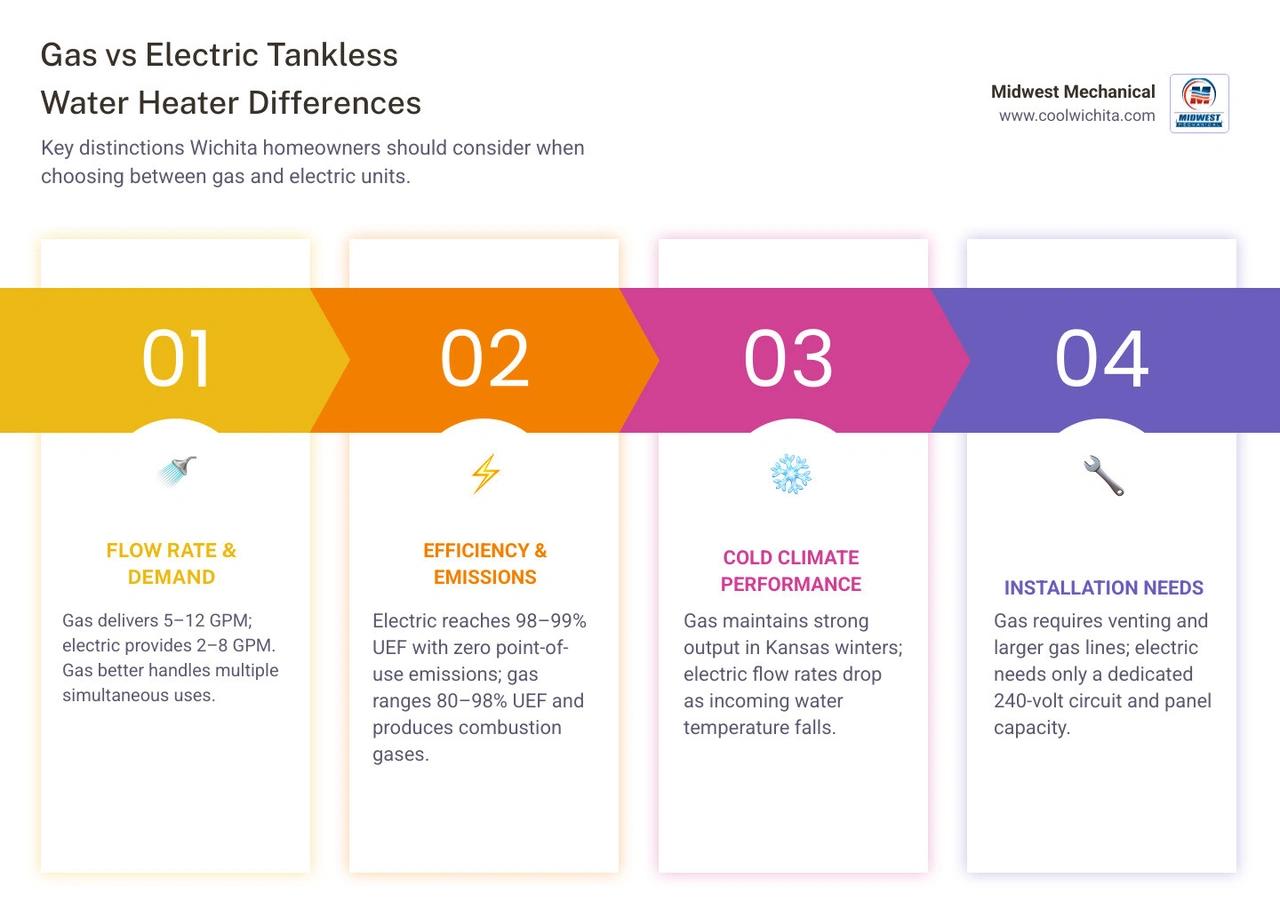
Understanding the gas vs electric tankless water heater differences is the first step toward choosing the right system for your home. Here is a quick side-by-side breakdown:
| Feature | Gas Tankless | Electric Tankless |
|---|---|---|
| Flow Rate | 5–12 GPM | 2–8 GPM |
| Thermal Efficiency | 80–98% (UEF 0.81–0.96) | 98–99% (UEF 0.96–0.99) |
| Installation Complexity | Higher (venting + gas line) | Lower (no venting needed) |
| Cold Climate Performance | Strong | Limited |
| Greenhouse Gas Emissions | Yes (combustion) | None at point of use |
| Lifespan | 20+ years | 20+ years |
| Best For | Large households, high demand | Smaller homes, point-of-use |
When it is time to replace your water heater in Wichita, KS, one of the biggest decisions you will face is whether to go with a gas or electric tankless unit. Both heat water on demand — meaning no storage tank, no standby energy loss, and hot water whenever you need it. But that is where the similarities start to thin out.
Gas and electric tankless heaters differ in some very practical ways: how much hot water they can deliver at once, what your home needs to support them, how efficient they are, and how they hold up through a Kansas winter. The right choice depends on your household size, your existing home infrastructure, and your long-term comfort goals.
This guide walks you through every major difference so you can make a confident, informed decision.
Gas vs electric tankless water heater differences glossary:
Core Gas vs Electric Tankless Water Heater Differences
At their core, gas and electric tankless water heaters accomplish the same goal—delivering hot water on demand—but they use completely different energy sources and heating mechanisms to get there.
A gas tankless water heater functions much like a high-powered miniature furnace. When you turn on a hot water tap, a sensor detects the flow. This triggers a gas burner to ignite. Cold water circulates through a heavy-duty heat exchanger wrapped around the combustion chamber, rapidly absorbing heat before traveling to your faucet.
An electric tankless water heater, on the other hand, relies on electrical resistance. When flow is detected, high-power electric heating elements plunge directly into the water stream or wrap around the internal piping. The water absorbs heat directly from these elements as it passes through.
These operational differences create very distinct footprints in your utility room. Gas units require robust venting to expel combustion byproducts and a steady supply of natural gas or propane. Electric units require no venting at all, making them incredibly compact and versatile in terms of where they can be mounted. However, they demand a massive amount of electrical current all at once.
If you are currently evaluating your options, reading up on Navigating Water Heater Options and understanding the Different Types of Water Heaters for Home can help you visualize how these systems integrate with your existing utilities.
Sizing and Flow Rate Performance in Kansas Climates
When choosing between gas and electric, geography matters. In Kansas, we experience dramatic seasonal temperature swings. The performance of any tankless water heater is directly tied to the temperature of the incoming cold water.
In the middle of a freezing winter in Wichita or Derby, the water entering your home from municipal pipes can drop significantly. A tankless water heater must work much harder to raise that icy water to a comfortable shower temperature. This temperature gap is known as the "temperature rise." The larger the required temperature rise, the lower the actual flow rate—measured in gallons per minute (GPM)—your system can deliver.
To make sure you do not end up with lukewarm showers in January, consult our Tankless Water Heater Flow Rate Guide for Your Home to understand how climate affects your system's output.
Sizing Gas Units for High Demand
Gas-fired tankless water heaters are the heavy lifters of the on-demand world. Because natural gas combustion packs an incredible thermal punch, gas units can achieve much higher flow rates than their electric counterparts.
In a typical home, a single high-capacity gas tankless unit can easily deliver a consistent flow rate. This makes them ideal for high-demand situations where multiple fixtures are running simultaneously. If you want to run the washing machine, the dishwasher, and have someone take a hot shower at the same time, a gas unit has the heating capacity to keep up without a drop in water temperature. For a deeper look at specifying these systems, see our Tankless Flow Rate Guide 2025.
Sizing Electric Units and Gas vs Electric Tankless Water Heater Differences in Cold Weather
Electric tankless water heaters are highly efficient, but they are limited by the physics of electrical resistance. In warmer southern climates, an electric unit can perform beautifully because the incoming water is already warm.
However, in cold weather climates like Kansas, electric flow rates drop significantly. When the incoming water is freezing, a whole-home electric tankless unit might only be able to supply a limited flow rate. This means running a single shower might be perfectly fine, but turning on a second faucet could cause the water temperature to plunge. Because of this, electric units are often best suited for smaller households, point-of-use applications (like an detached garage or guest suite), or homes in regions with milder winters. You can learn more about these limitations in our Electric On Demand Water Heater Guide.
Installation Requirements and Infrastructure Upgrades
Many homeowners focus solely on the physical size of the tankless unit, but the actual installation requirements are where the real gas vs electric tankless water heater differences come into play. Your home must have the proper infrastructure to support whichever fuel type you choose.
Before making a final decision, it is wise to review our guide on Choosing the Right Water Heater for Your Home to see how your home's current layout impacts your installation.
Venting and Safety Considerations for Gas Models
Because gas units burn fuel, they require dedicated venting to safely exhaust carbon monoxide and other combustion byproducts outside your home.
Modern condensing gas tankless water heaters are highly efficient and can use inexpensive PVC venting, but this vent must still be carefully routed through an exterior wall or up through the roof. Additionally, gas units require a constant supply of fresh combustion air. If you are retrofitting a home that previously had a standard tank water heater, you will likely need to upgrade your gas line. Standard storage tanks use smaller gas lines, but a tankless gas unit requires a larger gas line (often 3/4-inch to 1-inch) to deliver the massive volume of gas needed to heat water instantly.
Electrical Service Requirements and Gas vs Electric Tankless Water Heater Differences in Setup
While electric tankless water heaters do not require any venting or gas lines, they have their own major installation hurdle: electrical capacity.
A whole-house electric tankless water heater requires a massive amount of electrical current. It typically demands multiple dedicated double-pole 240-volt circuits. For most homes, this means you must have a 200-amp (or even larger) electrical panel. If your home currently has a 100-amp panel, you will need to invest in a professional electrical panel upgrade before an electric tankless unit can be installed. If you want to explore how these electrical setups work, check out our resource on the On Demand Water Heater.
Efficiency, Environmental Impact, and Lifespan
When it comes to efficiency, both options perform exceptionally well compared to traditional storage tanks, which suffer from standby heat loss. However, their efficiency profiles are quite different.
Electric tankless water heaters are incredibly efficient at the point of use, often boasting a Uniform Energy Factor (UEF) of 0.96 to 0.99. This means nearly 99% of the electricity used is converted directly into heat. They also produce zero direct greenhouse gas emissions.
Gas tankless water heaters have UEF ratings ranging from 0.81 to 0.96. While condensing gas models are highly efficient, some heat energy is naturally lost through the venting process. Gas units also produce direct carbon emissions through fuel combustion. However, because they heat water so quickly, they still use significantly less fuel than old-fashioned gas tanks.
In terms of longevity, both gas and electric tankless units are excellent long-term investments. They typically last 20 years or more with proper care, which is nearly double the lifespan of a traditional storage tank. To learn more about maximizing your investment, read our article on How Long Does a Tankless Water Heater Last and explore the Advantages of a Tankless Water Heater.
Maintenance and Descaling Needs
No matter which type you choose, tankless water heaters are not entirely "set-it-and-forget-it" appliances. Because they heat water so rapidly, minerals like calcium and magnesium can quickly bake out of the water and cling to the internal heat exchanger. This is known as scale buildup.
Wichita and the surrounding communities are known for having hard water. Over time, mineral buildup acts as an insulator, forcing your water heater to work harder and run hotter, which can eventually lead to system failure.
To prevent this, both gas and electric units require periodic flushing and descaling—typically once a year. Gas units also require a bit of extra attention, including regular burner inspections and vent pipe cleanings to ensure safe combustion.
If you want to keep your system running at peak efficiency, we recommend reading our Tankless Water Heater Descaling Guide and the Tankless Water Heater Flush Complete Guide to understand the maintenance steps involved. If you ever experience performance drops, our Tankless Water Heater Repair Guide is a great troubleshooting resource.
Frequently Asked Questions About Tankless Water Heaters
Which type of tankless water heater is better for large families in Wichita, KS?
For larger families in Wichita, Andover, and surrounding areas, a gas tankless water heater is almost always the better option. Because of our cold Kansas winters, the incoming municipal water temperature drops significantly. An electric tankless unit will struggle to provide enough flow rate to support multiple simultaneous hot water demands during the coldest months. A gas tankless unit provides the high GPM output necessary to run multiple showers and appliances at the same time without losing temperature. For more localized advice, check out our Water Heater Buying Guide for Kansas Homes.
Do tankless water heaters work during a power outage?
No. Both gas and electric tankless water heaters will stop working during a power outage. While an electric unit obviously loses its primary heating source, gas units also require electricity to power their internal computers, sensors, gas valves, and electronic ignition systems. If you live in an area prone to storms and power outages, you can pair a gas tankless water heater with a small battery backup system or generator to keep your hot water flowing.
How often do gas and electric tankless water heaters need to be flushed?
In South-Central Kansas, we highly recommend flushing and descaling your tankless water heater at least once a year. If your home has exceptionally hard water and you do not have a water softener installed, you may need to flush it every six months. Regular maintenance keeps the heat exchanger clean, protects your warranty, and ensures the unit reaches its full 20+ year lifespan. You can find step-by-step instructions in our Tankless Water Heater Flush Kitchen Guide or schedule a professional Tankless Hot Water Service with us to handle it safely.
Conclusion
Choosing between a gas and electric tankless water heater comes down to evaluating your household's peak hot water demands and your home’s existing infrastructure. If you have a large family with high simultaneous hot water needs, a gas unit is generally the most reliable choice for our cold Kansas winters. If you have a smaller household, want a simpler installation without venting, or have ample electrical capacity, an electric unit can be an incredibly efficient, space-saving solution.
At Midwest Mechanical, we specialize in helping homeowners throughout Wichita, Bel Aire, Goddard, Maize, and surrounding communities find the perfect comfort solutions for their homes. If you are ready to upgrade to endless hot water, contact us today to discuss a professional Tankless Water Heater Wichita KS installation. Our team of experienced plumbers will evaluate your home's utilities and help you select the ideal system. Explore our full range of options on the Midwest Mechanical Water Heater Services page.
Customer Testimonials
Hear from satisfied customers who trust us for reliable HVAC and plumbing service across Wichita.





Plus, the technician, Lee was very professional, knowledgeable and informative.
We will definitely be doing business with them sometime again in the past.
I'm prompt to my appointment. Thank you Midwest Mechanical.
I'm prompt to my appointment. Thank you Midwest Mechanical.

We have partnered with GoodLeap to offer flexible payment options for your project. GoodLeap uses a soft credit check until funding and the highest score from all 3 bureaus to see if you qualify. It also takes just a few minutes to get started.




Service Areas
.svg)