
How Many Years Does an AC Unit Typically Run?
How long does an AC unit last in Kansas depends on a few key factors — but here's a quick answer to get you started:
ScenarioEstimated LifespanWell-maintained unit in Kansas12–17 yearsPoorly maintained unit8–12 yearsNational average (proper maintenance)15–20 yearsKansas with extreme heat and humidityCloser to 12–15 years
Kansas homeowners and business owners tend to see shorter AC lifespans than the national average. The combination of hot summers, high humidity, heavy dust, and wide temperature swings puts more strain on cooling systems than in milder parts of the country. A unit that might last 18 years in a temperate climate could be worn out by year 12 or 13 here in Wichita and the surrounding communities.
That gap matters when you're trying to plan for repairs, budget for a replacement, or decide whether your aging system is worth fixing.
This guide walks you through everything you need to know — from what affects your AC's lifespan in Kansas, to the warning signs it's fading, to how to get the most years out of the system you have.

For most homes and businesses in Wichita, Andover, Derby, Park City, Maize, Bel Aire, Valley Center, Goddard, and nearby communities, a central AC system usually lasts about 12 to 17 years. In many cases, the more realistic expectation in Kansas is 12 to 15 years, especially if the unit sees heavy summer use or maintenance has been inconsistent.
That is a little shorter than the broader national estimate of 15 to 20 years for well-maintained systems.
Why the difference? Kansas weather does not exactly believe in taking it easy. Long hot stretches, humid days, airborne dust, and strong seasonal swings all add wear to equipment. Over time, those extra runtime hours matter.
Average lifespan for central air systems in Kansas
A well-installed, properly sized, and regularly maintained central air conditioner in Kansas can often reach the upper end of the 12 to 17 year range. Some systems may last longer, but that is the exception rather than the rule.
The biggest variables include:
- Installation quality
- Correct system sizing
- Maintenance history
- Frequency of use
- Airflow through the home
- Exposure to dust, debris, and weather
If a unit was oversized, undersized, or installed with airflow or duct issues, it may age faster even if the brand itself is solid. If it gets seasonal tune-ups and filter changes on time, it has a much better shot at reaching a full lifespan.
How long does an AC unit last in Kansas compared to milder climates?
Compared with milder regions, Kansas systems often wear out sooner because they run harder and longer. More runtime means more wear on motors, capacitors, compressors, fans, and coils.
In a gentler climate, an AC may not need to fight triple-digit heat indexes, sticky humidity, and dusty wind all in the same week. Around Wichita and surrounding areas, that kind of workload is normal summer business.
So if you are asking how long does an AC unit last in Kansas, the local answer is usually not just about years. It is about use. A 13-year-old unit in Kansas may have worked a lot harder than a same-age unit in a milder climate.
What Shortens or Extends AC Life in Kansas Homes and Businesses?
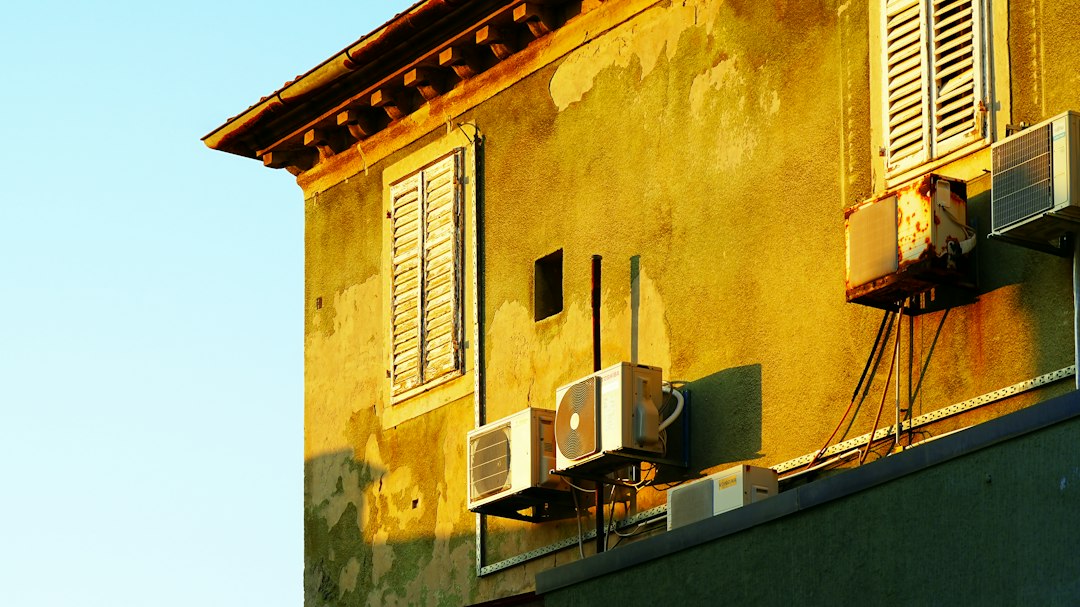
Kansas climate is part of the story, but homeowner or business owner habits matter too. Some factors are outside our control. Others are absolutely manageable.
For a deeper look at upkeep, we recommend reading this AC tune-up guide and this article on preventing major breakdowns with AC service.
How Kansas heat, humidity, wind, and dust affect AC lifespan
Kansas can be rough on cooling equipment in a few specific ways:
- Heat forces longer cooling cycles
- Humidity makes the system work harder to remove moisture from indoor air
- Wind carries dust and debris into the outdoor unit
- Seasonal swings create expansion and contraction stress on components
Dust buildup is especially sneaky. It can coat condenser coils, reduce heat transfer, and make the system run hotter than it should. That added strain can shorten the life of major parts, especially the compressor.
Humidity also matters more than many homeowners and business owners realize. When air is humid, your AC is doing two jobs at once: lowering temperature and removing moisture. That extra workload can shave years off a neglected system.
The biggest lifespan factors homeowners and business owners can control
The good news is that several of the most important lifespan factors are preventable.
Homeowners and business owners can help their AC last longer by:
- Changing filters regularly, often every 30 to 90 days depending on the filter and home conditions
- Keeping supply and return vents open and unobstructed
- Scheduling professional maintenance before summer
- Keeping at least a couple feet of clearance around the outdoor unit
- Trimming vegetation and removing leaves, grass, and debris
- Using a programmable or smart thermostat to reduce unnecessary runtime
- Addressing small performance issues early
Even simple habits matter. A clogged filter can restrict airflow, cause the system to run longer, and eventually contribute to frozen coils or blower strain. An outdoor unit packed with cottonwood, grass, or leaves cannot breathe properly either.
How long does an ac unit last in kansas when maintenance is skipped?
When maintenance is skipped year after year, lifespan drops fast. A neglected unit in Kansas may fail in as little as 8 to 12 years.
Common problems from poor maintenance include:
- Dirty evaporator or condenser coils
- Frozen coils from airflow issues
- Short cycling
- Overheating components
- Drain line clogs
- Low efficiency and higher runtime
- Compressor wear
Maintenance cannot stop aging forever, but it can absolutely slow it down. Think of tune-ups like changing the oil in a car. Ignore them long enough, and the bigger problems tend to arrive at the worst possible time, usually when it is 98 degrees outside and everyone is already cranky.
Signs Your AC Is Nearing the End of Its Life
Most AC systems do not quit without warning. They usually leave clues first. The trick is noticing them before you lose cooling during a Kansas heat wave.
For related warning signs, see Signs Your AC Needs Repair and Right Time for an AC Replacement.
Performance signs to watch before a breakdown
Watch for these common signs that an AC is losing ground:
- Warm or mildly cool air instead of steady cold air
- Weak airflow from vents
- Uneven cooling from room to room
- Rising indoor humidity
- Short cycling
- Longer run times
- Trouble keeping up on hot afternoons
If your home feels sticky, stuffy, or patchy even when the thermostat says everything is fine, the system may be struggling. Older units often lose performance gradually, so homeowners and business owners sometimes adjust by lowering the thermostat more and more without realizing the AC itself is declining.
Age, refrigerant, and repair history warning signs
Age is not the only factor, but it is an important one.
Pay close attention if your AC is:
- 12 to 15 years old or older
- Using R-22 refrigerant
- Breaking down repeatedly
- Showing rust, corrosion, or refrigerant leaks
- Running with an expired warranty
- Needing larger repairs more often
R-22 matters because it has been phased out. Systems made before 2010 are more likely to use it, and that can make leak-related repairs harder to justify. If your technician tells you the system uses R-22 and also has major wear, replacement often makes more sense than trying to keep an outdated setup alive.
How long does an ac unit last in kansas before efficiency starts to drop?
Efficiency usually starts dropping before the unit fully fails. By around year 10, many systems are no longer operating anywhere near original performance. Some research suggests a 12-year-old AC can lose roughly 20 to 30 percent of its original efficiency, especially if maintenance has been inconsistent.
That means the system may still run, but it runs longer to do less.
You may notice:
- Higher utility bills
- Less comfort for the same thermostat setting
- More noise during operation
- More frequent repairs
- Longer cooling cycles
So if you are wondering how long does an AC unit last in Kansas before it becomes expensive to keep, the answer is often: several years before total failure. Many systems become inefficient long before they completely stop working.
Repair or Replace: Making the Right Decision
This is the part homeowners and business owners usually wrestle with: should we repair the current unit or move on?
Helpful reading if you are weighing options:
When repair still makes sense
Repair is often the right choice when:
- The unit is under 10 years old
- The issue is isolated and relatively minor
- The system has a good maintenance record
- Cooling has been reliable overall
- Repair history is light
Examples include a failed capacitor, contactor issue, thermostat problem, or another single-component repair on a younger system that still cools well.
If the unit is otherwise in good shape, we usually want to preserve that remaining lifespan instead of replacing equipment too early.
When replacement is the smarter move
Replacement becomes more attractive when:
- The unit is 12 to 15 years old or older
- Breakdowns are happening regularly
- Comfort is inconsistent
- Humidity control is poor
- The system uses R-22 refrigerant
- A major component is failing
- Efficiency has dropped noticeably
Once a unit gets into later-life territory, repairs can become repetitive. One part fails, then another, then another. At that stage, homeowners and business owners are not just paying for repairs with money or time. They are also paying with stress, surprise outages, and summer discomfort.
Simple rules homeowners and business owners can use without overthinking it
Two common decision tools can help:
- The $5,000 rule: multiply the age of the unit by the repair cost. If the result is over $5,000, replacement is often the better long-term decision.
- The 40 to 50 percent rule: if one major repair would equal roughly 40 to 50 percent of replacement value, it is usually smart to seriously consider replacement.
These are rules of thumb, not hard laws. They help create perspective.
Here is a quick comparison:
SituationRepair-FriendlyReplacement-ReadySystem ageUnder 10 years12-15+ yearsRepair historyRare repairsFrequent repairsCooling performanceStill strongUneven or weakRefrigerantCurrent typeR-22EfficiencyBills stableBills climbingOverall reliabilityGoodUncertain
If your unit is older and unreliable, replacing before peak summer failure is often easier than waiting for the hottest day of the year to make the decision for you.
Why Newer AC Systems Are Worth Considering
If your old unit is fading, a new system is not just about replacing what broke. It is also about improving comfort, efficiency, and reliability.
For more on that, see A New AC System Worth the Investment.
Energy efficiency and utility bill benefits of replacement
Modern AC systems are much more efficient than older models. Research shows high-efficiency units can reduce energy use by about 20 to 50 percent compared with aging equipment.
That difference is especially meaningful in Kansas, where ACs can run hard for long stretches.
Older systems may have been installed with lower SEER ratings, and age only reduces actual efficiency further. Newer equipment uses updated standards such as SEER2 and is designed to deliver better real-world performance.
That can mean:
- Lower energy use
- Shorter runtime for the same comfort
- Better humidity removal
- More stable indoor temperatures
Refrigerant changes and why R-22 matters
R-22 refrigerant was phased out because of environmental concerns. If your system still uses it, that is a major factor in replacement planning.
Why it matters:
- R-22 is no longer produced for new use
- Repairs involving refrigerant leaks become harder to justify
- Older R-22 systems are already at or near end-of-life age
- New systems use current refrigerants and are easier to support moving forward
In plain English: if your AC still runs on R-22, it is not getting younger, parts are not getting easier, and replacement is usually the more future-proof move.
Comfort and reliability upgrades homeowners and business owners notice right away
Homeowners and business owners usually notice several improvements after replacement:
- More even cooling throughout the house
- Better humidity control
- Quieter operation
- Improved airflow
- Smarter thermostat compatibility
- Fewer surprise repair calls
A newer system also tends to recover faster on very hot Kansas afternoons. Instead of running endlessly and still feeling behind, it can maintain comfort more consistently.
Kansas AC Maintenance Tips to Help Your Unit Last Longer
If you want to get the most life from your cooling system, maintenance is the biggest lever you can pull.
If you are comparing replacement timing in nearby communities, these guides may also help:
- AC Replacement Andover KS Complete Guide
- AC Replacement Goddard KS Guide
- AC Replacement Valley Center KS Guide
Homeowner or Business Owner maintenance habits that add years of life
These simple habits help more than people expect:
- Replace filters on schedule
- Keep furniture and rugs from blocking vents
- Keep blinds closed during the hottest part of the day
- Check that the outdoor unit stays clear of weeds, leaves, and debris
- Hose off loose dirt around the condenser area when appropriate
- Use thermostat setbacks instead of extreme temperature swings
- Pay attention to new noises, odors, or weak airflow
A smart thermostat can also help reduce unnecessary runtime, especially during work hours or while you are away.
What professional AC maintenance should include
A professional tune-up should go beyond a quick glance. It should include inspection, cleaning, testing, and adjustment of key parts such as:
- Condenser and evaporator coils
- Refrigerant level and operating pressures
- Electrical connections and components
- Capacitor and contactor condition
- Condensate drain and drain line
- Blower components
- Thermostat calibration
- Temperature split and airflow testing
The goal is to catch small issues before they become bigger failures and to make sure the system is operating as efficiently as possible.
Best maintenance timing for Wichita and surrounding Kansas communities
In our area, the best time for AC maintenance is spring, before the first serious heat wave arrives. That gives homeowners and business owners in Wichita, Andover, Derby, Bel Aire, Maize, Park City, Valley Center, Goddard, Rose Hill, and nearby communities a chance to catch wear issues before summer demand peaks.
Spring service helps with:
- Pre-season reliability
- Better cooling performance
- Improved efficiency
- Reduced risk of midsummer breakdowns
If your unit is older, annual maintenance is essential. For some homes, especially those with pets, dust, or heavy summer use, even closer monitoring can be worth it.
Conclusion
So, how long does an AC unit last in Kansas? For most homeowners and business owners in Wichita and surrounding communities, the realistic answer is about 12 to 17 years, with many systems trending closer to 12 to 15 years because of our heat, humidity, dust, and long cooling seasons.
The biggest things that affect lifespan are:
- Climate and runtime
- Installation quality
- Maintenance history
- Refrigerant type
- How quickly problems are addressed
If your system is aging, struggling to keep up, or using R-22, it may be time to start planning instead of waiting for a total breakdown. And if your AC is still in good shape, regular maintenance can help you squeeze more good years out of it.
At Midwest Mechanical, we help homeowners and business owners in Wichita and nearby Kansas communities make smart decisions about cooling, whether that means maintenance, repair, or replacement planning. For more information about your options, visit More info about air conditioning services.


We have partnered with GoodLeap to offer flexible payment options for your project. GoodLeap uses a soft credit check until funding and the highest score from all 3 bureaus to see if you qualify. It also takes just a few minutes to get started.






.svg)