
Is Your Plumbing Problem a DIY Fix or a Job for a Pro?
Knowing when to call a plumber vs DIY can be the difference between a quick, cheap fix and a costly repair bill — or worse, serious water damage to your home. Here's a fast answer to help you decide:
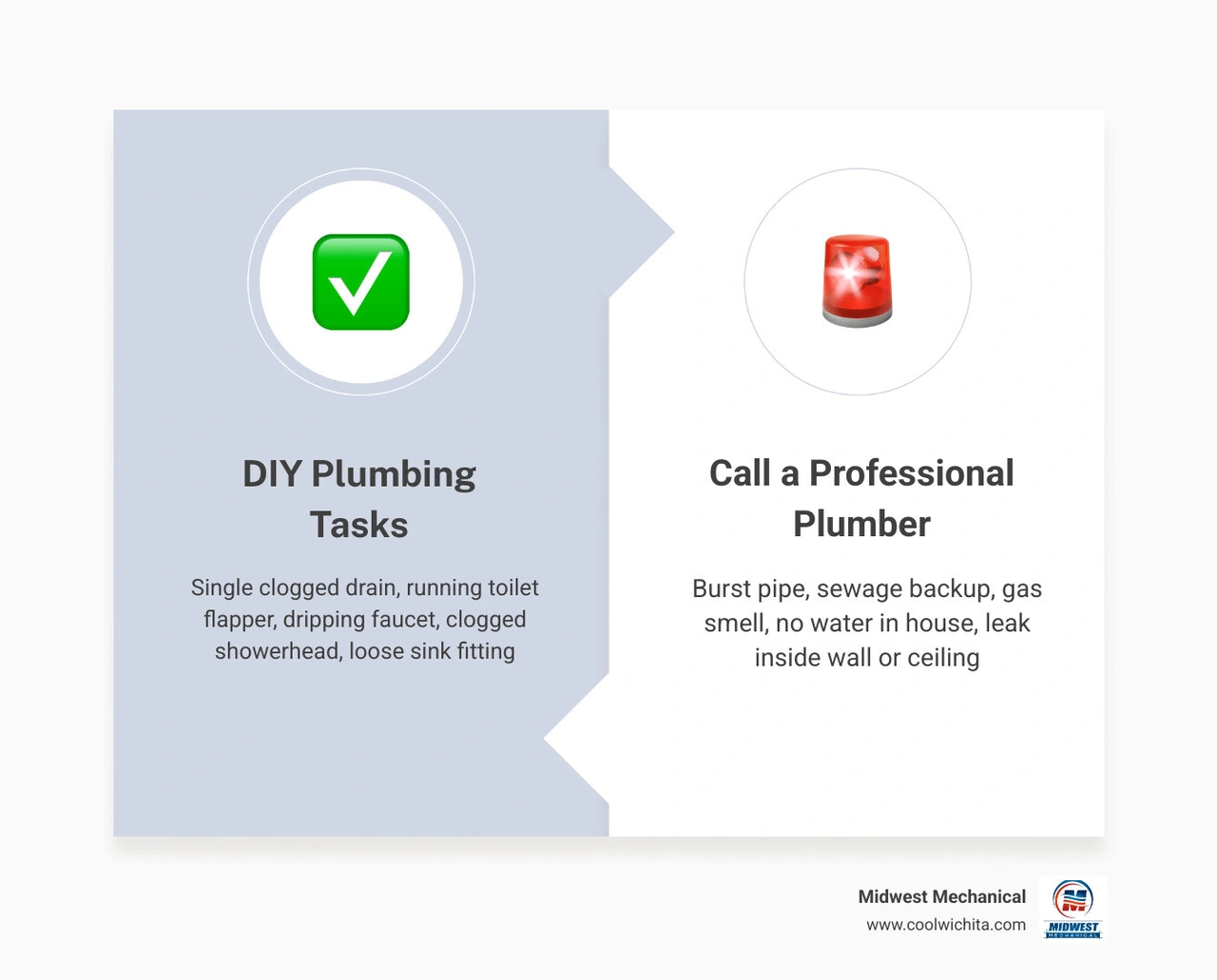
Call a plumber immediately if you have:
- A burst or frozen pipe
- Sewage backing up into drains or tubs
- A gas smell near your water heater or appliances
- No water throughout the entire house
- Water leaking inside a wall, ceiling, or under a slab
Safe to DIY (with the right tools and know-how):
- A single slow or clogged drain
- A running toilet with a worn flapper or fill valve
- A dripping faucet with a bad washer or cartridge
- A clogged showerhead with mineral buildup
- A loose fitting under the sink
For everything in between, the decision usually comes down to three questions: Is water actively damaging something right now? Does the fix involve a gas line, sewer, or main water line? Can you fully isolate the problem to one fixture?
If the answer to the first two is yes — stop and call a licensed plumber.
Every Wichita homeowner or business owner has been there. You notice a drip under the sink or a toilet that won't stop running, and your first instinct is to grab a wrench and handle it yourself. That instinct isn't wrong — plenty of plumbing fixes are genuinely safe and simple for a capable homeowner or business owner. But plumbing systems are more connected and pressurized than they appear, and one wrong move in the wrong place can turn a $20 repair into thousands of dollars in water damage, mold remediation, or code violations.
In July 2026, with home repair costs continuing to rise and endless DIY tutorials just a search away, it's more important than ever to know exactly where the line is — and when to put the wrench down and pick up the phone.
This guide walks you through that line, clearly and practically, so you can protect your home and make the right call every time.
Simple when to call a plumber vs diy glossary:
- drain cleaning tips and when to call a pro
- plumbing problems homeowners and business owners should never ignore
- plumbing tips for homeowners and business owners
The Homeowner’s or Business Owner’s Dilemma: When to Call a Plumber vs DIY
Deciding whether to roll up your sleeves or call in the professionals is a classic homeowner or business owner dilemma. On one hand, there is a distinct sense of pride that comes with fixing a household leak yourself. On the other hand, research shows that 7 out of 10 DIY attempts fail. In plumbing, a failed attempt is rarely just a minor inconvenience; it can be an absolute disaster.
If a DIY fix fails and causes water damage, the cost of remediation can be ten times higher than the cost of a standard professional service call. This is because water is incredibly destructive. Within just 24 to 48 hours of exposure to standing water, mold growth can begin in drywall, subfloors, and carpets.
Additionally, attempting complex repairs on your own can have major legal and financial ramifications. Many home insurance policies actually exclude coverage for water damage caused by uncertified or unlicensed DIY repairs. If you attempt to repipe a section of your home or install a new plumbing fixture without a permit, and it later leaks and floods your basement, your insurance provider may deny your claim entirely.
Local building codes are designed to keep your family safe. In Wichita, KS, and surrounding areas like Maize and Bel Aire, local plumbing standards require specific permit filings, inspections, and material specifications for major plumbing alterations. Licensed professionals understand these codes inside and out, ensuring that your home remains compliant and your insurance coverage stays fully intact.
To help you navigate this decision framework, check out our Plumbing Tips for Homeowners and business owners and review the quick comparison table below:
DIY-Friendly vs. Professional-Only Plumbing Tasks
Plumbing IssueDIY-Friendly?Why or Why Not?Minor Drain ClogYesCan usually be cleared with a standard plunger or a hand-cranked drain snake.Running ToiletYesTypically requires a simple flapper replacement or fill valve adjustment.Dripping FaucetYesOften resolved by swapping out a worn rubber washer or a cartridge.Burst or Frozen PipeNoRequires specialized pipe-joining tools and poses a high risk of immediate flooding.Sewer Line BackupNoDemands high-definition pipe cameras, commercial hydro-jetters, and deep system knowledge.Water Heater InstallationNoHigh-stakes work involving gas lines, electrical wiring, thermal expansion, and strict building codes.Gas Line RepairsNoExtremely dangerous; mistakes can lead to carbon monoxide poisoning or explosions.
Safe and Simple DIY Plumbing Projects
If you want to tackle home maintenance yourself, the key is starting with low-risk, high-reward projects. These are tasks where you can easily isolate the water supply, use basic hand tools, and complete the job without any risk of structural damage if things don't go perfectly on the first try.
Before starting any DIY project, make sure you have a basic toolkit on hand: an adjustable wrench, channel-lock pliers, a bucket, a flashlight, and plumber's tape (Teflon tape). Always locate the individual shutoff valve under the sink or behind the toilet and turn it clockwise to completely isolate the fixture before you begin.
Minor Drain Clogs and When to Call a Plumber vs DIY
A single slow-draining sink or tub is one of the most common household annoyances. In most cases, these minor blockages are caused by hair, soap scum, or grease collecting just below the drain grate.
For a single fixture clog, a plunger or a simple hand-cranked drain snake is your best friend. When plunging a sink, make sure to plug the overflow hole with a damp rag to create a tight vacuum seal. If plunging doesn't work, you can use a natural mixture of baking soda, vinegar, and boiling water to break up organic grease. Cleaning out the P-trap — the curved pipe directly beneath your sink — is also a highly effective DIY task. Just place a bucket underneath, unscrew the slip nuts, and clear out the accumulated debris.
However, you must know when to stop. If you find yourself constantly plunging the same drain, or if multiple drains across your home are running slow at the same time, you are no longer dealing with a simple surface clog.
To learn more about what causes these issues and how to avoid them, read about the Common Causes of Clogged Drains and check out our guide on How to Prevent Drain Clogs Before They Happen.
Basic Fixture Upgrades and Running Toilets
Upgrading outdated fixtures is a fantastic way to improve your home's aesthetic and water efficiency. Swapping out an old showerhead or installing a new faucet aerator is incredibly simple. All it takes is unscrewing the old unit, wrapping the threads clockwise with 2 to 3 layers of Teflon tape to ensure a watertight seal, and threading on the new fixture.
Similarly, fixing a running toilet is highly accessible. Most running toilets are caused by a degraded rubber flapper that no longer seats properly or a misadjusted float valve. Replacing these parts takes about 20 minutes and requires no special tools.
These quick fixes are particularly beneficial for Derby, KS homes and businesses, where the local water supply can carry minerals that accelerate the wear and tear on rubber plumbing components. According to the EPA, a running toilet can waste hundreds of gallons of water each day, while a single dripping faucet can waste more than 3,000 gallons per year. Taking care of these small issues yourself keeps your utility bills low and prevents minor drips from turning into major headaches.
High-Stakes Situations That Require a Professional Plumber
While simple fixes are great for Saturday morning DIY sessions, certain plumbing issues carry an incredibly high risk of structural damage, safety hazards, and health risks. When these situations arise, trying to fix them yourself can easily lead to catastrophic failures.
Our team at Midwest Mechanical possesses the specialized training, code familiarity, and heavy-duty diagnostic equipment required to handle these complex systems safely. To keep your home protected, it is vital to recognize the Plumbing Problems Homeowners and Business Owners Should Never Ignore.
Main Line Blockages and Sewer Backups
Your main sewer line is the single most important section of plumbing on your property. Every drain in your home empties into this single pipe, which carries waste away to the municipal sewer system. When the main line becomes blocked — often due to tree root intrusion, sagging pipes, or deep grease buildup — the consequences are severe.
Signs of a main line blockage include:
- Multiple slow-running drains throughout the house
- Gurgling noises coming from your toilets or tub drains when you run the washing machine
- Raw sewage backing up into your basement floor drains, showers, or tubs
This is not a job for a store-bought hand snake. Clearing a main line requires professional hydro-jetting, which uses high-pressure water to scour the inside of the pipes and blast away tree roots. Licensed plumbers also use high-definition sewer cameras that travel up to 100 feet inside the line to pinpoint the exact location and cause of the blockage.
Attempting to clear a main sewer line yourself can result in cracked underground pipes and exposure to dangerous pathogens found in raw sewage. For a deeper look at your options, read our guide on Drain Cleaning Tips and When to Call a Pro and learn How Professional Drain Cleaning Differs from Store Bought Solutions.
Hidden Water Leaks and Low Water Pressure
Not all water leaks are obvious. While a burst pipe is immediately noticeable, a slow, hidden leak inside a wall or ceiling can go undetected for months. Over time, these silent leaks rot structural wood, ruin drywall, and foster toxic mold growth.
Watch out for these warning signs of a hidden leak:
- Unexplained damp or soft spots on your walls, ceilings, or flooring
- Musty, earthy odors that won't go away
- A sudden, unexplained spike in your monthly water bill
- The home's water meter dial spinning even when all water fixtures are completely turned off
Wichita's hard water can also cause mineral deposits to build up inside copper or galvanized steel pipes, narrowing the pathway for water and putting extra stress on your pipe joints. If you suspect a leak but can't find the source, it is time to call in a professional. Plumbers use advanced tools like acoustic leak detectors and thermal imaging cameras to locate hidden leaks behind walls without tearing your home apart.
To help protect your home, read up on the Signs You Have a Hidden Water Leak and gain a better Understanding Main Water Line Issues.
How to Decide When to Call a Plumber vs DIY for Low Water Pressure
Low water pressure can be a minor annoyance or a symptom of a failing plumbing system. To decide when to call a plumber vs DIY for water pressure issues, you first need to determine if the problem is isolated or widespread.
If the low pressure is only affecting a single fixture, like your kitchen sink, the fix is usually simple. Unscrew the aerator at the tip of the faucet, soak it in vinegar overnight to dissolve mineral buildup, and scrub it clean with a toothbrush.
However, if you have weak water pressure across your entire house, the root cause is much deeper. It could indicate a failing main water shutoff valve, a malfunctioning pressure-reducing valve (PRV), or a major hidden leak in your main water line. Adjusting or replacing a whole-house PRV requires precise calibration to prevent over-pressurizing your pipes, which can cause them to burst.
If your whole home is experiencing a drop in flow, save yourself the frustration and explore our Solutions for Low Water Pressure or consult our Plumber Low Water Pressure Tips Guide.
Water Heaters and Gas Line Safety
Water heaters are complex appliances that combine high-voltage electricity or natural gas with water under intense heat and pressure. Because of this, they represent some of the highest-stakes equipment in your home.
If your gas water heater is improperly vented, it can leak odorless, deadly carbon monoxide gas into your living space. Additionally, natural gas is highly combustible; a minor mistake while tightening a gas connection can lead to catastrophic fires. Even electric water heaters require proper thermal expansion tanks and temperature and pressure (T&P) relief valves to prevent the tank from over-pressurizing and bursting.
Because of these extreme safety risks and the strict local building codes in places like Andover, KS, water heater installations and gas line repairs are strictly professional-only jobs. If you notice your water heater leaking, making popping or banging sounds, or failing to produce hot water, do not attempt to dismantle it yourself. Instead, refer to our Licensed Plumber Andover KS Guide to find a qualified expert who can handle the job safely and legally.
The Hidden Risks and Long-Term Consequences of DIY Mistakes
The biggest risk of DIY plumbing isn't just that the repair might not work; it's the hidden, long-term consequences of a mistake. A connection that seems dry today can slowly weep water inside a wall cavity for months, quietly rotting your home's framing and creating a massive mold problem.
Furthermore, many plumbing fixtures carry manufacturer warranties that are only valid if the unit was installed by a licensed professional. If you install your own water heater or high-end shower system and it fails due to a manufacturing defect, the company may refuse to honor the warranty because of the self-installation.
When you choose to work with a licensed professional, you aren't just paying for labor; you are purchasing peace of mind, code compliance, and liability protection. To understand why this investment is always worth it, read our article on Why Hire a Professional Plumber.
Common Garbage Disposal Installation Mistakes
Garbage disposals are incredibly convenient kitchen appliances, but installing them is a deceptively complex task that sits at the intersection of plumbing and electrical work.
Homeowners and business owners attempting a DIY installation often make several critical errors:
- Forgetting the dishwasher drain plug: New garbage disposals come with a plastic knockout plug in the drain tube. If you have a dishwasher connected to the disposal and forget to knock this plug out with a screwdriver before installation, your dishwasher will not drain, resulting in a flooded kitchen floor.
- Improper sink flange sealing: The disposal must be sealed tightly to the sink drain opening using plumber's putty. If the putty is applied unevenly, or if the mounting ring isn't locked down fully, water will slowly drip onto your wooden cabinetry below.
- Overtightening connections: Forcing plastic slip joints or metal rings too tight can crack the disposal housing or strip the threads, causing immediate leaks.
To keep your kitchen running smoothly, learn more about Garbage Disposal Installation Mistakes, check out our tips on Preventing Garbage Disposal Clogs, and memorize the Things You Should Never Put Down Your Kitchen Drain.
Frequently Asked Questions
How do I know if a plumbing leak is safe to fix on my own?
A leak is generally safe to DIY if it is fully visible, easily accessible, and can be isolated by turning off a local shutoff valve (such as the valves directly under your sink or behind your toilet). For example, tightening a loose slip-joint nut on an exposed P-trap or replacing a worn faucet cartridge are excellent DIY tasks.
If the leak is located inside a wall, ceiling, or under a concrete slab, or if you cannot turn off the water supply to that specific area without shutting off water to the entire neighborhood, do not attempt to fix it yourself.
Can chemical drain cleaners damage my home's pipes?
Yes, we strongly advise against using chemical drain cleaners. These products contain highly caustic acids that work by generating intense chemical heat to melt away blockages. Over time, this heat and chemical reaction can corrode metal pipes, soften and deform plastic PVC pipes, and weaken glued joints.
If the chemical cleaner fails to clear the clog, it leaves a pool of highly toxic, standing acid in your sink that can burn your skin and eyes if you try to plunge it later. Instead, stick to mechanical clearing methods like plungers, hand snakes, or natural enzyme-based cleaners.
What should I do immediately if a pipe bursts in my home?
If a pipe bursts, your priority is to stop the flow of water as quickly as possible to minimize structural damage.
Follow these steps immediately:
- Locate your home's main water shutoff valve (usually found in the basement, crawlspace, or near your street-side water meter) and turn it fully clockwise to shut off the water supply to the entire house.
- Turn off the electricity at your main breaker panel if water is leaking near electrical outlets, light fixtures, or appliances.
- Open your lowest faucets (like a basement sink or outdoor hose bibb) to drain the remaining water out of your pipes.
- Clean up as much standing water as possible using towels, mops, or a wet/dry vacuum to prevent mold.
- Call a licensed plumber to repair the broken pipe and inspect the rest of your system.
Keep Your Home Comfortable and Dry
Plumbing is the literal lifeblood of your home, delivering clean water and safely whisking away waste. While taking care of minor clops and basic fixture upgrades yourself is a great way to stay involved in your home's upkeep, knowing when to call a professional is the ultimate sign of a smart homeowner or business owner.
Our team at Midwest Mechanical is proud to serve families across the Greater Wichita area, including Andover, Derby, Maize, Bel Aire, and surrounding communities. We bring traditional customer service, state-of-the-art diagnostic tools, transparent pricing, and comprehensive maintenance plans to every single job. Whether you need help diagnosing a mysterious drop in water pressure or want to schedule a professional drain inspection, we are here to ensure your plumbing system remains reliable and worry-free.
Don't let a minor plumbing issue turn into a major home disaster. If you have a problem that requires an expert eye, head over to our Midwest Mechanical Plumbing Services page today to schedule a service visit with our friendly, licensed team!


We have partnered with GoodLeap to offer flexible payment options for your project. GoodLeap uses a soft credit check until funding and the highest score from all 3 bureaus to see if you qualify. It also takes just a few minutes to get started.






.svg)