
Your Kitchen Drain Is Not a Trash Can (And Your Pipes Are Paying for It)
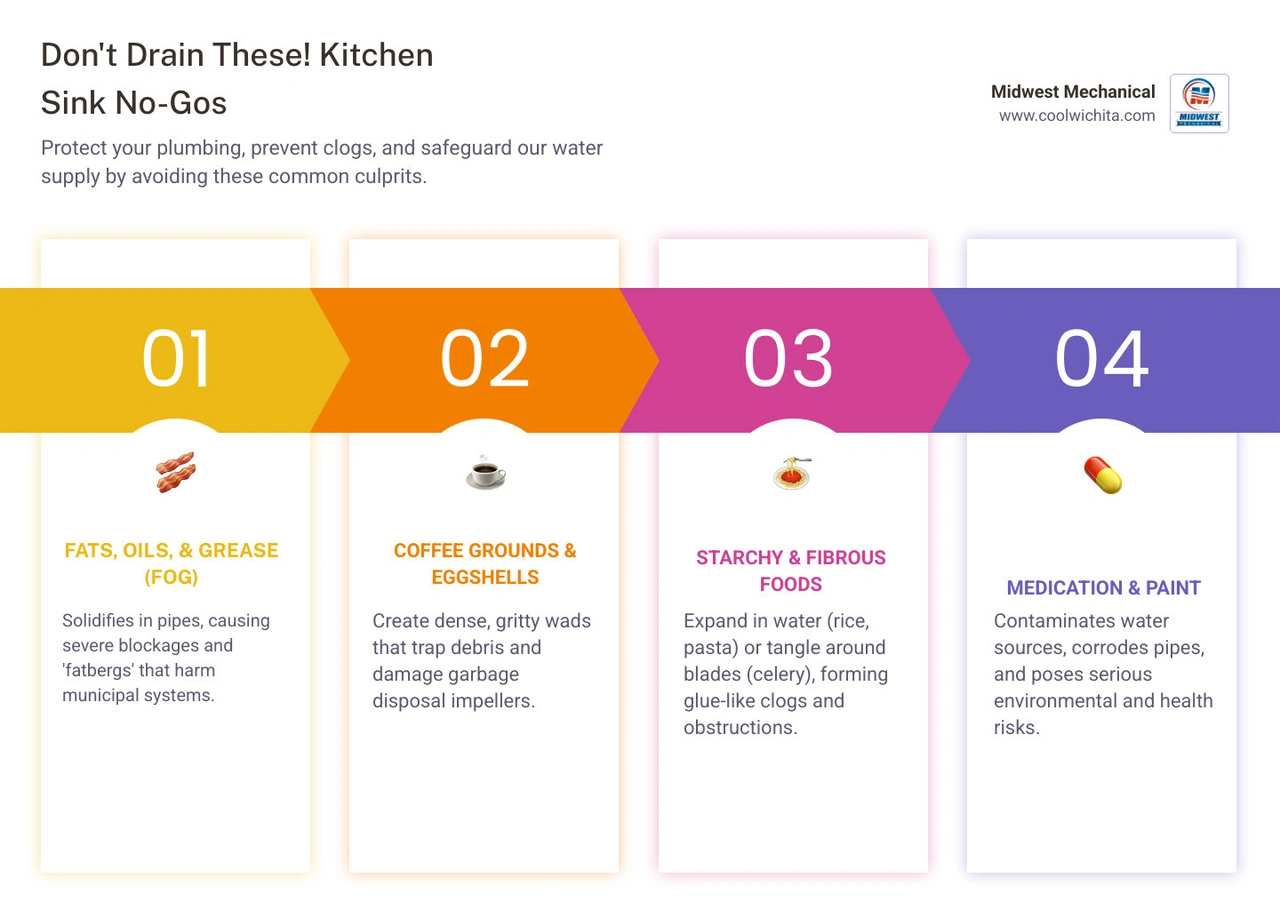
The things you should never put down your kitchen drain include:
ItemWhy It's HarmfulFats, oils, and grease (FOG)Solidifies in pipes, causing blockages and fatbergsCoffee groundsForms a dense, gritty wad that traps other debrisEggshellsSharp edges collect buildup and slow drainageRice and pastaExpands with water, creating glue-like clogsPotato peelsCreates a thick starchy paste that coats pipe wallsFibrous vegetablesTangles around disposal blades and lodges in pipesProduce stickersNon-biodegradable; sticks to pipes and water treatment filtersMedicationContaminates water supply and local waterwaysPaintContains toxins that corrode pipes and pollute water sourcesHousehold cleanersCaustic chemicals damage pipes and harm septic systems
Here's an uncomfortable truth: when your kitchen sink clogs, it's almost never a plumbing defect. It's a habit problem. Plumbing experts put it plainly — the vast majority of kitchen drain clogs are caused by what homeowners and business owners put down the drain themselves.
It's easy to treat the kitchen sink like a catch-all. A splash of bacon grease here, a rinse of coffee grounds there. Each incident feels harmless on its own. But inside your pipes, these materials are building up — solidifying, expanding, tangling, and slowly narrowing the passage your water needs to flow freely.
Over time, what starts as slow drainage can spiral into a full backup. And in some cases, the damage doesn't stop at your pipes — improper disposal of medications and paint can contaminate Wichita's water supply in ways that wastewater treatment plants aren't always equipped to fully reverse.
This guide breaks down exactly which items are silently damaging your kitchen plumbing — and what to do instead.
Things You Should Never Put Down Your Kitchen Drain: The Top Offenders
As we move through April 2026, many of us in Wichita and surrounding areas like Andover or Derby are spending more time in our kitchens. However, our pipes aren't always prepared for the workload. Understanding the Common Causes of Clogged Drains is the first step toward a healthy home.
The biggest threat to our municipal and residential sewer systems is a category known as FOG: Fats, Oils, and Grease. To give you an idea of the scale of this issue, nearly 47% of sewer overflows each year nationwide result from grease, fats, and oils being poured down the drain. When these substances enter your plumbing, they don't just "go away." They transform.
If you are already dealing with a sink that won't move, you likely need a professional for a Clogged Drain in Wichita, KS. But before that happens, let's look at why these specific items are so dangerous.
Why Fats, Oils, and Grease (FOG) are Enemy #1
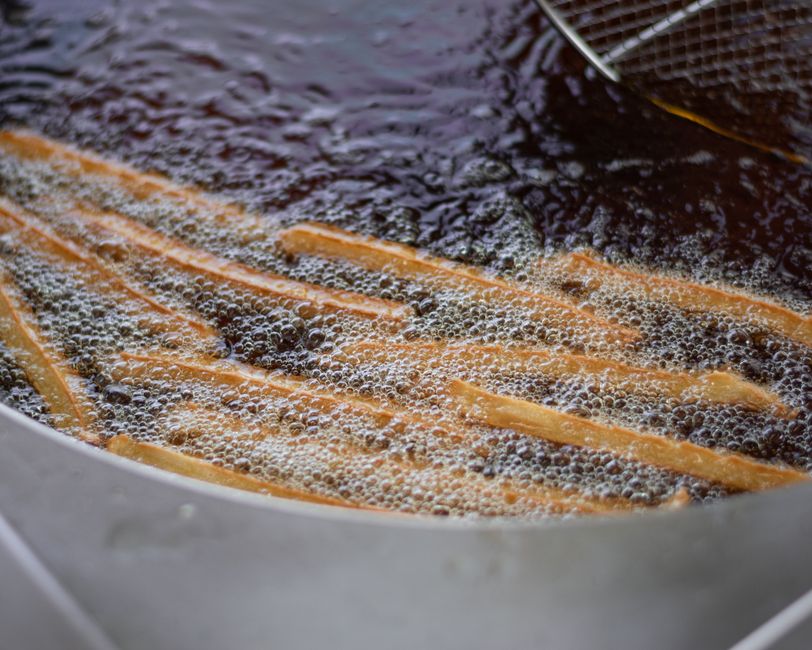
Fats, oils, and grease are the "blood clots" of the plumbing world. When you pour liquid grease—like bacon fat, butter, or cooking oil—down the sink, it may look harmless because it's in liquid form. However, as soon as it hits the cooler temperatures of your underground pipes, it congeals.
This congealed mass clings to the pipe walls, slowly narrowing the diameter of the pipe. As it grows, it catches other food particles, hair, and debris, eventually forming what plumbers call "fatbergs." These are massive, rock-hard blockages that can shut down an entire sewer line.
Proper Disposal Tip: Never pour grease down the drain, even with hot water. Instead, wait until the grease cools and solidifies. Scrape it into a disposable container (like an old soup can or glass jar) and toss it in the trash. For larger amounts of cooking oil, some local programs in the Wichita area even allow you to recycle it into biofuel. If the damage is already done, you'll likely need professional Drain Cleaning in Wichita, KS to clear the sludge.
The Truth About Coffee Grounds and Eggshells
Coffee grounds are perhaps the most deceptive items on this list. Because they are so small, many people assume they will simply wash away. In reality, plumbers say coffee grounds are the most common cause of drain problems. They don't dissolve in water; instead, they settle in the "P-trap" or pipe bends, clumping together into a dense, muddy wad. This wad acts like a dam, trapping every other piece of debris that tries to pass through.
Eggshells are equally problematic. Even if you have a powerful garbage disposal, the shells don't fully disintegrate. They break into tiny, sharp shards. These shards have a habit of getting stuck in the sticky grease already lining your pipes. Furthermore, the thin inner membrane of the eggshell can wrap itself around the disposal's impellers or blades, leading to mechanical failure. If your unit is struggling, Solving Garbage Disposal Problems usually starts with clearing out these stubborn remains.
Why medication and paint are things you should never put down your kitchen drain
While food clogs are a nuisance, putting medication and paint down the drain is an environmental hazard. A landmark US Geological Survey discovered that up to 80% of U.S. streams contain traces of pharmaceuticals. Wastewater treatment plants are designed to remove biological waste, not complex chemical compounds. When you flush pills or pour liquid medicine down the sink, those chemicals eventually end up in our local watersheds, harming aquatic life and potentially contaminating the water supply.
Paint is another major "no-no." It contains toxins and chemicals that are highly corrosive to your pipes and devastating to the environment. Latex paint can dry inside your pipes, creating a permanent, rubbery blockage that is nearly impossible to snake out. Oil-based paints are even worse, as they adhere to pipe walls and release volatile organic compounds (VOCs).
What to do instead:
- Medication: Utilize pharmacy take-back programs or local police station drop boxes in Wichita.
- Paint: Take leftover paint to a hazardous waste disposal center. For small amounts of latex paint, let it dry out completely (you can add kitty litter to speed it up) before throwing the solid mass in the trash.
Starchy and Fibrous Foods That Expand and Tangle
Your garbage disposal is not a wood chipper. It is a finely tuned machine designed for soft food scraps. Many homeowners and business owners run into trouble because they don't realize that some foods actually change shape or texture once they enter the drain. Preventing Garbage Disposal Clogs requires knowing which foods are "expanders" and which are "tanglers."
Food CategoryExamplesWhy It ClogsExpandersRice, Pasta, OatsAbsorb water and swell to twice their sizeTanglersCelery, Corn Husks, AsparagusFibrous strands wrap around bladesPastesFlour, Potato PeelsMixes with water to create "plumber's glue"
Starchy things you should never put down your kitchen drain
Rice and pasta are designed to absorb water. That process doesn't stop just because you've finished dinner. If you dump a pile of leftover spaghetti or rice down the drain, those grains will continue to swell inside your pipes. Because they are also starchy, they become incredibly sticky, creating a glue-like paste that grabs onto the pipe walls.
Potato peels are another major offender. In fact, plumbers often refer to the day after Thanksgiving as "Black Friday" because of the sheer volume of calls regarding potato-peel clogs. When you put a large amount of peels through the disposal, they turn into a thick, starchy mash—essentially mashed potatoes—that can completely plug the line. If your sink is backing up after a big meal, you might find your Garbage Disposal Not Working because it's choked with starch.
Fibrous vegetables and produce stickers
Fibrous vegetables like celery, onion skins, artichokes, and corn husks are the natural enemies of your disposal blades. The long, tough strings in these plants don't get chopped up easily. Instead, they wrap around the motor's spinning components, causing the disposal to jam. These fibers can also act like a "net" inside your pipes, catching other debris and forming a stubborn mat that blocks water flow.
Then there are the tiny produce stickers. They seem insignificant, but these stickers are made of plastic and non-water-soluble adhesive. They don't break down. Instead, they stick to the inside of your pipes or pass through to the water treatment plant, where they can clog filters and pumps. Always peel them off and toss them in the trash before washing your fruit. If your disposal has been mangled by too many tough fibers, you may need to consult a Garbage Disposal Installation Wichita Guide for a replacement.
Prevention and Professional Maintenance Habits
Preventing a plumbing disaster is much easier (and cleaner) than fixing one. The most effective tool in your arsenal is a simple, high-quality sink strainer.
A strainer acts as the final line of defense, catching the things you should never put down your kitchen drain before they can cause trouble. Empty the strainer into your trash or compost bin regularly.
Speaking of composting, it is the perfect solution for vegetable peels, coffee grounds, and eggshells. Not only does it keep your pipes clear, but it also provides nutrient-rich soil for your Kansas garden.
If you find that your sink is draining slowly despite your best efforts, it may be time for professional intervention. For deep-seated clogs that a plunger can't reach, Drain Snaking in Wichita, KS is the most effective solution. This process involves using a professional-grade auger to physically break up and remove blockages. You can learn more about how we Unblock Your Pipes with Drain Snaking to restore your kitchen to full functionality.
Frequently Asked Questions about Kitchen Drains
We hear many myths about drain care. Here are the facts to help you keep your plumbing in top shape.
Can I use hot water to wash grease down the drain?
This is perhaps the most dangerous plumbing myth. Many people believe that if they run the hot water while pouring grease, it will stay liquid and wash all the way to the city sewer. This is false. The grease will eventually cool down as it moves further away from your sink. By the time it reaches the main line, it will solidify, often in a spot that is much harder for a plumber to reach. This leads to the formation of downstream fatbergs and a thick coating on the interior of your pipes.
Are "flushable" wipes safe for kitchen-adjacent drains?
The short answer is no. While these products are marketed as "flushable," they do not disintegrate like toilet paper. They are made of tough artificial fibers. When they enter the sewer system—whether through a toilet or a kitchen-adjacent drain—they remain intact. They snag on pipe joints and grease buildup, quickly creating massive blockages in the Wichita municipal sewer lines or your home's main line. Always dispose of wipes in the trash.
What should I do if my kitchen sink is draining slowly?
If you notice a slow drain, act immediately before it becomes a total blockage. You can try:
- Plunging: A standard sink plunger can often dislodge minor food clogs.
- Baking Soda and Vinegar: Pour half a cup of baking soda followed by half a cup of vinegar down the drain. Let it fizz for 15 minutes, then flush with hot (not boiling) water.
- Avoid Chemicals: We strongly advise against using store-bought liquid drain cleaners. These are extremely caustic and can eat away at your pipes, leading to corrosion and leaks.
If these DIY methods fail, it's time to Snake a Drain in Wichita, KS. A professional plumber has the tools to see exactly what is happening. You can read about The Process of Snaking a Drain to understand how we clear your lines safely without damaging your pipes.
Conclusion
Your kitchen is the heart of your home, and your plumbing is its circulatory system. By being mindful of the things you should never put down your kitchen drain, you can avoid the mess, stress, and inconvenience of a major backup. From the fatbergs caused by FOG to the "cement" created by flour and water, your pipes are sensitive to what you feed them.
At Midwest Mechanical, we've seen every type of clog imaginable across Wichita, Bel Aire, and Maize. We are committed to helping our neighbors maintain a comfortable, functional home through expert service and honest advice. Whether you need a routine inspection or a complex repair, our team is here to ensure your plumbing flows as it should.
If your kitchen sink is giving you trouble, don't wait for a "volcano" under the sink. Trust the experts for all your Midwest Mechanical Plumbing Services. Stay smart with your sink, and your pipes will thank you for years to come!


We have partnered with GoodLeap to offer flexible payment options for your project. GoodLeap uses a soft credit check until funding and the highest score from all 3 bureaus to see if you qualify. It also takes just a few minutes to get started.






.svg)