

Why Learning How to Prevent Drain Clogs Before They Happen Saves You Time, Money, and Stress
How to prevent drain clogs before they happen comes down to a handful of consistent daily habits and simple maintenance routines. Here's a quick overview:
- Use drain screens in every sink, shower, and tub to catch hair and debris
- Never pour grease, fats, or oils down any drain — let them cool and trash them
- Only flush toilet paper — no wipes, cotton products, or hygiene items
- Run hot water for 10–15 seconds after each kitchen sink use
- Do a monthly baking soda and vinegar flush to break up early buildup
- Clean drain stoppers weekly to remove trapped hair and soap scum
- Schedule professional drain cleaning every 18–22 months for sewer lines
Most drain clogs don't show up overnight. They build slowly — a little grease here, a clump of hair there — until one day the water just stops moving. By that point, what started as a minor inconvenience can turn into a backed-up sink, a flooded floor, or a costly plumbing call.
The good news? The vast majority of residential drain clogs are entirely preventable. Approximately 85% of U.S. households deal with hard water, which accelerates mineral buildup inside pipes. A single shower drain in a busy household can develop a partial blockage in as little as 30 to 60 days without a hair screen in place. And even small amounts of fats, oils, and grease poured down the kitchen sink can build into a thick, pipe-narrowing layer within just three to six months.
For homeowners and business owners in Wichita and surrounding Kansas communities, staying ahead of drain problems means fewer surprises, less water damage risk, and no standing water greeting you in the shower on a Monday morning.
Common Culprits: What Causes Most Residential Blockages?

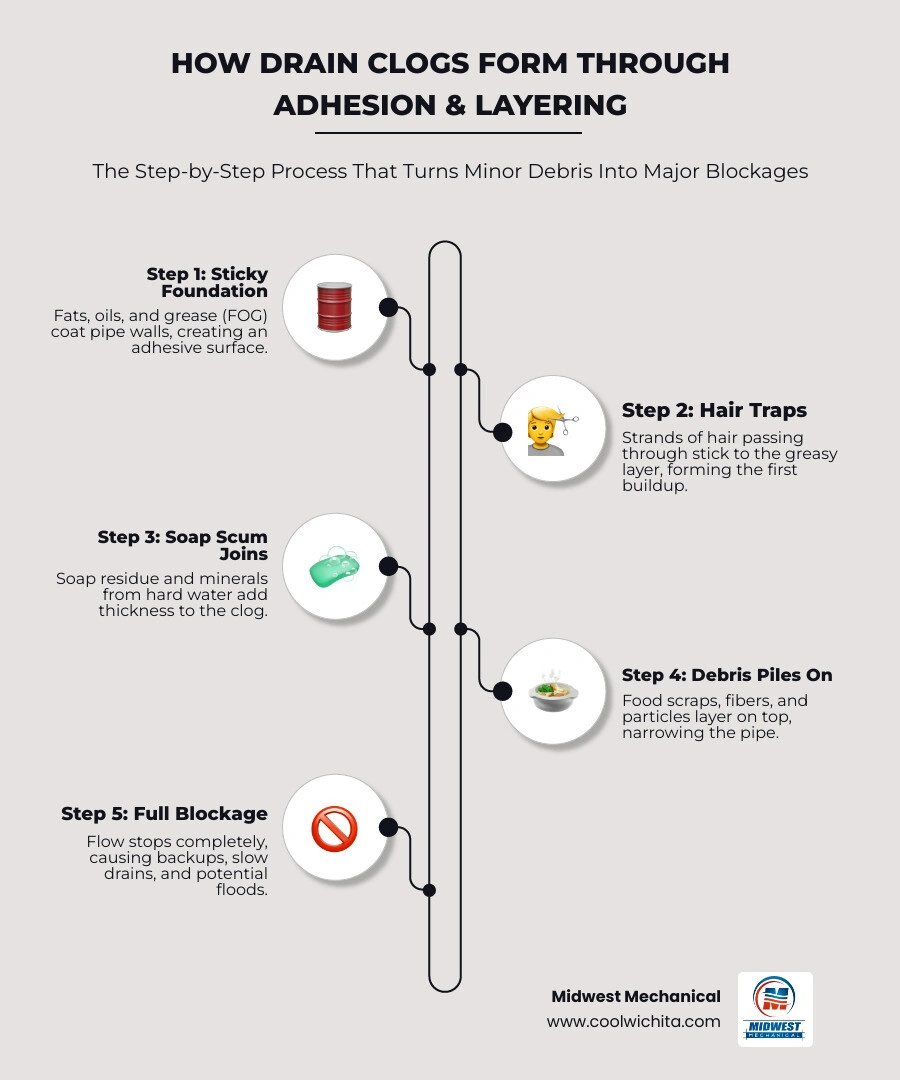
Understanding why pipes clog is the first step in stopping the problem before it starts. Most blockages are caused by a process called "adhesion and layering." It begins when a sticky substance—usually fats, oils, or grease (FOG)—coats the interior of your pipes. Once that sticky foundation is laid, every other bit of debris that passes through becomes a potential building block for a clog.
In our experience serving the Wichita area, we see several recurring offenders:
- Fats, Oils, and Grease (FOG): These are the leading causes of kitchen clogs. While they might be liquid when hot, they solidify quickly once they hit the cool environment of your underground pipes.
- Hair: This is the primary culprit in bathrooms. A single strand isn't an issue, but hair easily tangles with soap residue to form a net that catches other particles.
- Soap Scum: When soap minerals react with the calcium and magnesium found in our local hard water, they form a chalky, stubborn film that narrows the pipe diameter.
- Flushable Wipes: Despite the marketing claims, these wipes do not break down like toilet paper. They are made of tough artificial fibers that snag on pipe joints and create massive obstructions.
- Food Scraps: Even with a garbage disposal, items like coffee grounds and pasta can create a thick paste that acts like cement inside your plumbing.
For a deeper dive into these issues, check out our guide on Common Causes of Clogged Drains.
How to Prevent Drain Clogs Before They Happen in the Kitchen
The kitchen is the heart of the home, but it’s also the most common place for plumbing "heart attacks." Preventing these issues requires a combination of physical barriers and better disposal habits.
The most effective tool you can own is a simple sink strainer. By catching food particulates before they ever enter the drain, you eliminate the raw materials for a clog. However, even with a strainer, you must be disciplined about FOG. We recommend keeping a "grease jar"—an old glass jar or metal can—to collect liquid fat. Once it hardens, you can toss it in the trash.
For those with a garbage disposal, it is a grinder, not a trash can. You can find more tips on Preventing Garbage Disposal Clogs to keep your kitchen running smoothly.
Daily Habits: How to Prevent Drain Clogs Before They Happen
Establishing a routine can save you from a Clogged Drain in Wichita, KS. Here are the habits we recommend for every kitchen:
- The Cold Water Rule: Always run a steady stream of cold water while using your garbage disposal and for at least 30 seconds after you turn it off. Cold water keeps any trace amounts of grease in a solid state so the disposal can grind them up and flush them away.
- The Hot Water Flush: Once a week, pour a kettle of hot (but not boiling) water down the drain. This helps melt away any minor grease accumulation before it has a chance to harden.
- Load Management: Feed food scraps into the disposal gradually rather than stuffing it full and then turning it on. This prevents the motor from jamming and ensures a thorough grind.
Items to Avoid: How to Prevent Drain Clogs Before They Happen
Some items should never meet your kitchen sink, regardless of how powerful your disposal is. If you find yourself with a stubborn blockage despite your best efforts, you may need to Unblock Your Pipes with Drain Snaking. To avoid that, keep these out of the drain:
- Coffee Grounds: These don’t break down and instead settle in the "P-trap," forming a heavy, sludge-like pile.
- Eggshells: The membrane inside the shell can wrap around the disposal's impellers, and the shells themselves turn into a gritty sand that builds up in the pipes.
- Pasta, Rice, and Oats: These foods expand when exposed to water. Even after being ground up, they can swell inside the pipe and create a thick paste.
- Fibrous Vegetables: Celery, corn husks, and potato peels have long "strings" that can tangle around the disposal blades like a nest.
Bathroom Best Practices: Keeping Sinks, Showers, and Toilets Clear
Bathroom clogs are often the most unpleasant to deal with, but they are also the most predictable. Hair and soap scum are the primary villains here.
To keep your bathroom flowing, we suggest switching from bar soap to liquid soap. Bar soap contains fats and minerals that contribute heavily to soap scum buildup. Liquid soap is formulated differently and rinses away much more cleanly.
When a bathroom clog does occur, the first step is often to Snake a Drain in Wichita, KS to remove the physical obstruction.
Maintaining Bathroom Fixtures
Routine maintenance is the secret to a trouble-free bathroom. We recommend the following:
- Mesh Screens: Install a fine-mesh hair catcher in every shower and tub. These are inexpensive and can catch hair that would otherwise cause a partial obstruction within 30 days.
- Stopper Cleaning: Weekly, pull out your sink and tub stoppers. You’ll likely find a "hair monster" beginning to form. Wiping this away regularly prevents it from migrating deeper into the pipes.
- The Flush Test: Toilets are designed for human waste and toilet paper only. Even "flushable" wipes, cotton swabs, and dental floss can snag on the rough interior of older pipes, leading to a backup.
- Monthly Scouring: Use a mixture of half a cup of baking soda followed by one cup of vinegar. Let it fizz for 10 minutes, then flush with hot water. This natural reaction helps break down the "bio-slime" that often coats bathroom pipes.
If you're curious about the mechanics of how we clear these lines, you can read about The Process of Snaking a Drain.
Advanced Maintenance: Hard Water, Tree Roots, and Professional Care
Sometimes, the cause of a clog is completely out of your hands. In the Wichita area, many homes deal with structural or environmental factors that require professional attention.
Hard Water: With 85% of U.S. homes supplied with hard water, mineral scaling is a major issue. These minerals create a rough surface inside your pipes, making it easier for hair and grease to latch on. A water softener can be a great long-term preventive measure.
Pipe Slope: According to the International Plumbing Code, drain lines should have a minimum slope of 1/4 inch per foot. If your home has settled—common in the expansive clay soils of Kansas—your pipes may lose this "pitch," causing water to pool and debris to settle.
Tree Roots: Roots naturally seek out moisture and can find even the smallest crack in an older sewer line. Once inside, they grow into massive "root balls" that can completely shut down your system.
For these complex issues, Drain Cleaning in Wichita, KS is often the only permanent solution.
Long-Term Strategies: How to Prevent Drain Clogs Before They Happen
To protect your home over the long haul, consider these professional strategies:
- Sewer Inspections: Every 18 to 22 months, have a professional perform a camera inspection. This allows us to see the condition of your main line and catch root intrusion or pipe sagging before it causes a basement backup.
- Hydro Jetting: For older homes with significant scale buildup, hydro jetting uses high-pressure water to scrub the pipe walls clean, returning them to nearly original condition.
- Root Destroyer: If you have a known history of root issues, we can recommend safe, professional-grade products to inhibit root growth after we've mechanically cleared the line.
Professional Drain Snaking in Wichita, KS can clear the immediate problem, but a long-term plan keeps it from coming back.
Safe Maintenance vs. Chemical Cleaners
Many homeowners and business owners reach for a bottle of liquid drain cleaner at the first sign of a slow drain. However, we generally advise against this.
FeatureEnzyme CleanersAlkaline Chemical CleanersActionUses bacteria to "eat" organic wasteUses a chemical reaction to dissolve wastePipe SafetySafe for all materials (PVC, Cast Iron)Can corrode metal and soften PVCEnvironmentEco-friendly and non-toxicToxic and hazardous to groundwaterEffectivenessBest for prevention and slow drainsBest for total clogs (but risky)HeatNo heat generatedGenerates intense heat (thermal stress)
Chemical cleaners can damage the rubber gaskets in your plumbing and create rough surfaces that actually encourage future clogs. Enzyme treatments are a much safer way to maintain your pipes monthly.
Recognizing Warning Signs and Knowing When to Call a Pro
Catching a clog early can be the difference between a quick fix and a major repair. Your plumbing system usually tries to tell you when something is wrong.
Common Warning Signs:
- Slow Drainage: If you're standing in an inch of water during your shower, a clog is already forming.
- Gurgling Sounds: That "glug-glug" sound from your sink or toilet is often air trapped by a partial blockage.
- Foul Odors: Rotting food in the kitchen or "sewer gas" smells in the bathroom indicate that waste isn't moving through the system as it should.
- Multiple Backups: If using the washing machine causes the toilet to bubble, you likely have a blockage in your main sewer line.
When DIY Isn't Enough
While a plunger can solve minor issues, some situations require professional Drain Cleaning in Wichita, KS. You should call us if:
- The clog keeps coming back: This suggests a deep-seated issue like tree roots or a sagging pipe.
- You smell sewage: This is a safety hazard and indicates a serious break or blockage in the main line.
- Water backs up into other fixtures: This is a sign of a mainline failure that can lead to significant water damage.
If you've tried to Snake a Drain in Wichita, KS and the water still won't budge, it's time to bring in the experts.
Frequently Asked Questions about Drain Prevention
Why are chemical drain cleaners generally not recommended?
Most store-bought cleaners are highly alkaline and generate intense heat through a chemical reaction. This heat can warp PVC pipes and corrode older metal ones. Furthermore, if the chemical doesn't clear the clog, you're left with a sink full of toxic acid that makes the job much more dangerous for a plumber to handle manually.
How often should professional drain cleaning be scheduled?
For the best results, we recommend having your main sewer line inspected and cleaned every 18 to 22 months. Kitchen sinks, which deal with heavy grease and food use, benefit from a professional check every 6 to 12 months, while bathroom drains should be maintained every 3 to 6 months to stay ahead of hair buildup.
Can hard water contribute to frequent drain clogs?
Yes, absolutely. The minerals in hard water (calcium and magnesium) create a rough, "sticky" surface inside your pipes. This mineral scaling acts like a magnet for hair, soap scum, and grease. Over time, this buildup narrows the pipe's diameter, making it much easier for even small amounts of debris to cause a total blockage.
Conclusion
Keeping your home's plumbing in top shape doesn't have to be a chore. By following these simple habits—like using hair catchers, properly disposing of grease, and being mindful of what goes down the disposal—you can effectively master how to prevent drain clogs before they happen.
At Midwest Mechanical, we are proud to serve the Wichita community, including Andover, Derby, Maize, and Bel Aire. We believe in total home comfort, and that includes the peace of mind that comes with a reliable plumbing system. Whether you need a routine inspection or help with a stubborn backup, our team is here to provide transparent pricing and expert service.
Ready to ensure your drains stay clear for years to come? Visit our Plumbing Services page to learn more about our maintenance plans or to schedule your next inspection. Let’s keep the water flowing together!


We have partnered with GoodLeap to offer flexible payment options for your project. GoodLeap uses a soft credit check until funding and the highest score from all 3 bureaus to see if you qualify. It also takes just a few minutes to get started.






.svg)