


Why Knowing the Signs You Have a Hidden Water Leak Can Save Your Home
The signs you have a hidden water leak are not always as obvious as a dripping faucet or a puddle on the floor — and that's exactly what makes them so dangerous. In Wichita, KS homes, hidden leaks can quietly work behind walls, under floors, and beneath concrete slabs for months before anyone notices anything wrong.
Here's a quick look at the most common warning signs:
- Unexplained spike in your water bill with no change in usage habits
- Musty or earthy odors in rooms that should be dry
- Water stains, bubbling paint, or peeling wallpaper on walls or ceilings
- Warped, soft, or buckling flooring near bathrooms or kitchens
- Sound of running water when all fixtures are turned off
- Warm or wet spots on your floor, which can signal a slab leak
- Soggy patches or unusually lush grass in your yard
- Low water pressure in one or more areas of your home
- Mold or mildew growth in unexpected places
- Your water meter moves when all water is turned off
The numbers behind hidden leaks are striking. According to the EPA, the average household wastes more than 10,000 gallons of water every year due to leaks — and 1 in 10 homes has a leak wasting 90 gallons or more every single day. Worse, 78% of water damage claims trace back to slow, hidden leaks that were never caught early. Mold can begin growing inside wet drywall in as little as 24 to 48 hours after water exposure begins.
The longer a hidden leak goes undetected, the more damage it does — to your walls, your foundation, your health, and your wallet. Knowing what to look for is the first and most important step.
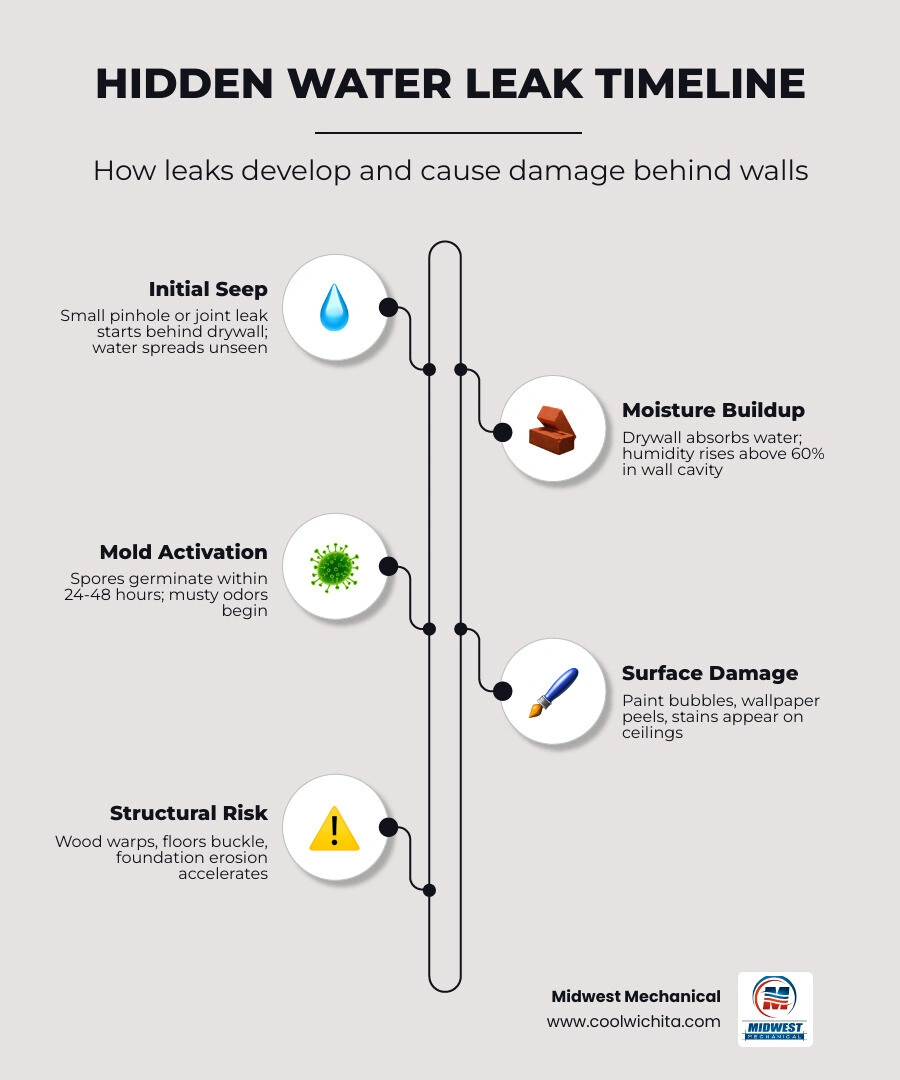
Simple signs you have a hidden water leak glossary:
1. Unexplained Water Bill Spikes and Usage Changes
One of the earliest and most reliable indicators of a hidden plumbing issue is a sudden, unexplained jump in your monthly water utility statement. If your family's daily routines, guest count, and lawn watering habits haven’t changed, but your bill has steadily crept upward over the last two or three billing cycles, water is escaping somewhere on your property.
To put this in perspective, the EPA states that a typical family of four uses roughly 12,000 gallons of water per month (approximately 400 gallons per day). If your monthly usage suddenly registers at 16,000 or 20,000 gallons without a clear explanation, you are likely dealing with a hidden leak.
A small, continuous pinhole leak in a pressurized copper pipe can easily waste hundreds of gallons of water per day. Over the course of several months, this slow loss of water adds up significantly. Homeowners are often shocked by how much a simple, unseen leak can impact their finances. To understand the long-term financial consequences of ignoring these early warnings, read our guide on the Cost of Undetected Water Leaks.
2. Physical and Visual Signs You Have a Hidden Water Leak
When water escapes from a pipe behind a wall or above a ceiling, gravity and capillary action force it to travel through the home's framing, insulation, and drywall. Because water naturally takes the path of least resistance, the visual signs of a leak may appear several feet away from the actual pipe break.

Keep a close eye out for these physical changes in your home's interior:
- Staining and Discoloration: Yellow, brown, or dark gray water rings on ceilings or drywall are classic signs of a slow drip. These stains will often expand over time if the leak is active.
- Bubbling Paint and Peeling Wallpaper: Modern wall paints and vinyl wallpapers act as moisture barriers. When water accumulates inside the drywall cavity, it pushes against the back of the paint or wallpaper, causing it to blister, peel, or bubble.
- Warped and Buckling Flooring: If you have hardwood, laminate, or luxury vinyl plank flooring that begins to cup, warp, or feel spongy underfoot, moisture is likely rising from the subfloor.
- Musty or Earthy Odors: A persistent, damp smell that lingers even after a thorough cleaning is a strong indicator of hidden moisture. This musty odor is caused by mold and mildew thriving in dark, unventilated spaces like wall cavities or crawl spaces.
- Recurring Mold Growth: While some mold in a shower is common due to high humidity, mold appearing on baseboards, closet walls, or ceilings in non-bathroom areas is a clear sign of an active plumbing leak.
Ignoring these physical changes can lead to dry rot in your structural framing and ruined drywall. If you are noticing any of these visual red flags in your home, consult our Water Leak Repair Complete Guide to understand the repair process and how to protect your property.
3. Structural, Foundation, and Auditory Warning Signs
Some of the most destructive leaks don't happen in your walls; they happen beneath your feet. Many homes in Wichita, Derby, and surrounding communities are built on concrete slab foundations. When plumbing lines running beneath the concrete crack or burst, it is known as a slab leak.
If you suspect water is escaping under your foundation, look for these warning signs:
- Unexplained Warm Spots on the Floor: If you walk barefoot across your tile or linoleum floor and notice a localized area that feels unusually warm, a hot water line beneath the slab may be leaking.
- Soggy or Wet Carpeting: Water from a severe slab leak will eventually find its way up through the concrete pores and saturate your carpet padding and fibers.
- The Sound of Running Water: When your home is completely quiet, turn off all appliances and listen closely. If you hear a faint hissing, rushing, or dripping sound behind your walls or beneath your floors, water is actively moving through your pipes.
- Cracks in the Foundation or Walls: As water saturates the soil beneath your home, it can cause the ground to swell or erode, leading to foundation movement and visible cracks in your drywall or brick exterior.
Because these issues occur deep within the structure of your home, identifying them requires specialized knowledge. You can learn more about how professionals pinpoint these hidden issues by reading about Understanding Leak Detection.
Identifying Slab Leaks and Foundation Issues
Slab leaks are a serious threat to your home's structural integrity. When pressurized water sprays continuously under a concrete foundation, it can wash away the supporting soil, leading to soil erosion and shifting. Over time, this lack of support causes the heavy concrete slab to crack and settle unevenly.
Homes built before 2000 are at a higher risk for slab leaks, particularly if they were constructed with copper pipes. Over several decades, the chemical reaction between the copper and the surrounding soil, combined with the friction of the pipes expanding and contracting against the concrete, can create pinhole leaks. For residents in historic or established neighborhoods, keeping a close eye on these structural signs is essential. If you live in the Andover area and suspect foundation-related plumbing issues, our guide on Leak Detection Andover offers localized advice.
How Low Water Pressure Points to Signs You Have a Hidden Water Leak
A sudden or gradual drop in water pressure throughout your home — or even in just one specific bathroom or kitchen — is another common sign of a hidden leak. When a pipe suffers from corrosion or develops a pinhole leak, a portion of the water flow is diverted before it ever reaches your faucets.
If you notice that your shower head doesn't have the same force it used to, or if your washing machine is taking twice as long to fill, your plumbing system may be under stress from a hidden breach. To understand how we diagnose these pressure drops and isolate the source of the issue, explore these Essential Leak Detection Techniques.
4. Outdoor and Appliance-Specific Indicators
Hidden water leaks aren't always confined to the interior of your home. Your main water service line, outdoor irrigation systems, and major appliances can also develop leaks that are easy to miss if you don't know where to look.
- Soggy Yard Patches: If we haven’t had rain in days, but you notice a soft, muddy, or soggy patch of grass in your yard, the underground main water line running from the street to your home may be leaking.
- Unusually Green Grass: A leaking underground pipe acts as a constant source of irrigation. If you notice a strip of grass that is significantly greener, taller, and more lush than the rest of your lawn, there is likely a water source leaking directly beneath it.
- Irrigation System Leaks: A cracked underground sprinkler line can easily waste thousands of gallons of water per month. Check your yard for bubbling water or pooling around sprinkler heads when the system is running.
- Water Heater Leaks: Water heaters can develop slow leaks around the pressure relief valve, drain valve, or the bottom of the tank itself. Because many water heaters are tucked away in basements or utility closets, these leaks can go unnoticed for weeks. To prevent these issues, review our tips on Preventing Water Heater Leaks.
Checking Appliances for Signs You Have a Hidden Water Leak
Your home's water-using appliances can also be sources of silent water waste. Water softeners, for example, can get stuck in a continuous regeneration cycle, sending hundreds of gallons of water straight down the drain. If you suspect your water softener is leaking or cycling constantly, you can use the bypass valve to isolate the unit and see if your water usage drops.
Toilets are another primary source of hidden leaks. A worn-out toilet flapper can allow water to silently leak from the tank into the bowl, wasting up to 90 gallons of water per day. To test for this, perform a simple toilet dye test: drop a few drops of food coloring into the toilet tank and wait 15 minutes without flushing. If the color appears in the toilet bowl, your flapper needs to be replaced.
For home appliances that handle hot water, leaks can pose safety risks. Learn how to Handle Water Heater Leaks Safely or contact us directly if you need professional assistance with a Water Heater Leaking Wichita KS.
How to Perform the Water Meter Test Correctly
If you suspect you have a hidden water leak but aren't sure where to start, the water meter test is the most accurate DIY diagnostic tool available. Your water meter is the ultimate truth-teller when it comes to your home's plumbing system.
To perform this test correctly, follow these steps:
- Turn Off All Water: Ensure that no appliances are running (washing machines, dishwashers, ice makers) and that all faucets, showers, and outdoor spigots are tightly closed.
- Locate Your Water Meter: In our Kansas service areas, your water meter is typically located in a concrete box near the street or curb, or inside your basement or utility room.
- Check the Flow Indicator: Open the meter cover. Many digital and analog meters have a small, sensitive dial known as a flow-indicator triangle or a low-flow indicator. If this triangle is spinning — even slowly — water is currently moving through the system.
- Record the Main Reading: If there is no obvious movement, write down the exact numbers displayed on the meter.
- Wait and Re-Check: Keep all water turned off for at least two hours. After the waiting period, check the meter reading again. If the numbers have changed, you have an active leak.
- Isolate the Leak: To determine if the leak is inside or outside, turn off your home's main shutoff valve (usually located where the main water line enters the house). Check the meter again. If the meter continues to move, the leak is located in the underground service line between the meter and your home. If the meter stops moving, the leak is located somewhere inside your house.
While a DIY water meter test is highly effective at confirming the existence of a leak, it cannot pinpoint the exact location of a pipe break behind a wall or under a concrete slab. That is where professional technology comes in.
| Diagnostic Step / Tool | DIY Water Meter Test | Professional Leak Detection Tools |
|---|---|---|
| Primary Function | Confirms if a leak is present in the plumbing system. | Pinpoints the exact physical location of the leak. |
| Key Indicators Used | Flow-indicator triangle, meter dial changes over 2 hours. | Acoustic sensors, thermal imaging, tracer gas. |
| Invasiveness | Completely non-invasive (visual check only). | Non-invasive, utilizing sound waves and heat signatures. |
| Accuracy | High for detection, low for location pinpointing. | Extremely high, pinpointing leaks within inches. |
| Best Used For | Initial household diagnostic checks. | Locating hidden wall, ceiling, and slab leaks. |
If you are dealing with a complex or hard-to-find leak, our team uses Advanced Leak Detection Technology to locate the issue without causing unnecessary damage to your drywall or flooring.
Frequently Asked Questions About Hidden Water Leaks
Maintaining a safe, dry home requires staying informed. Here are some of the most common questions we receive from homeowners in the Greater Wichita area about leak prevention and maintenance. If you are located in Bel Aire, you can also check out our localized guide on Leak Detection Bel Aire.
How fast can mold start growing after a hidden leak begins?
Mold spores are present in almost every indoor environment, but they require consistent moisture, warmth, and an organic food source (like the paper backing on drywall) to grow. Once a hidden leak saturates drywall or carpeting, mold spores can begin to germinate and colonize in as little as 24 to 48 hours. Within a week, mold can spread inside wall cavities, releasing spores into your home's air supply and potentially causing respiratory issues. This rapid growth timeline is why addressing hidden leaks immediately is so important.
Does homeowner's insurance cover hidden water leaks?
In most cases, standard homeowner's insurance policies cover water damage that is sudden and accidental — such as a water line that bursts unexpectedly. However, damage caused by slow, gradual leaks that have been ignored over several months is typically excluded, as insurance companies view this as a maintenance issue. Keeping detailed documentation of your plumbing maintenance and addressing warning signs immediately can help support your case if you ever need to file a claim.
When should I call a professional plumber for leak detection?
You should call a professional plumber if:
- Your water meter test confirms a leak, but you cannot find any visible signs of water indoors or outdoors.
- You hear the sound of running water behind your walls but see no moisture.
- You notice warm spots on your concrete floor or cracks in your foundation.
- You are dealing with mold growth that keeps returning after being cleaned.
Professional plumbers use advanced tools like acoustic sensors, thermal imaging cameras, and tracer gas to locate leaks non-invasively, saving you from the hassle and cost of tearing up your walls or floors in search of a drip.
Conclusion
Catching the signs you have a hidden water leak early is one of the best ways to protect your property and your wallet from severe water damage. Whether it's a slow drip behind your bathroom drywall or a complex slab leak beneath your foundation, ignoring these warning signs can lead to structural damage, mold growth, and high utility bills.
If you suspect your home has a hidden plumbing issue, don't wait for the damage to spread. Our team at Midwest Mechanical provides expert plumbing and leak detection services across Wichita, Andover, Derby, Bel Aire, and the surrounding communities.
Contact us today to schedule a professional inspection and keep your home safe, dry, and comfortable. Visit our plumbing services page to learn more about how we can help.
Customer Testimonials
Hear from satisfied customers who trust us for reliable HVAC and plumbing service across Wichita.





Plus, the technician, Lee was very professional, knowledgeable and informative.
We will definitely be doing business with them sometime again in the past.
I'm prompt to my appointment. Thank you Midwest Mechanical.
I'm prompt to my appointment. Thank you Midwest Mechanical.

We have partnered with GoodLeap to offer flexible payment options for your project. GoodLeap uses a soft credit check until funding and the highest score from all 3 bureaus to see if you qualify. It also takes just a few minutes to get started.




Service Areas
.svg)